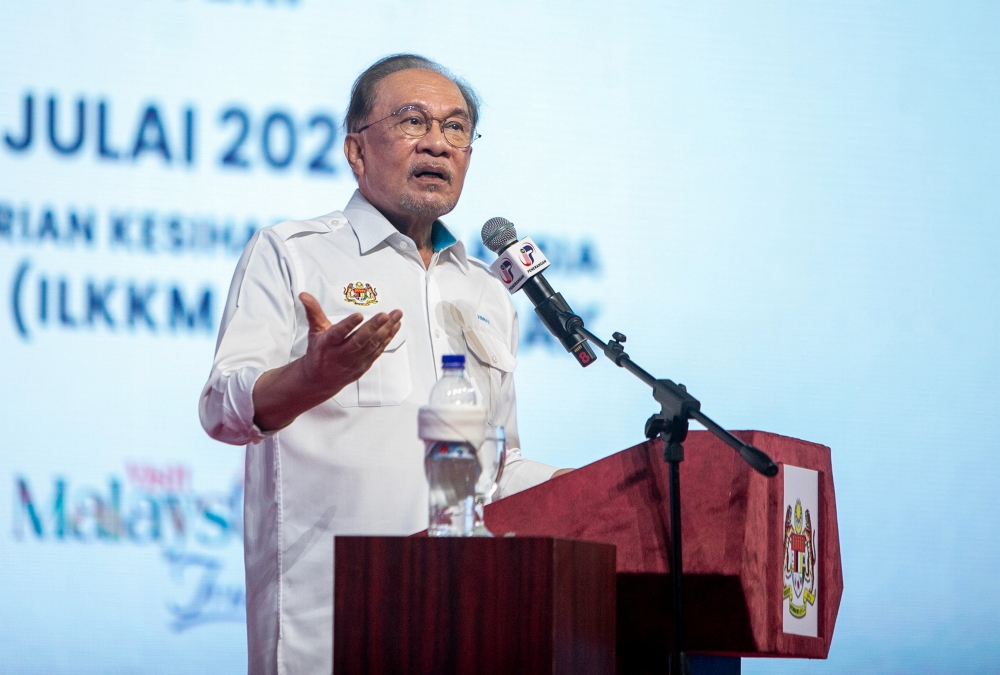
Prime Minister Datuk Seri Anwar Ibrahim has publicly endorsed the government's approach to fuel pricing, framing the subsidy programme as a necessary measure to protect household finances while simultaneously raising concerns about the fiscal pressures such policies create. Speaking in Kajang, Anwar articulated a delicate balancing act that reflects the tensions within Malaysia's economic management strategy, where competing priorities of social welfare and fiscal responsibility demand careful navigation.
The Prime Minister's defence of the fuel subsidy scheme comes amid ongoing domestic debate about whether Malaysia can sustain such programmes indefinitely. Anwar's rhetorical question—"who will pay for it?"—underscores a fundamental concern animating government thinking: the long-term viability of subsidy-dependent policies when global fuel prices remain volatile and Malaysia's fiscal space remains constrained. This framing shifts the conversation from immediate consumer relief to intergenerational fairness, suggesting that subsidies today translate into obligations borne by future taxpayers and citizens.
Malaysia's fuel subsidy system represents one of Southeast Asia's largest social expenditure programmes, with the government absorbing substantial price differentials between global market rates and domestic pump prices. The system emerged as a populist measure decades ago but has evolved into a structural feature of Malaysia's economic policy, benefiting not only individual motorists but also industries dependent on affordable fuel inputs. Dismantling or significantly reducing subsidies carries political risks, as transport operators, small business owners, and urban commuters constitute powerful constituency blocs capable of influencing electoral outcomes.
Anwar's cautionary stance on debt accumulation reflects broader concerns within the Malaysian administration about the country's fiscal trajectory. Government debt has risen substantially in recent years, driven partly by spending commitments made during and after the COVID-19 pandemic, as well as ongoing subsidy obligations. The Prime Minister's emphasis on sustainability suggests the government recognises that indefinite subsidy expansion would compromise Malaysia's ability to invest in critical areas such as education, healthcare, and infrastructure development—sectors that require substantial capital allocation for long-term competitiveness.
The tension between maintaining fuel price stability and avoiding unsustainable debt burdens reflects a policy dilemma confronting many developing economies. Southeast Asian nations including Indonesia, Thailand, and the Philippines have grappled with similar challenges, each adopting different strategies ranging from targeted subsidies for lower-income groups to gradual price liberalisation. Malaysia's approach attempts to thread this needle, sustaining broad-based subsidies while signalling concern about fiscal limits. However, critics argue that such messaging may prove insufficient without concrete reforms detailing how the government plans to rebalance its spending priorities.
The political economy of fuel pricing in Malaysia also intersects with competition for resources among different government programmes. Every ringgit allocated to subsidy reduction could theoretically support education improvements, healthcare expansion, or infrastructure investment. Anwar's framing implicitly acknowledges this opportunity cost, though the political difficulty of implementing subsidy cuts or targeted reforms remains substantial. Any move toward means-testing subsidies or implementing gradual price adjustments would inevitably trigger opposition from affected constituencies, particularly rural and lower-income communities that depend heavily on fuel affordability.
Regional context provides additional perspective on Malaysia's dilemma. Indonesia, the region's largest energy producer, has attempted multiple times to reform its fuel subsidy system, with limited success. The Indonesian experience suggests that even clear fiscal imperatives may prove insufficient to overcome public resistance to subsidy reductions. Meanwhile, Thailand and the Philippines have experimented with various pricing mechanisms, though none has achieved a durable solution satisfying both fiscal and social objectives simultaneously. Malaysia's ongoing commitment to subsidies, despite fiscal pressures, places it among the more generous subsidy providers in the region.
Anwar's public statements regarding debt sustainability also reflect conversations occurring within international financial institutions and among foreign investors monitoring Malaysia's fiscal health. Credit rating agencies and bond market participants scrutinise government spending patterns and debt trajectories carefully, as deterioration in either metric could increase Malaysia's borrowing costs substantially. The Prime Minister's emphasis on limiting future debt accumulation may partly reflect efforts to maintain investor confidence and prevent upward pressure on interest rates, which would compound existing fiscal challenges.
Looking forward, Malaysia faces difficult choices regarding fuel policy sustainability. Current subsidies provide immediate relief to consumers and businesses but accumulate liabilities that will eventually require resolution through either spending cuts, tax increases, or subsidy reforms. Anwar's public concern about debt burden suggests internal government discussions are occurring regarding medium-term policy adjustments, though political constraints appear to limit the pace of reform implementation. The question of "who will pay" remains essentially unresolved, with the answer ultimately depending on political decisions about burden distribution across current consumers, future taxpayers, and other government programme beneficiaries.

