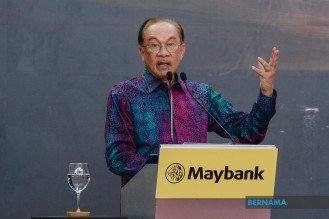
Prime Minister Datuk Seri Anwar Ibrahim has expressed confidence in the financial recovery of Lembaga Tabung Haji, stating that the Islamic pilgrim fund institution has been successfully stabilised after inheriting serious operational and managerial difficulties from preceding administrations. Speaking at the official opening of Maybank's new headquarters at Menara Merdeka Maybank in Kuala Lumpur on Thursday, Anwar underscored that prompt intervention had prevented the situation from deteriorating further, allowing the institution to regain its footing.
The significance of Tabung Haji's recovery extends beyond a single financial institution. As Malaysia's dedicated Islamic financial body managing hajj pilgrimages for hundreds of thousands of Muslims annually, the fund's stability directly affects the pilgrimage experience of Malaysian worshippers and touches the savings of numerous families who have contributed to the scheme over decades. The institution's role in the Islamic financial ecosystem makes its rehabilitation a matter of both economic and religious importance for the country.
Anwar's remarks reflect the Malaysian government's determination to restore public confidence in an institution that had been plagued by governance lapses. The early detection of these issues proved crucial, he noted, as it created the opportunity for corrective action before irreversible damage could occur. His statement carries particular weight given the political sensitivity surrounding Tabung Haji, which has affected millions of Malaysian Muslims who depend on the fund for their pilgrimage arrangements.
On Wednesday, the Cabinet took the significant step of approving the release of the full Royal Commission of Inquiry report into Tabung Haji's operations. This move toward transparency represents a departure from previous practices and demonstrates the government's commitment to accountability. The decision to make the comprehensive RCI findings public signals confidence that the institution's problems are being systematically addressed rather than concealed.
The RCI investigation itself focused on Tabung Haji's management and operational performance between 2014 and 2020, a seven-year period during which multiple governance failures accumulated. This timeframe covers the tenure of previous administrations and their respective leadership of the institution. By examining this specific window, the inquiry was able to identify the root causes of institutional deterioration and pinpoint when lapses in oversight and decision-making occurred.
For Malaysian pilgrims, the recovery narrative holds practical implications. Tabung Haji's financial health directly determines its capacity to maintain service quality, process pilgrim applications efficiently, and protect the accumulated savings of its members. A weak institution would inevitably translate into delays, reduced services, or exposure of pilgrim funds to further risk. Conversely, a restored and well-managed Tabung Haji ensures that pilgrims can focus on their spiritual journey rather than worrying about administrative or financial complications.
The broader context of Islamic financial institutions in Malaysia also makes this recovery meaningful. Malaysian Islamic banking and finance commands significant regional influence, and Tabung Haji's standing affects perceptions of governance quality within the Islamic financial sector. International stakeholders and Islamic finance investors monitor such institutions as indicators of Malaysia's commitment to robust Islamic financial standards and transparency.
Anwar's confidence in Tabung Haji's future trajectory rests on the institution's demonstrated ability to adapt after crisis. The restoration process has presumably involved restructuring management, implementing stronger oversight mechanisms, and introducing enhanced accountability frameworks. These operational changes, combined with leadership committed to ethical stewardship, form the foundation for sustained improvement.
The public release of the RCI report serves multiple functions beyond mere transparency. It allows affected parties—pilgrims, investors, and the general public—to understand exactly what went wrong and what remedial steps have been undertaken. This information access helps rebuild institutional credibility, which is essential for an organisation that depends on public trust and voluntary contributions from citizens.
For Malaysian policymakers and the broader Southeast Asian region observing institutional governance, the Tabung Haji case offers instructive lessons about the consequences of administrative negligence and the critical importance of early intervention. When governance lapses are identified and addressed promptly, institutions can be rehabilitated. However, delay in detection and remediation can compound problems exponentially, making recovery far more costly and time-consuming.
Moving forward, the challenge for Tabung Haji leadership involves sustaining the improvements achieved thus far while preventing regression. This requires embedding strong governance practices into institutional culture, maintaining transparent reporting standards, and ensuring that management prioritises pilgrim welfare and fund security above all other considerations. The institution's future success will ultimately depend on whether these reforms take root permanently or fade once public attention moves elsewhere.
Anwar's public commitment to Tabung Haji's excellence during a high-profile event like the Maybank headquarters opening also signals to stakeholders that the government considers the institution's recovery a priority. This backing, combined with the cabinet's transparency initiative and ongoing institutional reforms, positions Tabung Haji for a more stable future, though continued vigilance and accountability measures remain essential to prevent any recurrence of past problems.

