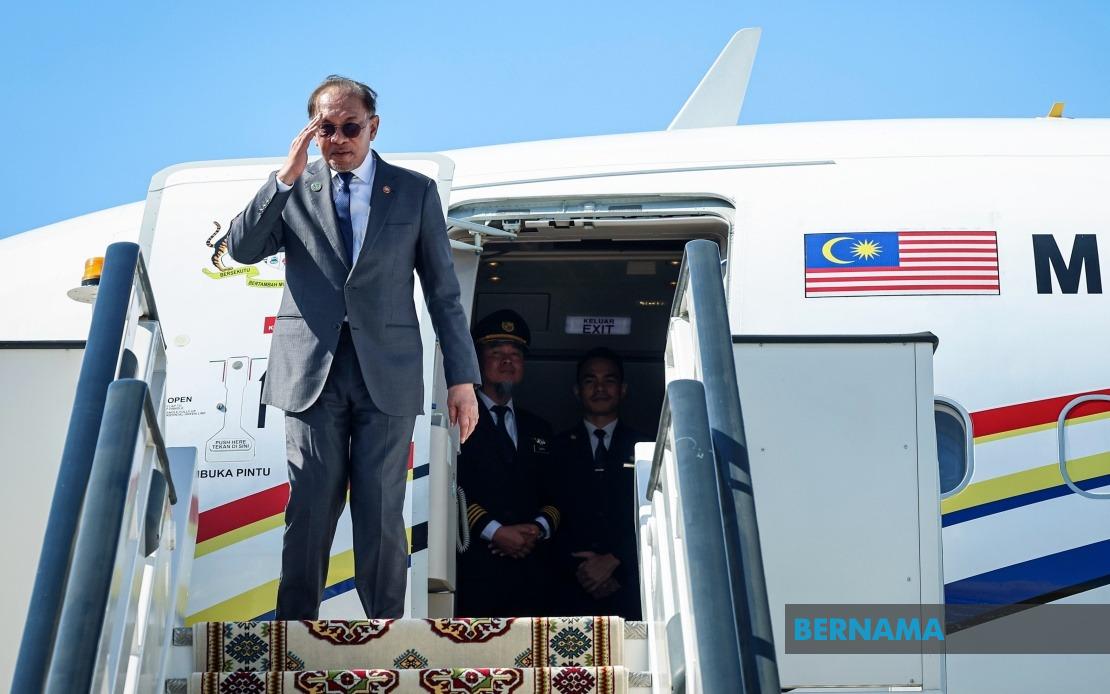
Prime Minister Datuk Seri Anwar Ibrahim touched down in Penang on June 20 to pack a substantial working schedule into a single day, fresh from concluding his inaugural official visit to Turkmenistan since taking office. The rapid turnaround underscores the intensity of Malaysia's diplomatic and domestic engagement, as Anwar balanced international relations with regional economic development priorities and recognition of the nation's media sector.
The Penang leg began with the official opening of MKS Instruments Malaysia Sdn Bhd at Bandar Cassia Technology Park in Batu Kawan at 11 am. This facility represents continued foreign direct investment into Malaysia's high-technology manufacturing base, particularly in the northern corridor where semiconductor and precision instrumentation sectors have become increasingly strategic to the country's economic diversification away from traditional commodities.
Within two hours, Anwar shifted focus to preside over the groundbreaking ceremony for Setia Fontaines Industrial Park at Bandar Setia Fontaines in Kepala Batas. The project reflects developer Setia's substantial commitment to expanding Penang's industrial footprint, signalling confidence in the state's continued appeal as a manufacturing and business hub despite competitive pressures from elsewhere in Southeast Asia. The ceremony also marked the launch of two additional strategic collaborations within the township, suggesting a clustering effect that could attract complementary enterprises to the region.
These infrastructure commitments hold particular significance for Malaysia's broader economic strategy. Penang and the Northern Corridor remain crucial to attracting semiconductor manufacturers and technology firms seeking alternatives to congested or politically unstable Asian locations. The Prime Minister's personal attendance at such events signals government backing for private-sector expansion and reinforces the narrative that Malaysia remains open for serious industrial investment.
The centrepiece of Anwar's Penang visit, however, was his appearance at the National Journalists' Day (HAWANA) 2026 Grand Finale at the PICCA Convention Centre in Butterworth at 3 pm. Approximately 1,000 media practitioners from Malaysia and internationally gathered to celebrate the profession and acknowledge outstanding contributions to journalism and public discourse. This event carries symbolic weight beyond ceremony, as independent media and journalistic freedom remain essential components of democratic governance and public accountability.
At the HAWANA celebration, Anwar presented the HAWANA Award and Special HAWANA Award to individuals recognised for significant contributions to journalism and the development of informed public thought. He also distributed contributions from Tabung Kasih@HAWANA to media practitioners facing financial hardship, demonstrating government support for the profession beyond rhetoric. These gestures acknowledge journalism's crucial role in a functioning democracy and signal official recognition of media workers' often challenging operating environment.
HAWANA itself, organised by the Communications Ministry with the Malaysian National News Agency (Bernama) as implementing agency, functions as Malaysia's premier platform for recognising media professionalism and dedication. The event's biennial cycle provides structured opportunity for the government and civil society to reflect on journalism's state and direction, reinforcing the sector's importance to national development beyond mere entertainment or information dissemination.
Anwar's itinerary that day reflected the multifaceted demands placed on Malaysia's prime minister. His immediate predecessor to Turkmenistan came after attending the 35th ASEAN-Russia Commemorative Summit in Kazan, Russia, where Investment, Trade and Industry Minister Datuk Seri Johari Abdul Ghani and Economy Minister Akmal Nasrullah Mohd Nasir accompanied him. This diplomatic engagement reaffirmed Malaysia's commitment to maintaining balanced relationships across the geopolitical spectrum, particularly important given rising great-power competition in the region.
The Turkmenistan visit, lasting two days beginning June 18, represented Anwar's first official visit to the Central Asian nation since his November 2022 assumption of office as Malaysia's 10th Prime Minister. Conducted at President Serdar Berdimuhamedov's invitation, the visit likely explored trade, energy security, and diplomatic cooperation opportunities. Central Asia's energy resources and geographic position along historic trade routes make bilateral engagement worthwhile for Malaysia's long-term economic interests.
Anwar's aircraft departed Ashgabat International Airport at 4.45 pm local time, arriving in Penang by evening Malaysian time to commence the packed schedule. This seamless transition between international diplomacy and domestic engagement demonstrates the logistical complexity of modern prime ministerial duties and the expectations that political leaders balance multiple scales of governance simultaneously.
Following his Penang commitments, Anwar was scheduled to attend the Himpunan Pertubuhan Lima Generasi (PLG) Malaysia dinner in Negeri Sembilan that evening, extending his regional tour into a full rotational circuit across peninsular Malaysia's key states. Such comprehensive touring maintains political presence, allows face-to-face engagement with varied constituencies and stakeholder groups, and demonstrates active leadership across economic, media, and civil society sectors.
The cumulative arc of Anwar's three-day journey—from Kazan to Ashgabat to Penang to Negeri Sembilan—illustrates contemporary Malaysian statecraft's scope. Prime ministers must simultaneously navigate great-power diplomacy, facilitate foreign direct investment, honour professional sectors, attend to party politics, and remain visible across the federation. Success in managing these competing demands determines not merely domestic political stability but also Malaysia's capacity to maintain relevance and agency within rapidly shifting regional and global contexts.

