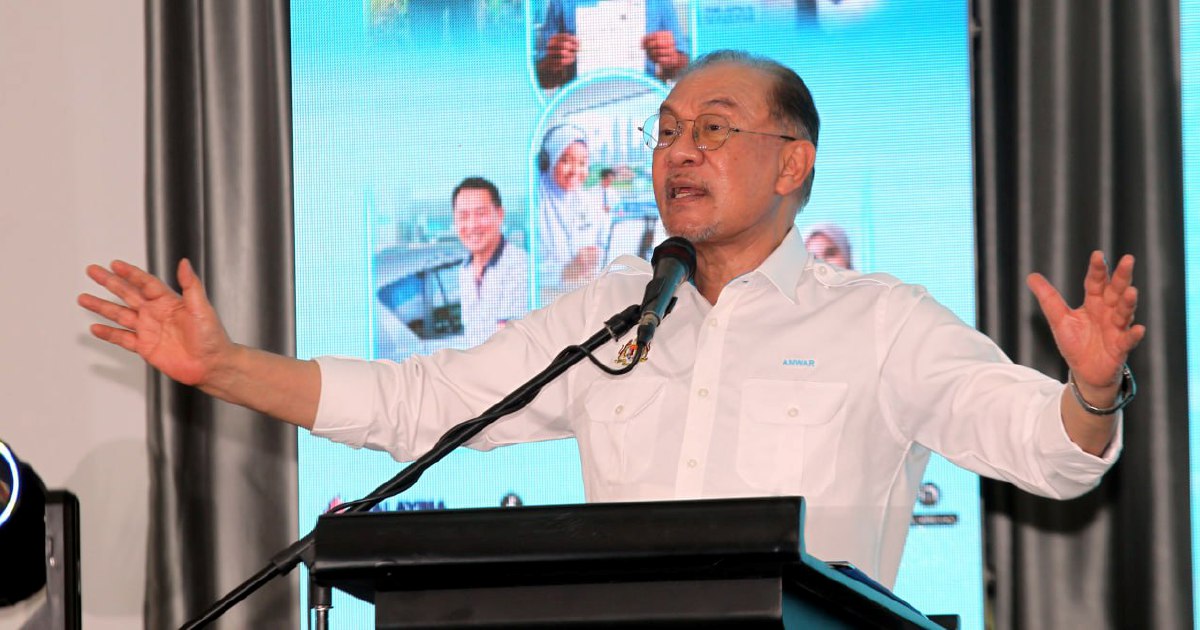
Prime Minister Datuk Seri Anwar Ibrahim has announced a RM15.3 million financial injection aimed at bolstering religious and pondok schools throughout Perak, underlining the administration's broader agenda to strengthen Islamic educational institutions nationwide. The commitment, unveiled during a visit to Ipoh, reflects the government's recognition of the critical role these institutions play in Malaysia's education ecosystem and community fabric.
The Madani administration views the enhancement of religious and pondok schools as a long-term strategic priority rather than a one-time intervention. This funding allocation represents a tangible demonstration of policy intent, moving beyond rhetorical support to allocate substantial resources that can address pressing infrastructure, curriculum development, and operational needs across these institutions. The decision signals confidence in the Islamic education sector as a legitimate and valued component of Malaysia's broader educational landscape.
Perak's religious and pondok schools have historically served disadvantaged communities and provided alternative pathways for students seeking Islamic-focused learning. These institutions often operate with limited budgets and facilities compared to their conventional counterparts, making targeted government support essential for maintaining educational quality and accessibility. The RM15.3 million commitment addresses a genuine gap in resource distribution that has long constrained these schools' capacity to modernise and expand their programmes.
The Prime Minister's pledge extends beyond immediate infrastructure improvements to encompass broader capacity-building initiatives. Investment in teacher training, curriculum alignment with contemporary educational standards, and integration of digital learning tools represent crucial areas where these funds can deliver meaningful impact. Such comprehensive support ensures that pondok and religious schools remain competitive and relevant in an increasingly digitalised educational environment.
For Malaysian readers, this initiative carries particular significance given the growing discourse around balancing religious and secular education. The government's investment acknowledges that religious schools need not exist in isolation from mainstream educational development, and that support for Islamic institutions can coexist with efforts to strengthen conventional schooling. This represents a pragmatic approach to preserving educational choice whilst ensuring equitable resource distribution.
The Perak-specific allocation also reflects political and demographic realities within the state, where religious schools serve substantial populations. Perak's economy and social fabric have traditionally benefited from strong Islamic institutions, making this investment both symbolically important and practically necessary for local communities. By directing funds to this state, the federal government demonstrates sensitivity to regional needs and educational diversity.
From a Southeast Asian perspective, Malaysia's approach to funding religious education differs markedly from many neighbouring countries. While some regional governments maintain strict secular frameworks, Malaysia's model acknowledges religious schooling as legitimate and worthy of public investment. This commitment may influence how other Southeast Asian nations approach similar questions about the relationship between government funding and religious education.
The initiative also carries implications for teacher recruitment and retention within the Islamic education sector. Improved facilities and resources typically translate into better working conditions, potentially attracting qualified educators to pondok schools. Enhanced professional support can address persistent challenges regarding curriculum delivery and student outcomes that have historically lagged behind conventional schools in some measures.
Looking forward, the success of this funding injection will depend on transparent implementation, community involvement in project selection, and mechanisms for monitoring educational outcomes. The government's willingness to commit resources must be matched by accountability frameworks ensuring funds reach intended recipients and deliver measurable improvements in school infrastructure, teaching quality, and student learning.
The announcement also reflects broader Madani government priorities centred on inclusivity and recognising Malaysia's plural society. Religious schools represent important institutions for Muslim families exercising educational choice, and government support acknowledges this legitimacy whilst working to elevate standards. This approach seeks to move beyond false dichotomies between religious and secular education, instead treating both as complementary components of a functioning educational system.
Anwar's commitment carries particular weight given his personal background and intellectual engagement with Islamic thought, positioning him as credible advocate within religious education communities. This credibility may facilitate smoother implementation and community cooperation in deploying funds effectively. However, it also creates expectations that must be met through sustained commitment beyond the initial allocation.
Pearak's religious and pondok schools now have concrete resources to address accumulated deficits in infrastructure and programming. Whether this represents the beginning of sustained, multi-year investment or a singular gesture will significantly determine long-term impact on institutional capacity and educational outcomes across these schools. The broader Malaysian education sector watches closely to see whether this commitment evolves into a pattern of government support for religious institutions.

