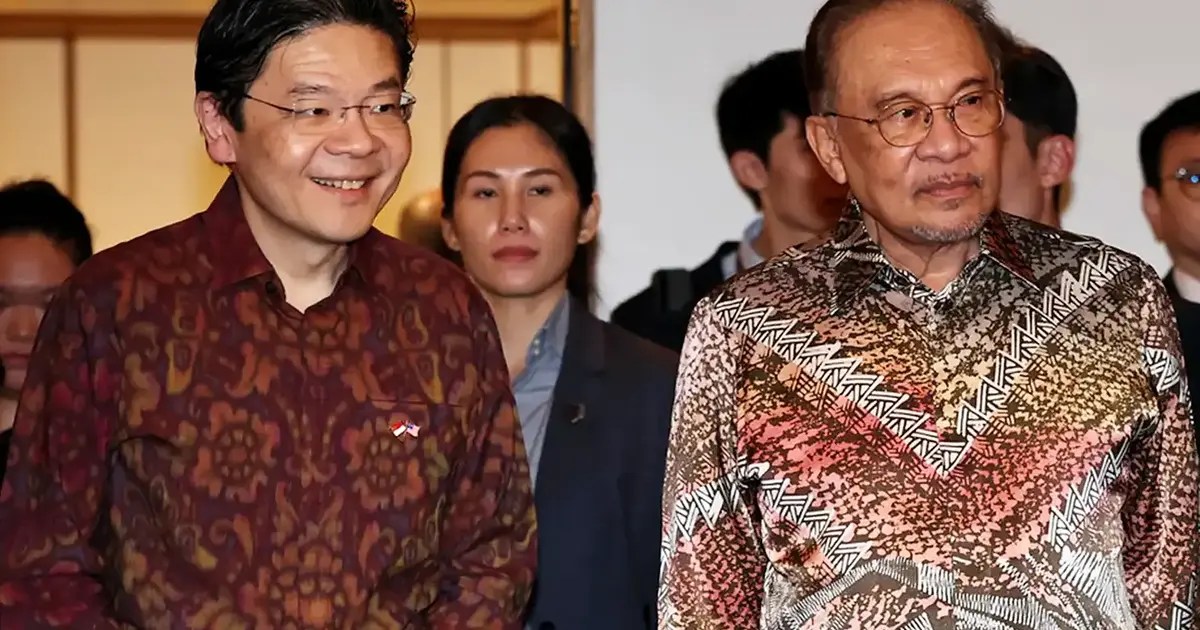
Prime Minister Anwar Ibrahim has made clear that he has not reached out to his Singapore counterpart regarding arrangements for Malaysians living and working in the city-state to participate in the forthcoming Johor state election, addressing widespread speculation about potential cross-border coordination on voting logistics.
The clarification emerged when Anwar responded to questions posed by reporters questioning whether he planned to initiate contact with Singapore's leadership to explore measures that might enable Malaysians employed in Singapore to return home for the poll. The Prime Minister's response underscored that no such diplomatic initiative has been undertaken, effectively putting to rest conjecture that Malaysia might pursue formal channels with its neighbour to accommodate voters abroad.
This statement carries particular weight given the sizeable population of Malaysian nationals working in Singapore, many of whom originate from Johor due to geographical proximity and employment opportunities across sectors including finance, manufacturing, and services. During state elections, the question of voter participation from expatriate communities traditionally garners attention, particularly when significant blocs of voters reside in neighbouring jurisdictions with established labour migration patterns.
The clarification also reflects the practical complexities of managing electoral participation across international borders. Malaysian electoral law permits citizens abroad to vote, but the mechanisms for doing so typically require physical presence at designated polling stations within Malaysia or at overseas diplomatic missions during federal elections. State elections, however, generally require voters to cast ballots at their registered constituencies within Malaysia, creating logistical challenges for those working abroad.
Anwar's statement suggests that Malaysia intends to proceed with its electoral arrangements through existing institutional frameworks rather than seeking bilateral accommodations from Singapore. This approach maintains conventional electoral procedures while acknowledging the practical limitations faced by voters temporarily absent from their home states for employment purposes.
The Singapore-Malaysia relationship, while cooperative on many fronts including trade and security matters, maintains distinct boundaries regarding domestic electoral processes. Both nations typically treat election administration as a sovereign matter, with limited expectation of cross-border facilitation for voting purposes. Singapore's government has historically maintained strict protocols regarding the movement of foreign nationals during electoral periods, reflecting its approach to maintaining clear separation between electoral participation and residency status.
For Johor specifically, the state has long experienced significant labour outflow to Singapore, with tens of thousands of Malaysians commuting daily or residing temporarily across the causeway for employment. This migration pattern has established socio-economic ties that persist regardless of electoral cycles, yet both governments have avoided creating special mechanisms to address voting participation arising from this labour mobility.
Anwar's clarification also signals continuity in Malaysia's approach to electoral matters, where the government's position remains that citizens bear responsibility for managing their participation within established legal frameworks. The Prime Minister's response implicitly acknowledges that while sympathetic to the challenges faced by voters abroad, Malaysia does not pursue extraordinary diplomatic measures to accommodate electoral participation outside its territorial boundaries.
The timing of Anwar's statement underscores the administrative preparations underway for the Johor election, with various stakeholders potentially seeking clarification on how voting logistics would be managed. By explicitly confirming no special arrangements are being negotiated with Singapore, the government provides clarity to election administrators and the public alike regarding the operational framework they should expect.
This also reflects broader patterns within ASEAN, where member states generally maintain strict protocols around electoral sovereignty and rarely accommodate cross-border voting arrangements, even among neighbouring countries with substantial migration flows. Malaysia's position aligns with this regional norm, treating elections as exclusively domestic affairs managed through national institutions rather than subjects for bilateral diplomatic negotiation.
For Malaysian voters working in Singapore, the practical implication is that participation in Johor state elections would continue to depend on their ability to physically return to their registered constituencies during the election period, without expectation of government-facilitated leave arrangements or coordinated bilateral protocols. This places responsibility on individuals to make personal arrangements within their employment circumstances.
The statement also carries implications for how Malaysia manages electoral administration moving forward, potentially signalling that future state elections will maintain consistency with existing procedures rather than experimenting with special arrangements for specific constituencies experiencing significant labour out-migration. Policymakers appear to have concluded that maintaining standardized electoral procedures takes precedence over attempting to accommodate structural labour mobility patterns through diplomatic channels.
Anwar's clarification ultimately reinforces that Malaysia's election system, while democratic and inclusive of all citizens, operates within established territorial and procedural parameters that do not extend to creating special cross-border mechanisms. The government's focus remains on ensuring that elections proceed smoothly within Malaysia's borders using conventional administrative and legal frameworks that have long governed electoral participation.

