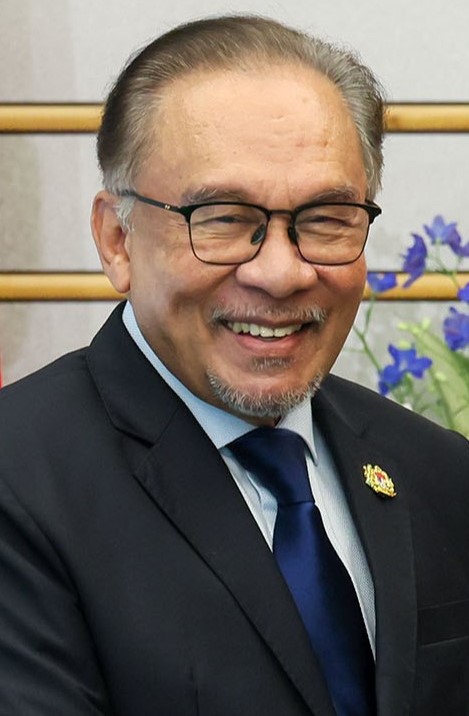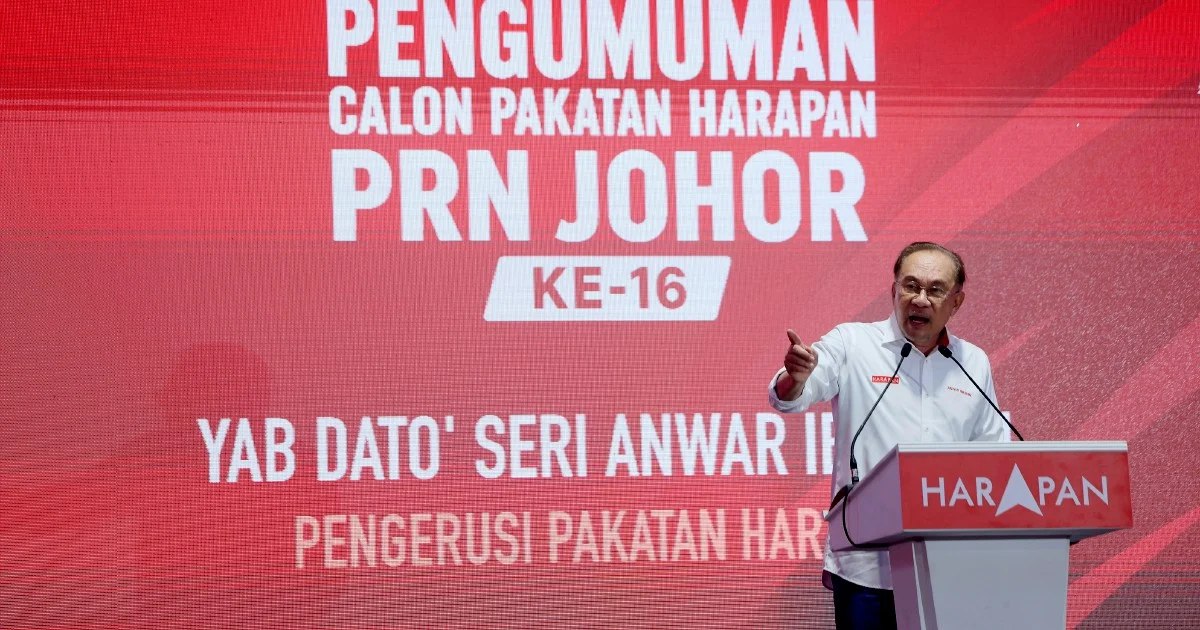
Prime Minister Datuk Seri Anwar Ibrahim has made a pointed call on Johor's executive councillors to conduct a thorough investigation into claims that the state has been shortchanged on revenue allocations by past federal governments, according to remarks made during a visit to Tangkak. The statement represents a continuation of Anwar's recent efforts to audit the financial dealings of his predecessors, particularly around accusations that resource-rich states like Johor may not have received equitable returns from federal distribution mechanisms.
The challenge Anwar has posed to state administrators reflects broader political fault lines that have emerged since his administration assumed office. By directing Johor's executive councillors to independently verify revenue claims, the Prime Minister is essentially asking state-level leadership to become forensic auditors of federal financial transactions spanning multiple prior governments. This approach sidesteps potential accusations of partisan investigation while embedding accountability mechanisms at the state level, where Johor's administration—composed of representatives from both Pakatan Harapan and Barisan Nasional in a state-level coalition—would oversee the examination.
The question of equitable revenue distribution among Malaysian states has long been a contentious issue in federal politics. Johor, as one of Malaysia's most economically developed and resource-endowed states, has historically raised concerns about whether its contribution to federal coffers is proportionally matched by its allocation of developmental resources and federal funds. The state's significant port revenues, industrial base, and geographic importance to the broader Southeast Asian economy mean that precise accounting of financial flows becomes politically charged and fiscally consequential.
Under the tenure of the Barisan Nasional federal government, which lasted until 2018, questions emerged periodically about whether resource-rich states received fair compensation for federal resource extraction and utilization. These concerns intensified during the subsequent Perikatan Nasional administration under former Prime Minister Tan Sri Muhyiddin Yassin, particularly as the coalition relied on smaller parties and regional allies whose support sometimes necessitated financial concessions. The opacity surrounding revenue distribution mechanisms during both periods has provided fertile ground for allegations of misallocation or preferential treatment to certain states.
Anwar's intervention carries significant implications for Johor's political positioning within the current federal structure. The state maintains a unique coalition arrangement that includes both government and opposition figures, a configuration that emerged from the state elections held in 2023. By tasking this mixed-composition leadership body with auditing federal financial dealings, Anwar is effectively creating space for cross-party scrutiny. Such an arrangement could either strengthen consensus on genuine financial grievances or expose deeper political fractures along party lines depending on how findings are interpreted and presented publicly.
The financial transparency agenda that Anwar has championed since 2022 has extended beyond the federal level to encompass state-by-state examination of resource allocation patterns. This reflects a recognition within Pakatan Harapan circles that fiscal accountability and equitable distribution represent both genuine governance concerns and politically potent issues. For Johor specifically, demonstrating that previous administrations under-allocated resources could validate the state leadership's requests for enhanced federal support while simultaneously placing blame squarely on predecessors rather than the current administration.
Southeast Asian context matters here as well. Johor's role as Malaysia's southern economic anchor, its strategic position as a gateway to Singapore, and its industrial manufacturing base make its financial health relevant to broader regional economic stability. If Johor has indeed suffered from underallocation of federal resources, rectifying such imbalances could have multiplier effects throughout the region's supply chains and investment flows. Conversely, any investigation that suggests foul play by previous administrations reinforces narratives about the need for governance reform across Malaysian institutions.
The procedural challenge that Anwar has issued also sidesteps potential legal complexities. Rather than launching a federal inquiry that might require subpoena powers or investigative authorities, delegating this task to Johor's executive council transforms what could be a confrontational audit into a state-level administrative review. This approach carries lower political risk while still signaling to voters that the administration takes fiscal accountability seriously. It also provides cover for Johor's Barisan Nasional representatives to engage in scrutiny of their own national party's record without appearing to undermine party leadership at the federal level.
The substantive question underpinning Anwar's call concerns what mechanisms exist to verify historical revenue claims and what remedies might apply if genuine shortfalls are documented. Malaysian constitutional provisions governing federal-state financial arrangements are complex, and determining whether specific allocations fell below legally mandated thresholds or equitable standards involves technical accounting expertise combined with political judgment. The executive council's investigation would need to navigate these complexities while remaining cognizable to public audiences lacking specialized financial knowledge.
For Malaysian readers, particularly those in Johor, these developments represent part of a longer reckoning with how federal resources have been distributed across the federation over recent decades. The state has significant leverage in national politics given its economic contribution and demographic weight, and Anwar's invitation for the state to conduct its own audit signals recognition of that importance. Whether such scrutiny yields actionable conclusions about revenue disparities or demonstrates that previous allocations were defensible under existing frameworks will likely shape Johor's positioning in future budget negotiations and federal resource distributions.
The broader implication extends to governance accountability in Malaysia more generally. If states across the federation begin conducting similar retrospective audits of federal financial dealings, the cumulative effect could establish precedents for transparency and equity assessments that constrain future federal governments' discretion in allocating resources. This potential standardization of financial auditing at state level, while superficially administrative, carries constitutional and political weight that extends well beyond Johor's particular circumstances.