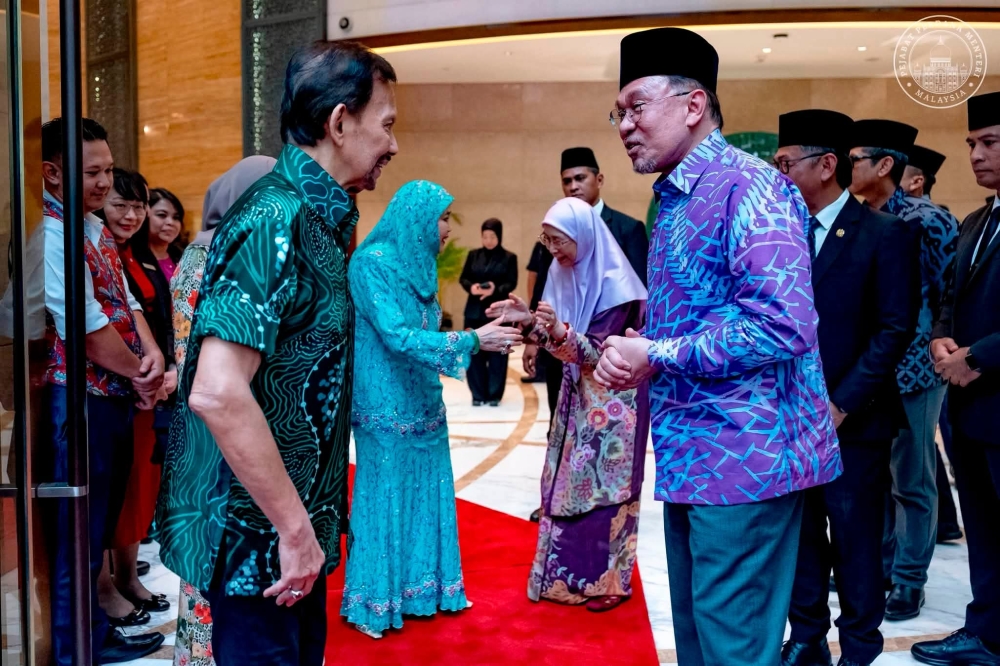
Prime Minister Datuk Seri Anwar Ibrahim has extended formal birthday greetings to the Sultan of Brunei, using the occasion to reinforce Malaysia's commitment to deepening ties with its neighbour. The gesture, rooted in diplomatic custom, carries broader significance for a bilateral relationship that spans decades of economic integration, security cooperation, and cultural exchange across the Borneo region.
The birthday message represents more than ceremonial protocol. It underscores Malaysia's strategic interest in maintaining stable, cordial relations with Brunei Darussalam, a nation with which it shares maritime borders, energy interests, and membership in regional groupings including ASEAN. The timing and tenor of such communications often reflect the broader health of interstate relations, signalling political will at the highest levels to nurture partnership.
Malaysia and Brunei have cultivated institutional mechanisms for cooperation across multiple sectors. These arrangements facilitate dialogue on shared challenges ranging from maritime boundary demarcation to environmental stewardship in the South China Sea. The two nations also coordinate on transnational issues including counter-terrorism, human trafficking, and cybersecurity—areas where regional cooperation proves increasingly vital as threats evolve.
The bilateral economic relationship remains significant, though often overshadowed by larger ASEAN partners. Trade flows between Malaysia and Brunei encompass downstream petroleum products, construction services, and increasingly, digital commerce. Malaysian companies maintain substantial investments in Brunei's non-oil sectors, reflecting confidence in the market and the stability of the operating environment. Cross-border labour mobility, particularly skilled professionals, further binds the two economies.
Regionally, Brunei's role as ASEAN Chair in 2013 and ongoing diplomatic activity have positioned the sultanate as a thoughtful voice in regional forums. Malaysia, as a larger power, benefits from stable ties that prevent miscalculation or friction from undermining ASEAN cohesion. The partnership also serves as a stabilising factor in the face of great power competition in Southeast Asia, where smaller nations increasingly seek to leverage multilateral frameworks to preserve autonomy.
Cultural and people-to-people connections provide ballast for official relations. The shared Islamic heritage, Malay language commonality, and overlapping diaspora communities create natural constituencies for understanding. Educational exchanges, sports competitions, and cultural festivals regularly bring citizens of both nations into contact, building grassroots appreciation and trust that sustains diplomatic engagement even during occasional frictions.
The security dimension remains quietly consequential. Malaysia and Brunei coordinate through ASEAN mechanisms on maritime security, a pressing concern given shipping lanes through the South China Sea and potential disputes over continental shelf boundaries. Joint exercises, intelligence sharing, and naval coordination strengthen deterrence and reduce the risk of accidents or misunderstandings that could escalate.
Brunei's relatively small population and economy mean it must carefully calibrate its foreign policy to maintain influence and protect interests. Strong ties with Malaysia—whether through ASEAN, bilateral accords, or personal relationships between leaders—help Brunei punch above its weight diplomatically. Conversely, Malaysia benefits from a predictable, cooperative neighbour that shares its commitment to regional stability and the rules-based order.
Looking forward, Malaysia and Brunei face shared opportunities and challenges. Climate change threatens the sustainability of their fishing grounds and coastal communities. Digitalisation and economic diversification require coordinated approaches to education and skills development. The ASEAN Comprehensive Investment Agreement and other regional frameworks create fresh possibilities for investment and trade expansion that both nations can capitalise upon through enhanced bilateral coordination.
Prime Minister Anwar's birthday message thus carries strategic weight beyond pleasantries. It reaffirms Malaysia's investment in stable, mutually beneficial relations with Brunei at a time when regional dynamics are increasingly complex. The gesture acknowledges Brunei's importance as a partner and signals Malaysian commitment to constructive engagement with all ASEAN neighbours, regardless of size or economic weight.
As Malaysia navigates its own domestic challenges and regional positioning, maintaining strong ties with smaller ASEAN partners like Brunei serves important interests. It demonstrates that Malaysia remains a reliable, respectful partner committed to collective security and prosperity. Such consistency builds trust and provides the foundation for addressing the transnational challenges that no single nation can tackle alone.

