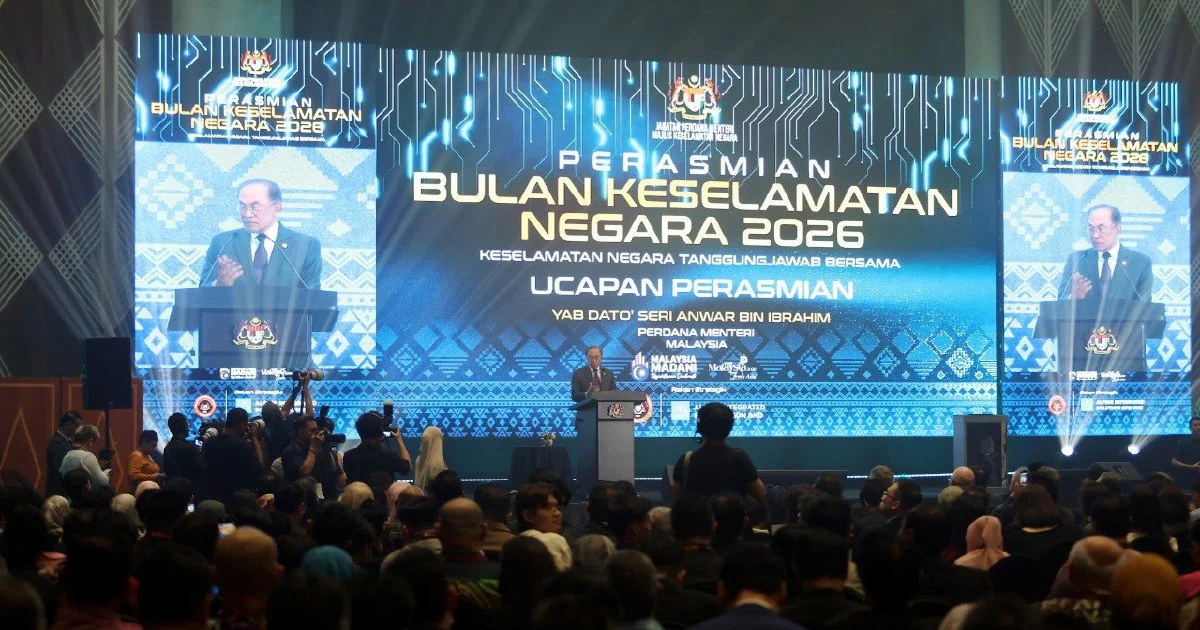
Prime Minister Datuk Seri Anwar Ibrahim has voiced serious reservations about the resurfacing of racial and regional tensions in Malaysian political discourse, particularly as the state of Johor gears up for its electoral contest. Speaking from Putrajaya, the premier cautioned that continuing to rely on outdated narratives centred on communal grievances and geographical divisions represents a troubling trajectory for the nation's democratic health.
The timing of Anwar's intervention carries particular significance given Johor's strategic importance within Malaysia's political landscape. The southern state, home to over 4 million residents, functions as both an economic powerhouse and a bellwether for national political sentiment. Johor's electoral performance has historically influenced broader trends across the peninsula, making the conduct and tenor of its campaigns a matter of concern to the federal government.
Anwar's remarks underscore a growing unease within leadership circles regarding campaign strategies that prioritise communal identity over policy platforms and developmental agendas. The premier appears to be signalling that political contestants must resist the temptation to weaponise historical grievances or resurrect divisive rhetorical frameworks that pit demographic groups against one another. This represents a conscious effort to steer Malaysian politics toward substantive engagement with governance issues rather than identity-based mobilisation.
The concern articulated by the Prime Minister reflects broader anxieties about Malaysia's political maturity. The nation has long grappled with the tension between managing genuine communal concerns and avoiding cynical exploitation of group identities for electoral advantage. The fact that Anwar felt compelled to issue such a warning suggests that campaign dynamics in Johor may already be exhibiting troubling signs of communalisation, necessitating federal-level intervention.
For Malaysian and Southeast Asian observers, this intervention carries implications extending beyond a single state election. It signals the federal government's commitment to maintaining a baseline standard of electoral conduct that prioritises national cohesion over factional interests. In a region where electoral polarisation has destabilised neighbouring democracies, Malaysia's willingness to proactively discourage divisive narratives demonstrates a conscious effort to protect institutional integrity.
The emphasis on transcending "old" narratives is particularly instructive. Anwar's characterisation suggests that the problematic rhetorical frameworks being deployed are not novel but rather recycled from previous iterations of Malaysian politics. This implies that despite decades of democratic experience and significant socioeconomic transformation, certain political actors continue to default to familiar divisive playbooks rather than adapting their approaches to contemporary realities. The Prime Minister's language suggests frustration with this apparent resistance to political evolution.
Regionally, Malaysia's approach to managing electoral tensions offers contrasts with other Southeast Asian democracies facing similar challenges. While countries across the region have struggled with communal polarisation in electoral contexts, Malaysia's institutional mechanisms for encouraging restraint—exemplified by Anwar's public intervention—represent a distinctive governance strategy. This approach depends fundamentally on leadership willingness to articulate clear expectations regarding acceptable campaign conduct.
The implications for Johor specifically merit careful consideration. The state's electorate comprises diverse communities with distinct economic interests and historical experiences. Campaign strategies that exploit these differences for short-term electoral gains risk fragmenting the consensus necessary for effective governance and sustained economic development. Johor's role as an economic contributor to national growth makes such fragmentation particularly costly.
Anwar's intervention also reflects evolving expectations regarding prime ministerial engagement in state-level politics. Rather than maintaining distance from electoral contests, the federal leadership is actively shaping the normative environment within which such contests occur. This represents an assertion of the Prime Minister's role as custodian of national values and institutional standards, extending beyond conventional executive functions.
The warning carries implicit recognition that racial and regional divisions, if permitted to dominate electoral discourse, create negative externalities extending beyond immediate campaign dynamics. They can erode social cohesion, distort policy priorities away from pressing development issues, and undermine public faith in democratic institutions. By issuing this caution, Anwar signals that such costs are unacceptable from a national perspective.
Looking forward, the effectiveness of this intervention will depend on whether political actors in Johor respond by moderating their campaign strategies. Should contestants continue deploying racially-inflected rhetoric despite the Prime Minister's warning, it would suggest either that electoral incentives favouring divisiveness outweigh the costs of ignoring federal leadership, or that the warning itself carries insufficient enforcement mechanisms. Either scenario would raise uncomfortable questions about the state of Malaysian democratic culture.
For Malaysian voters, particularly in Johor, Anwar's statement should prompt reflection on what electoral contests should accomplish. Elections theoretically provide opportunities for communities to deliberate collectively about shared futures, to evaluate leaders' capacities to deliver development, and to exercise democratic agency. When campaigns degenerate into communal posturing, these functions are compromised. The Premier's intervention implicitly calls on voters to demand better from their political representatives, insisting that campaigns engage substantively with policy rather than retreating into divisive identity politics.

