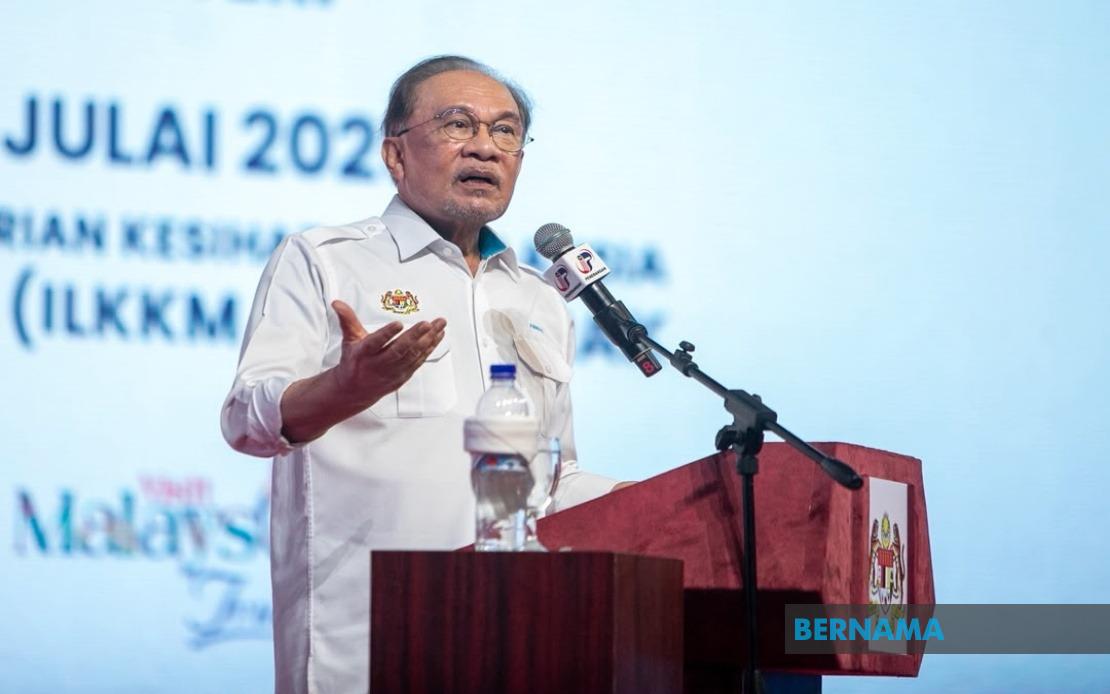
Prime Minister Datuk Seri Anwar Ibrahim has issued a pointed call for Malaysians to look back at their nation's independence journey and comprehend the profound cost of freedom that previous generations secured through extraordinary hardship. Speaking in Ipoh on July 19 during the formal launch of the 2026 National Month and Fly the Jalur Gemilang Campaign, Anwar stressed that understanding this historical foundation is essential for appreciating the relative comfort and stability that contemporary Malaysians enjoy today. His message came as the country prepares for nationwide celebrations of national pride, with particular emphasis on engaging younger generations who have grown up entirely within an independent Malaysia.
The Prime Minister articulated a three-layered approach to reinforcing national consciousness among Malaysians. First, he advocated for revisiting the historical record of Malaysia's path to independence, acknowledging the toll exacted on those who fought for freedom. Second, he positioned the flying of the national flag as a symbolic gesture of unity that transcends mere ceremonial practice. Third, he framed these reflections as foundational to building an even stronger and more prosperous future for the nation. This conceptual framework suggests that patriotism, in Anwar's view, derives not from abstract nationalism but from informed appreciation of tangible historical struggles.
Anwar's language throughout his remarks emphasised the visceral nature of the independence struggle. By repeatedly invoking the imagery of blood, sweat and tears, he sought to convey that Malaysia's freedom was not achieved through negotiation alone but through genuine sacrifice and perseverance. His specific instruction to younger citizens—captured in his phrase "do not forget this"—indicates growing concern among national leadership about potential disconnection between those born after independence and the foundational narratives that shaped Malaysian society. This concern reflects broader patterns observed across Southeast Asia, where rapid modernisation and economic development sometimes overshadow historical consciousness.
The gathering in Ipoh brought together senior government figures, underscoring the official weight attached to these messages about national identity. Communications Minister Datuk Seri Fahmi Fadzil, National Unity Minister Datuk Aaron Ago Dagang, and Perak Menteri Besar Datuk Seri Saarani Mohamad all attended the campaign launch. The presence of the National Unity Minister particularly signals that Malaysia's leadership views historical consciousness and appreciation for independence as integral to maintaining social cohesion across the nation's diverse communities.
For Malaysian readers, Anwar's remarks carry significant implications regarding how the country intends to position itself during a period of substantial economic and social transition. The emphasis on understanding independence's true cost speaks to fears that younger generations, facing contemporary challenges including economic inequality and rapid technological change, might not fully appreciate the foundational achievements that enabled national development. By anchoring national pride in historical struggle rather than current material success, the Prime Minister suggests that patriotism should remain rooted in memory and shared sacrifice rather than volatile economic circumstances.
The timing of this campaign also merits consideration within the regional context. Across Southeast Asia, nations are grappling with questions of how to maintain national identity and cohesion amid globalisation, digital disruption, and demographic change. Malaysia's particular challenge involves maintaining unity across multiple ethnic and religious communities, each with different relationships to the independence struggle. By framing the national narrative around the collective effort required for independence, Anwar's approach attempts to create inclusive historical ownership that transcends communal boundaries.
The 2026 National Month campaign represents an opportunity for the government to shape public discourse around citizenship and national identity. Such campaigns typically include flag-flying initiatives, educational programmes, and public ceremonies designed to reinforce national consciousness. By launching this effort in July 2024, approximately eighteen months before the actual 2026 celebration period, the government signals its intention to build momentum and ensure comprehensive participation across governmental and private sectors. The campaign's dual focus on flying the Jalur Gemilang alongside historical education distinguishes it from purely celebratory initiatives.
Anwar's invocation of the independence struggle also carries implicit messages about Malaysian governance and national priorities. By emphasising the sacrifices of past generations and their vision for Malaysia's future, he implicitly suggests that current and future leaders bear responsibility for honouring that legacy through effective stewardship. This framing creates a continuity between independence-era aspirations and contemporary policy-making, suggesting that decisions made today should reflect the values and principles for which earlier Malaysians sacrificed.
The Prime Minister's emphasis on making history "enliven" through contemporary action—particularly through the flag-flying campaign—indicates understanding that historical consciousness cannot remain purely academic or commemorative. Instead, Anwar positions active participation in national observances as the mechanism through which younger generations transform historical knowledge into lived national identity. This approach recognises that for those born into independence, patriotism must be actively cultivated rather than inherited.
Looking forward, Malaysia faces the challenge of sustaining intergenerational transmission of historical consciousness in an era of rapid information proliferation and competing narratives. The official emphasis on returning to historical sources and understanding independence's true cost represents a deliberate counter-narrative to superficial or politicised versions of history that sometimes circulate through social media and informal channels. Whether this campaign successfully reaches younger audiences and affects their understanding of national identity will largely depend on how effectively the messages penetrate beyond formal government communications into educational systems, family discussions, and peer networks where genuine attitude formation occurs.
The campaign also reflects confidence that emphasising shared historical struggle remains the most compelling unifying narrative available to Malaysian leadership. In a nation where different communities sometimes remember independence differently, the focus on collective sacrifice and shared burden offers common ground. Whether this approach effectively resonates with younger Malaysians who may view historical narratives with more critical distance remains an open question, but the government's investment in this messaging suggests its belief in the enduring power of independence-era narratives for cementing national identity.

