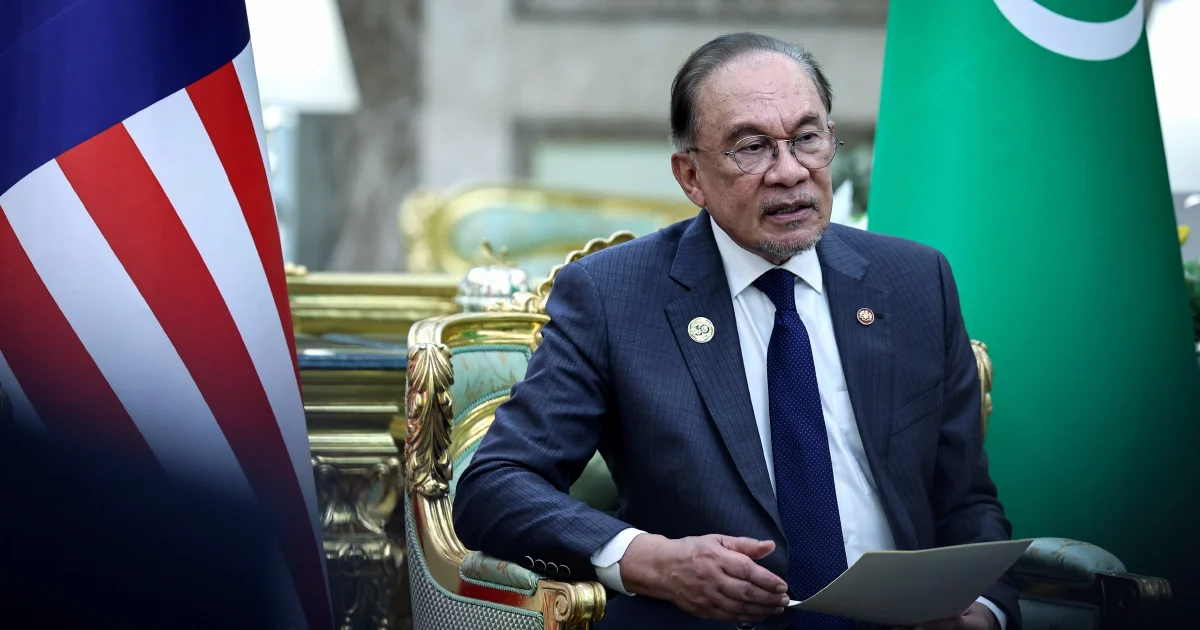
Prime Minister Datuk Seri Anwar Ibrahim has responded positively to emerging reports of an initial agreement between the United States and Iran, characterizing the diplomatic overture as encouraging news with global significance. Speaking at an event in Batu Kawan, Anwar emphasized that any meaningful progress toward de-escalation between these two major powers carries implications far beyond their bilateral relationship, extending throughout the international community and affecting regional stability across Asia.
The Malaysian leader's public endorsement reflects Kuala Lumpur's broader strategic interest in maintaining peaceful corridors for trade and commerce throughout the Middle East and beyond. As Southeast Asia's largest Muslim-majority nation and a significant player in global commerce, Malaysia has long maintained a delicate diplomatic balance in its engagement with major powers and Middle Eastern states. Anwar's statement signals Malaysia's preference for dialogue-based solutions to international disputes rather than confrontation, a principle that has guided Malaysian foreign policy across multiple administrations.
The significance of any US-Iran rapprochement cannot be understated for countries like Malaysia that depend heavily on stable maritime passages and uninterrupted energy supplies. The Strait of Hormuz, through which approximately one-third of the world's seaborne traded oil passes, remains one of the world's most critical chokepoints. Elevated tensions between Washington and Tehran have historically created uncertainty in global energy markets, with potential ripple effects on fuel prices and inflation rates affecting Southeast Asian economies heavily reliant on oil imports.
Anwar's cautious optimism reflects a recognition that preliminary agreements, while positive, often face substantial implementation challenges. The historical record of US-Iran diplomatic initiatives demonstrates the fragility of such arrangements, with previous attempts at nuclear diplomacy proving vulnerable to political changes, domestic pressures, and competing interpretations of agreements. The Prime Minister's emphasis on the durability of any emerging consensus suggests an understanding that sustainable peace requires more than ceremonial breakthrough moments.
For Malaysia specifically, improved US-Iran relations could facilitate more predictable foreign policy environments across multiple domains. The nation's role as a respected voice in the Non-Aligned Movement and its membership in various international forums positions it as a potential mediator and voice of reason in global disputes. Malaysian diplomatic capital in international institutions stands to benefit from continued emphasis on constructive engagement and peaceful resolution of conflicts, themes that Anwar has consistently prioritized since his return to high office.
The Prime Minister's remarks also underscore Malaysia's commitment to upholding international law and multilateral frameworks even while navigating complex great-power rivalries. By publicly welcoming diplomatic breakthroughs, Anwar reinforces Malaysia's positioning as a nation that favors rules-based international order over unilateral actions or coercive measures. This stance carries particular weight given ongoing regional tensions, including disputes in the South China Sea and the broader Indo-Pacific region where Malaysia maintains significant maritime interests.
Energy security considerations loom large in Malaysia's interest in Middle Eastern stability. The country imports substantial quantities of crude oil and liquified natural gas, with price fluctuations directly affecting domestic energy costs and industrial competitiveness. Any agreement reducing geopolitical risk premiums in Middle Eastern oil markets could translate into more stable energy prices, benefiting Malaysian manufacturers and consumers alike. Moreover, Malaysian energy companies maintain significant investments and operations throughout the Middle East, making regional peace a matter of direct commercial concern.
Anwar's welcoming message also reflects the diplomatic tradition of supporting peaceful resolution efforts regardless of the parties involved. Malaysia has historically maintained cordial relations with both the United States and Iran, though with varying intensities depending on the era and administration. This multi-directional engagement allows Malaysia to serve as a bridge between different power centers, a role that requires explicit affirmation of support for constructive diplomacy whenever such opportunities emerge.
The Prime Minister's statement carries domestic political dimensions as well, appealing to Malaysia's Muslim population while avoiding the appearance of taking sides in broader Sunni-Shia dynamics that complicate Middle Eastern geopolitics. By framing the potential agreement as universally positive rather than advantageous to particular actors, Anwar maintains the inclusive tone his administration has sought to establish. This approach reflects recognition that Malaysia's pluralistic society benefits from foreign policies that emphasize common interests over sectarian divisions.
Looking forward, Malaysia may find opportunities to contribute constructively to any peace process through its established diplomatic channels and respected position in Muslim-majority nations. The country's successful hosting of the Asian Pacific Economic Cooperation forum and other international gatherings demonstrates its capacity to facilitate dialogue among diverse stakeholders. Should US-Iran relations continue normalizing, Malaysian mediators and officials could play supporting roles in subsequent negotiations affecting broader regional architecture.
The long-term implications of improved US-Iran relations extend to Southeast Asia's position in evolving global balances of power. A Middle East less consumed by US-Iran tensions could potentially allow Washington greater strategic attention and resources for Indo-Pacific affairs, with both stabilizing and complicating effects on regional dynamics. Malaysia's interest in supporting US-Iran diplomatic progress thus intersects with its own strategic calculations regarding great-power competition in Asia.
Anwar's cautious endorsement also suggests Malaysia's recognition that sustainable peace requires patience, good faith, and commitment to implementation from all parties. The Prime Minister's emphasis on lasting rather than merely initial agreements indicates awareness that breakthrough moments frequently encounter obstacles during execution phases. By publicly supporting ongoing efforts toward comprehensive resolution, Anwar positions Malaysia as a consistent advocate for dialogue-based solutions, potentially enhancing the nation's diplomatic credibility in future regional and global disputes.
Ultimately, Malaysia's welcoming response to US-Iran diplomatic progress reflects a calculated national interest in global stability and predictable international order. As the region's economies become increasingly integrated with global markets and supply chains, the geopolitical temperature of distant regions directly impacts Southeast Asian prosperity and security. Anwar's statement therefore represents both a principled commitment to peaceful resolution of international disputes and a pragmatic recognition that Malaysia's own interests are best served in a world characterized by reduced tensions among major powers.

