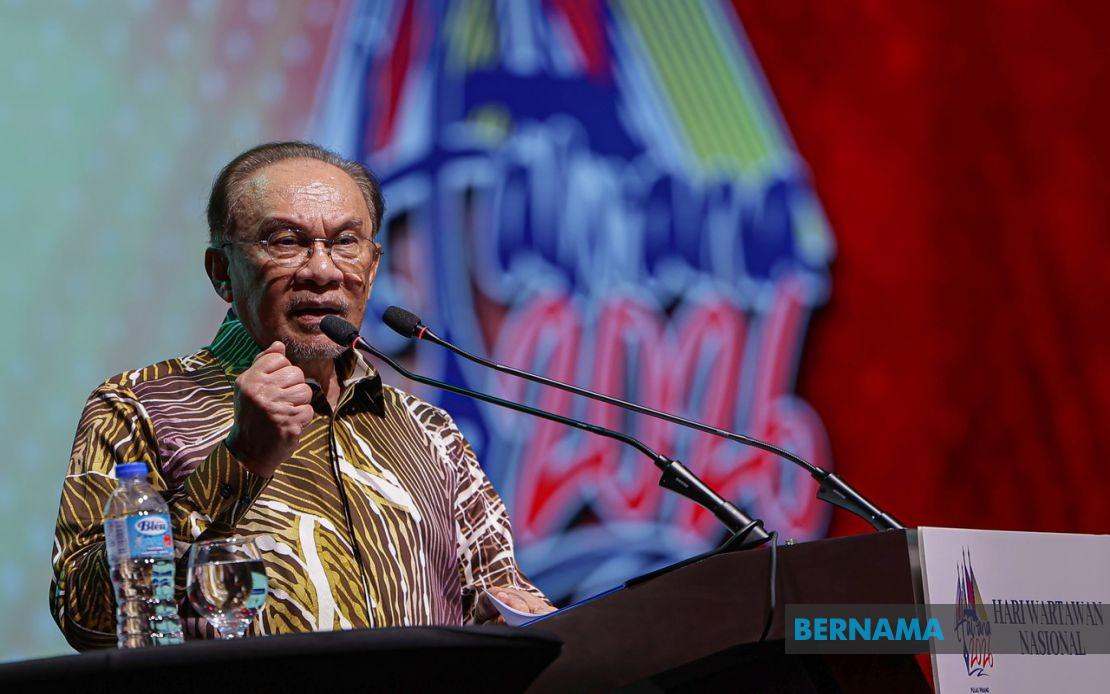
Prime Minister Datuk Seri Anwar Ibrahim has publicly endorsed the appointment of former Federal Court judge Tan Sri Nallini Pathmanathan as chairman of the Malaysian Media Council, saying her distinguished judicial background will enhance the body's credibility and restore public trust. Speaking at the National Journalists' Day (HAWANA) 2026 celebrations in Butterworth on June 20, Anwar highlighted Nallini's integrity and track record as decisive factors in the selection process, which he emphasised followed careful deliberation by the government. The backing from Malaysia's top political leader signals strong executive commitment to positioning the MMC as a credible and independent institution capable of balancing journalistic freedom with ethical accountability.
The appointment of Nallini represents a calculated move to address lingering perceptions about the independence and effectiveness of Malaysia's media regulatory apparatus. Her transition from the bench to leadership of the MMC carries symbolic weight in the context of ongoing efforts to strengthen democratic institutions and public sector credibility. The Prime Minister's explicit endorsement underscores the government's investment in the council's legitimacy, a particularly important signal given recent global scrutiny of media freedom in Southeast Asia and Malaysia's own experience with polarisation and misinformation. By elevating someone with her judicial standing, policymakers are attempting to demonstrate that regulatory authority over the press rests with qualified, impartial figures rather than political appointees.
Nallini's appointment was formally ratified by the MMC board during a meeting held on May 26, when members unanimously supported her selection. This unanimity suggests broad consensus among industry stakeholders and governing council participants regarding her suitability for the role. Her background in the Federal Court positions her with experience in interpreting complex constitutional matters, a skill directly relevant to adjudicating disputes involving media conduct, press freedom, and public interest concerns. The legal expertise she brings could potentially elevate the sophistication with which the MMC handles complaints and develops regulatory guidance for the journalism sector.
Established under the Malaysian Media Council Act 2025, the MMC operates as a self-regulatory body with statutory authority to address key functions including the development and enforcement of journalistic standards, investigation of public complaints related to media conduct, promotion of ethical practices within news organisations, and protection of media freedom as a cornerstone of democratic governance. The framework reflects Malaysia's broader institutional evolution and growing recognition that democratic health depends on robust but fair oversight of public discourse. For Malaysian readers, the MMC's mandate carries direct relevance to their daily engagement with news, affecting everything from how misinformation is addressed to how ethical boundaries are defined for journalistic investigation and reporting.
The political gathering included prominent attendees such as Penang Chief Minister Chow Kon Yeow and Communications Minister Datuk Fahmi Fadzil, reflecting the importance attached to the event and the media council initiative at federal and state levels. The presence of senior Communications Ministry officials, including secretary-general Datuk Abdul Halim Hamzah and deputy secretary-general Datuk Bahria Mohd Tamil, demonstrated alignment across government structures on the MMC's strategic significance. Malaysian National News Agency (Bernama) leadership, including chairman Datuk Seri Wong Chun Wai and Chief Executive Officer Datin Paduka Nur-ul Afida Kamaludin, were also in attendance, indicating support from the state news agency for the council's institutional framework and Nallini's elevation.
The timing of Nallini's appointment during the HAWANA 2026 celebrations carries particular resonance for Malaysia's journalism community. By honouring journalists' professional contributions during an event that simultaneously announces the media council's new leadership, the government signals an intent to view regulation and professional recognition as complementary rather than adversarial. Nallini's appointment offers an implicit reassurance to newsrooms that regulatory oversight will be exercised by someone with judicial experience in balancing competing interests and constitutional considerations rather than through overtly political mechanisms. For Southeast Asian observers, the move illustrates Malaysia's continued investment in institutional frameworks for managing press-state relations during a period of broader democratic experimentation across the region.
The emphasis placed on Nallini's personal credentials—her judicial background, professional integrity, and public standing—reflects a deliberate strategy to address legitimacy concerns that media councils face globally. Self-regulatory bodies often encounter scepticism from journalists and civil society advocates who question whether they truly function independently or serve as disguised instruments of state control. By appointing someone with her profile, Malaysian authorities are attempting to preempt such criticism and establish a firewall of professional credibility around the council's operations. This approach mirrors international best practices where media councils draw leadership from respected legal, academic, or journalistic figures rather than government officials.
Looking forward, Nallini's tenure will likely be scrutinised by press freedom advocates, industry participants, and international observers monitoring Malaysia's democratic trajectory. The effectiveness of her leadership will be judged not merely by her personal integrity but by concrete outcomes including the MMC's responsiveness to legitimate complaints, its fairness in addressing industry disputes, and its ability to mediate between press freedom protections and ethical journalism standards. Malaysian readers have a direct stake in these outcomes, as the MMC's work will influence both the quality and accountability of news they consume daily. The council's performance under her leadership could significantly shape public confidence in both journalism and regulatory institutions.
For Malaysian media organisations and journalists, the appointment presents both opportunity and accountability. The MMC's statutory foundation and Nallini's judicial background suggest a more legalistic, procedurally rigorous approach to complaint handling and standards-setting compared to previous arrangements. News organisations may need to invest more substantially in compliance infrastructure and editorial protocols to align with standards likely to emerge under more stringent regulatory attention. Simultaneously, the council's explicit statutory mandate to safeguard media freedom offers journalists and publishers a champion for their interests at the regulatory level, potentially providing institutional recourse when governmental or corporate pressures threaten editorial independence.
The broader context for Nallini's appointment extends to Malaysia's positioning within the Southeast Asian media landscape and among global democracies. As Thailand, Myanmar, and other regional neighbours grapple with press freedom challenges, Malaysia's investment in institutional safeguards for media independence—even within a self-regulatory model—distinguishes its approach. The MMC framework and Nallini's leadership represent an attempt to demonstrate that Malaysia views media regulation as compatible with democratic values when conducted transparently and with professional governance. This positioning carries implications for Malaysia's international standing and for how foreign investors, journalists, and civil society actors assess the country's commitment to institutional pluralism and rule of law.
Prime Minister Anwar's public endorsement also reflects his broader governance philosophy emphasising institutional strengthening, professional competence, and public-sector credibility recovery. Throughout his tenure, he has prioritised appointments that prioritise merit and professional qualification, and the selection of Nallini exemplifies this pattern. Her appointment sends a message to the broader public sector that advancement and leadership appointments will increasingly be based on demonstrated capability rather than political patronage. This institutional-building approach, if consistently applied, could gradually rebuild public confidence in government agencies and regulatory bodies, an outcome particularly valuable given public scepticism following years of governance challenges.
The MMC's institutional role in protecting media freedom deserves particular attention for Malaysian readers given the global retreat of press freedom in recent years. By establishing a formal, statutory body dedicated explicitly to safeguarding journalism as a democratic function, Malaysia has signalled that media freedom is not merely an aspiration but an institutionalised priority warranting dedicated oversight and advocacy. While self-regulatory models have critics who question their independence, the legal framework and Nallini's professional standing suggest Malaysia is attempting to create a meaningfully independent alternative to either state control or unregulated market dynamics. Over time, the council's actual performance will determine whether this institutional architecture translates into genuine protection for journalistic work and public discourse.

