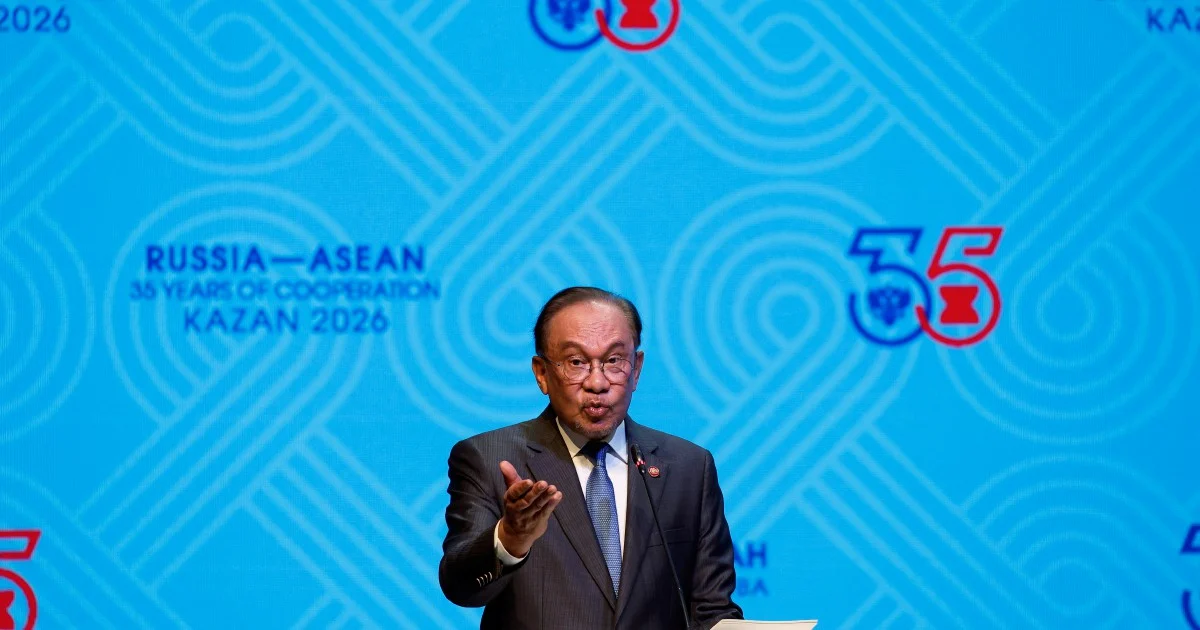
Prime Minister Datuk Seri Anwar Ibrahim has characterised the completion of the Asean-Russia Strategic Programme on Trade and Investment Cooperation 2026-2035 as a significant milestone that could reshape economic engagement between the region and Moscow over the coming years. Speaking in Kazan, Anwar framed the finalised blueprint as offering genuine momentum rather than mere diplomatic rhetoric, suggesting the ten-year roadmap provides concrete opportunities for deepening commercial and investment relationships between Southeast Asian economies and Russia.
The strategic programme represents years of negotiation between the ten-member Asean bloc and the Russian Federation, culminating in a comprehensive framework designed to guide bilateral and multilateral economic interactions through to 2035. For Malaysia and other regional members, the agreement potentially unlocks new sectors for collaboration and provides a structured pathway for trade expansion beyond traditional channels that have sometimes been constrained by geopolitical considerations and international sanctions regimes.
However, Anwar's cautious optimism reflects a mature understanding of the gap between agreement and implementation. The Prime Minister stressed that finalising the document alone does not guarantee success; rather, achieving the roadmap's objectives demands what he termed an "enabling environment"—a diplomatic formulation encompassing political will, regulatory alignment, and freedom from external pressures that might discourage genuine commercial exchange between the parties.
Southeast Asia's relationship with Russia has become increasingly complex in recent years. While traditional ties remain, regional governments have sought to balance relations with Moscow against broader international concerns and partnerships. The completion of this strategic programme suggests Asean is attempting to establish deeper economic moorings that could provide stability and mutual benefit regardless of the fluctuating geopolitical climate. For countries like Malaysia, which maintains diverse international relationships and has historically avoided rigid alignment, the framework offers flexibility in pursuing economic interests.
The 2026-2035 timeframe is deliberately long-term, reflecting confidence in the partnership's durability even amid current uncertainties. This decade-long vision contrasts with shorter-term agreements and suggests both sides anticipate substantive economic activity. Key sectors likely to benefit include energy, agriculture, technology, and manufacturing, areas where Asean economies possess competitive advantages and where Russian resources or expertise complement regional capabilities.
Anwar's emphasis on the need for an enabling environment addresses a practical reality: international sanctions, supply chain disruptions, and political tensions can severely hamper trade even when formal agreements exist. The Prime Minister's statement implicitly acknowledges that external actors and circumstances beyond the signatories' direct control can constrain implementation. Creating the necessary conditions requires not only commitment from Asean and Russia but also the absence of prohibitive barriers from third parties.
For Malaysia specifically, deepening Russia ties through this framework could diversify economic partnerships and reduce dependence on traditional Western markets during a period of reshaping global commerce. However, Kuala Lumpur must navigate carefully, ensuring that enhanced Russia engagement does not provoke backlash from other partners or compromise its standing in international institutions and agreements to which it remains committed.
The roadmap's emphasis on trade and investment cooperation suggests both sides recognise that sustained economic interdependence creates incentives for peaceful coexistence and cooperation on other issues. This reflects a calculated investment in building bridges through commerce, a strategy that has historically proven resilient even when political relations face strain.
Implementation mechanisms will prove crucial to transforming this framework into tangible outcomes. Specific initiatives such as joint chambers of commerce, harmonised standards, streamlined customs procedures, and joint ventures in priority sectors will determine whether the roadmap becomes a template for genuine expansion or remains largely aspirational. The success of smaller initiatives could build momentum and confidence for larger collaborative projects.
Asean as a bloc brings considerable economic heft and strategic positioning to this partnership. Russia's interest in formalising ties with the entire region rather than pursuing bilateral relationships individually suggests Moscow recognises the value of engaging with Southeast Asia as an economic and political force. This collective approach could provide individual Asean members with greater leverage in negotiations and implementation discussions.
Anwar's characterisation of the roadmap as a "shot in the arm" for economic progress captures both the genuine opportunity it represents and the recognition that much work remains. The framework provides a foundation, but building upon it requires sustained diplomatic effort, clear operational planning, and political protection from attempts to derail cooperation. For Southeast Asian leaders, balancing engagement with Russia against other international relationships will remain a delicate exercise requiring sophisticated diplomacy and strategic thinking.
Moving forward, the practical test of this partnership will emerge not from signing ceremonies but from boardrooms, trade missions, and investment flows over the coming months and years. Asean and Russia now possess the strategic blueprint; converting it into economic reality will demand the enabling environment Anwar emphasised and a shared commitment to turning mutual interests into mutual gains.