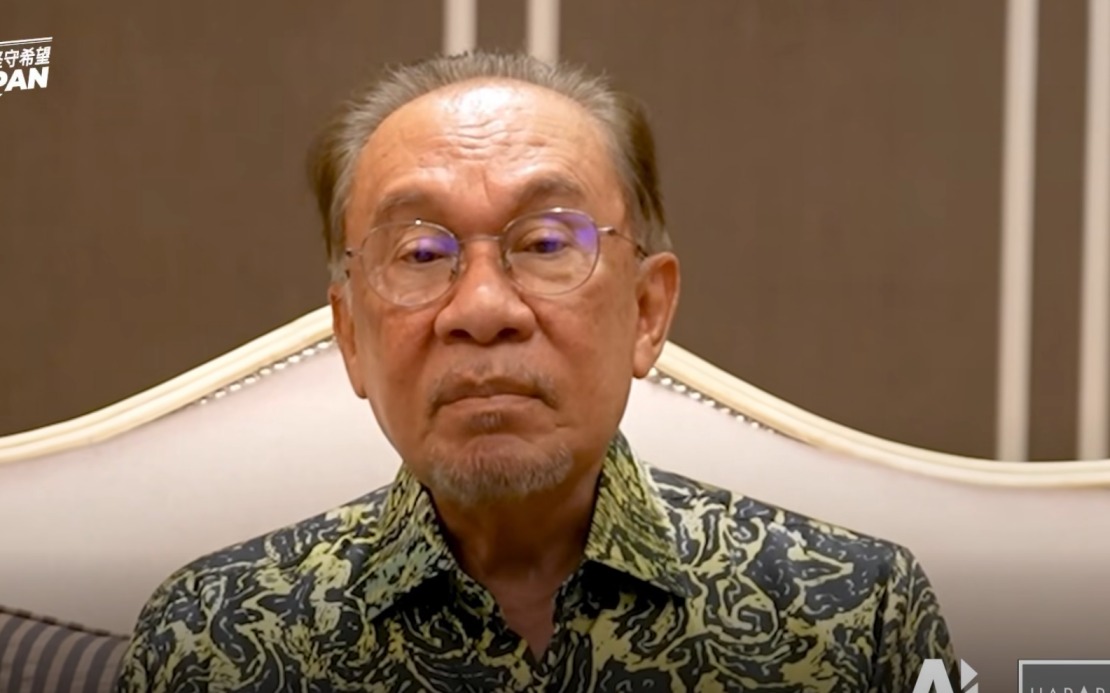
Prime Minister Datuk Seri Anwar Ibrahim has made a direct appeal to military and police personnel, along with their family members, to support the Pakatan Harapan candidate in Tuesday's early voting for the 16th Negeri Sembilan State Election. Speaking through a Facebook video released from Seremban, the PH chairman framed the election as an opportunity for security forces to endorse the government's stewardship of their welfare and professional interests.
Anwar's messaging centred on the administration's record of prioritising defence and law enforcement personnel through targeted policy initiatives. He highlighted efforts across multiple dimensions affecting the daily lives of military and police staff, including salary improvements, access to basic amenities, housing provisions, and educational opportunities for their children. The Prime Minister also referenced two significant government assistance programmes—Sumbangan Tunai Rahmah and Sumbangan Asas Rahmah—framing these as evidence of the coalition's commitment to broader social support.
The appeal comes at a strategically important moment for Pakatan Harapan, as the Negeri Sembilan contest serves as a significant test of the coalition's electoral standing ahead of the general election cycle. Security personnel represent a concentrated voting bloc with shared interests, and their support carries both symbolic and practical significance for any governing administration. By directly addressing this demographic, Anwar signalled that the government views defence and law enforcement votes as competitive and worth actively courting.
Anwar's language throughout the video emphasised reciprocal obligation—the government has invested in security sector welfare, and personnel should reciprocate through electoral support. He framed continued PH governance not merely as maintenance of existing benefits but as a pathway to further improvements. The phrase "give us the opportunity to continue serving" positioned the election as a mandate renewal rather than a judgment on past performance, subtly suggesting that alternative outcomes might jeopardise ongoing welfare enhancements.
The welfare agenda outlined by Anwar reflects longstanding pressures within Malaysia's defence and police establishments regarding remuneration and working conditions. Personnel salaries have remained contentious issues, with successive governments facing pressure to improve compensation packages relative to private sector alternatives. Housing shortages and inadequate family support infrastructure have similarly generated grievances within these organisations. By directly addressing these concerns in an election context, Anwar acknowledged their political salience while attempting to position his government as the more reliable guardian of security sector interests.
The scale of early voting among security forces underscores their electoral weight in the Negeri Sembilan contest. A combined total of 22,339 military and police personnel, plus spouses, will participate in early voting across 38 designated centres throughout the state. This concentrated early voting mechanism reflects practical realities of security sector deployment patterns but also creates a distinct voting cohort whose preferences can be tracked and analysed separately from general election results. The military figure of 16,884 voters substantially exceeds the police contingent of 5,455, suggesting armed forces personnel constitute the larger segment of this strategic electorate.
The timing of the appeal, occurring days before early voting commenced, allowed the government to reach security personnel through formal messaging channels while their attention was directed toward the electoral process. Social media distribution via Facebook enabled direct communication without filtering by traditional media, a strategy increasingly common in Malaysian political campaigns. The video format permitted Anwar to present his message in personal terms, emphasising emotional connection to security sector concerns alongside policy achievements.
For Negeri Sembilan specifically, the election outcome carries implications for state-level governance and resource allocation. However, the broader significance extends to national political dynamics. Negeri Sembilan occupies a strategically middling position within Malaysia's electoral geography—neither a PH stronghold nor particularly competitive, rendering its results as a barometer of coalition performance without being determinative. Security personnel voting patterns in this state could offer insights into whether targeted welfare messaging resonates within these constituencies or whether other considerations—such as party affiliation, local issues, or professional grievances—dominate their electoral calculus.
The government's emphasis on welfare initiatives also reflects international trends in democratic societies, where state security establishments increasingly emerge as interest groups competing for resources and recognition. In Malaysia's context, where civil-military relations historically maintained particular characteristics shaped by constitutional arrangements and institutional traditions, explicit political appeals to defence and police personnel represent a contemporary evolution of engagement strategies. Whether such appeals prove effective depends partly on whether personnel perceive government messaging as credible given actual experiences with implementation of promised benefits.
Opposition parties contesting the Negeri Sembilan election face pressure to articulate counterpositions on security sector welfare, either through alternative benefit proposals or through appeals emphasising professional autonomy and institutional independence. The PH strategy of emphasising government responsibility for personnel welfare potentially frames opposition candidates as threatening to existing or promised benefits, a powerful framing in electoral contexts where personnel fear regression in living standards or working conditions.
The Negeri Sembilan election itself will occur on August 1, with full results revealing whether early voting patterns among security personnel align with broader electoral preferences. Early voting outcomes historically provide preliminary indicators of election trajectories, though they do not necessarily predict final results. The concentration of military and police voters in early voting creates a distinctive subset of the total electorate that can be distinguished analytically from general voting populations.
Anwar's appeal ultimately represents a calculated political investment in a constituency whose electoral behaviour carries both immediate significance for the Negeri Sembilan outcome and broader implications for understanding security sector political engagement in contemporary Malaysia. Whether such direct appeals to professional self-interest prove decisive or whether other factors outweigh welfare considerations remains a question that election results and subsequent analysis will illuminate.

