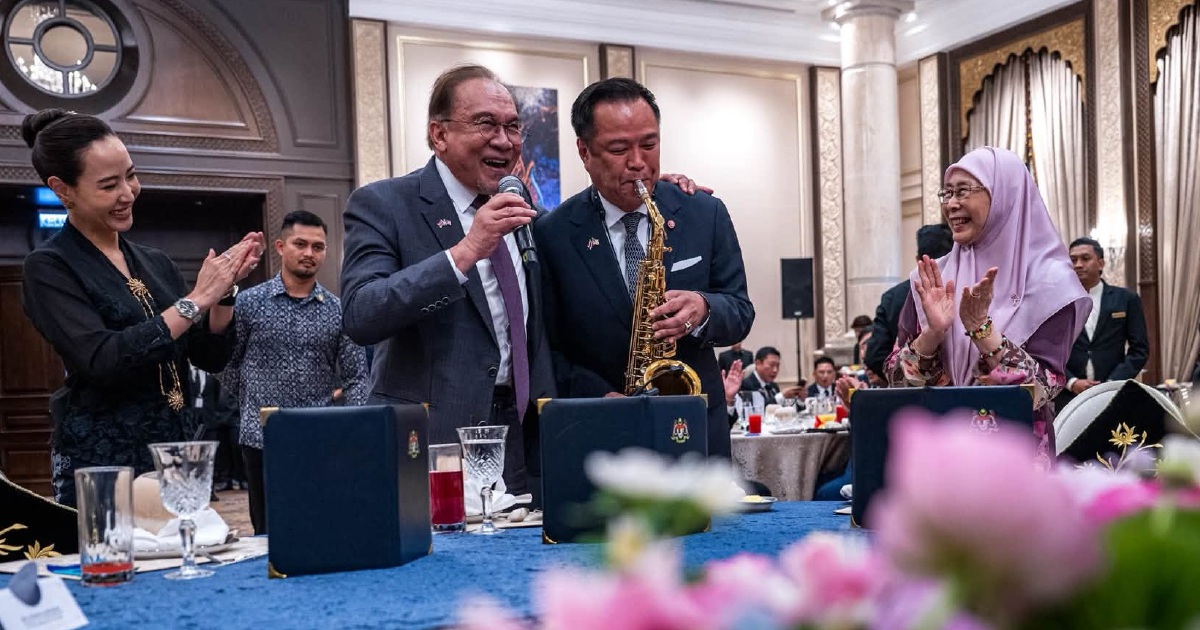
Malaysia's Prime Minister Datuk Seri Anwar Ibrahim and Thailand's counterpart Anutin Charnvirakul set aside the formality of high-level diplomatic negotiations to share an impromptu moment of levity at an official luncheon in Putrajaya. The two leaders performed Frank Sinatra's classic "My Way" together, with Anwar taking the vocal lead while Anutin provided musical accompaniment on the saxophone, creating an unexpectedly intimate scene during what was otherwise a structured state visit.
The spontaneous performance unfolded after the pair had concluded their formal bilateral talks, suggesting a degree of personal rapport and ease between the two Southeast Asian leaders. Such moments, though informal by nature, carry diplomatic significance in the region's political context. They humanise leadership figures and demonstrate a willingness to step beyond rigid protocol, potentially signalling strengthened working relationships that extend beyond the conventional boardroom setting of government negotiations.
The selection of "My Way" holds particular resonance given the song's themes of independence, dignity, and personal conviction—values that have characterised both leaders' political trajectories. Anwar's journey through Malaysian politics has been marked by periods of adversity and resilience, while Anutin has navigated Thailand's complex political landscape with his own brand of pragmatism. The choice, whether deliberate or spontaneous, offered a symbolic touchstone for two politicians who have each faced substantial challenges in their respective careers.
Thailand-Malaysia bilateral relations encompass critical areas including trade, security, border management, and regional cooperation within ASEAN frameworks. The personal chemistry demonstrated between leaders can facilitate smoother negotiations on these substantive issues. When government heads develop personal connections, bureaucratic processes often become more fluid, and diplomatic channels tend to remain open even during disagreements. The Putrajaya luncheon moment suggested that despite any differences in policy or approach, both leaders value constructive engagement.
Anutin's presence in Kuala Lumpur represented a continuation of high-level Thai-Malaysian diplomatic engagement that has intensified in recent years. Thailand, as one of Malaysia's closest neighbours and major trading partners, remains central to regional stability and prosperity. The bilateral relationship encompasses complex issues including maritime boundaries, irregular migration patterns, and joint security operations in shared border regions. Against this backdrop of substantive concerns, the lighter moment at the luncheon provided welcome relief and reinforced the positive tone both governments seek to maintain.
The saxophone performance by Anutin added a distinctive personal element to the engagement. Few senior Thai political figures maintain such obvious cultural pursuits, making his musical contribution noteworthy. In Southeast Asian diplomatic tradition, such displays of cultural dimension—whether through music, cuisine, or ceremony—strengthen the perception of mutual understanding between nations. They demonstrate that leaders are not merely representatives of state apparatus but individuals with depth and dimension, capable of appreciating shared human experiences and artistic expression.
Social media amplification of such moments reflects broader trends in how contemporary diplomacy operates. State visits were once reported through sparse official communiques; today, visual documentation and immediate distribution shape international perception of bilateral relationships. The decision to allow cameras to capture Anwar and Anutin's musical moment, rather than confining it to behind-closed-doors informality, indicates both governments recognise the value of projecting warmth and collaborative spirit to their respective publics and the broader international audience.
For Malaysian observers, the image of their Prime Minister engaging comfortably in cultural expression during international engagements reinforces perceptions of Malaysia as an open, confident nation in regional affairs. Thailand's similar openness to such informal displays strengthens the narrative of both countries as sophisticated regional powers capable of balancing formality with genuine human connection. These perceptions matter in shaping how nations are viewed within the complex web of Southeast Asian international relations.
The Frank Sinatra classic itself carries universal appeal across generations and cultures in the region, making it an apt choice for cross-cultural diplomatic moments. Unlike music that carries specific national or cultural associations, "My Way" operates as genuinely international repertoire—recognised, appreciated, and beloved across borders in Southeast Asia and beyond. This neutrality, paradoxically, made it an ideal vehicle for bilateral rapprochement.
Looking forward, such personal rapport between national leaders frequently translates into substantive policy outcomes. When senior figures maintain comfortable working relationships, discussions around contentious issues—whether involving border disputes, economic competition, or security concerns—tend to occur within frameworks of mutual respect rather than adversarial positioning. The Putrajaya luncheon performance thus represented more than mere theatre; it functioned as a micro-diplomatic moment reinforcing the institutional relationship between Malaysia and Thailand at a crucial moment in Southeast Asian geopolitics.
The incident also reflects how regional leadership is gradually evolving. Contemporary ASEAN leaders, particularly those facing complex domestic challenges and evolving international circumstances, increasingly recognise that effective diplomacy requires both professional competence and personal authenticity. The willingness of Anwar and Anutin to step outside ceremonial constraints and share a genuine moment of musical expression demonstrates that modern statesmanship encompasses dimensions beyond policy papers and formal statements, enriching bilateral relationships and contributing to regional stability through the simple, powerful medium of shared human experience.

