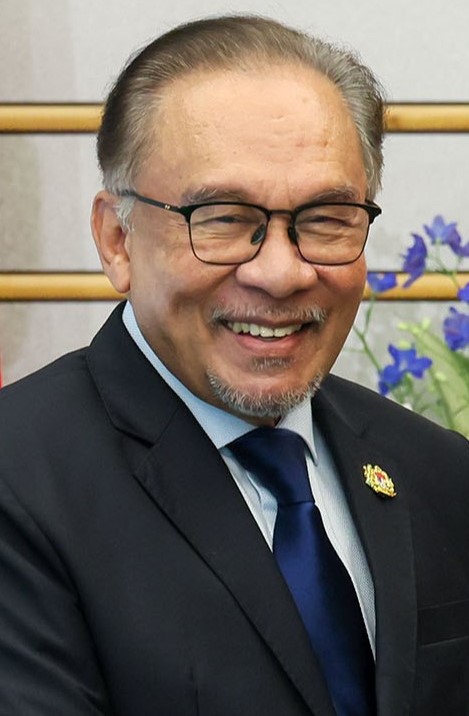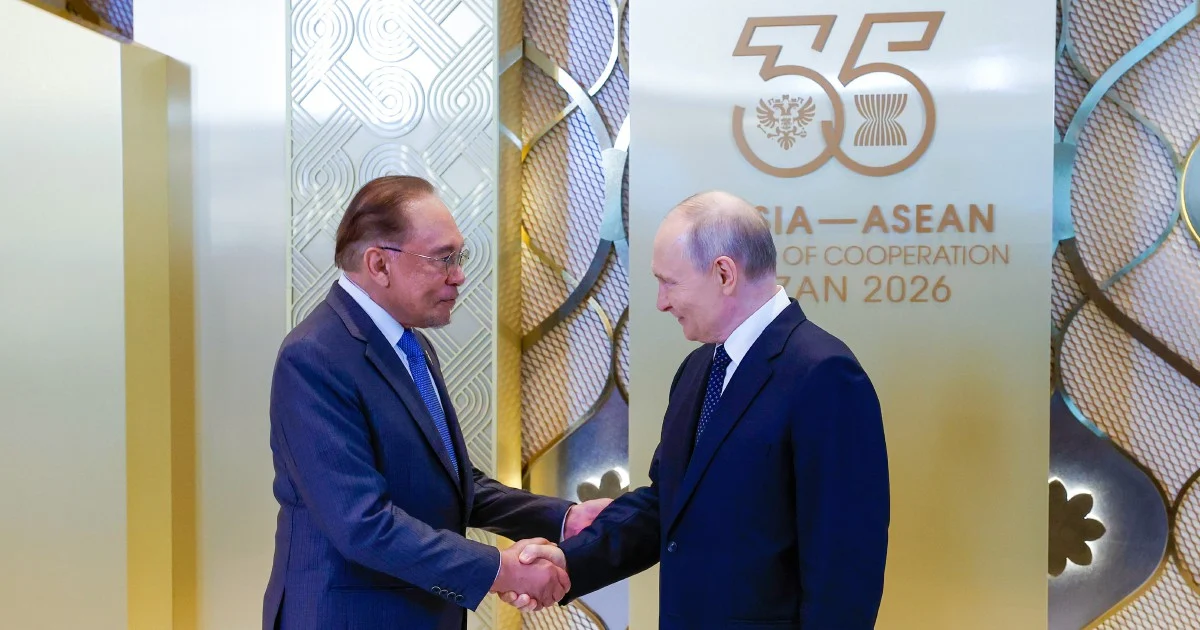
Prime Minister Datuk Seri Anwar Ibrahim and Russian President Vladimir Putin convened in Kazan to explore avenues for strengthening the bilateral partnership between Malaysia and Russia, with energy security emerging as a central pillar of their discussion. The meeting underscored both nations' commitment to advancing cooperation across multiple sectors at a time when global energy markets face significant volatility and geopolitical pressures. This engagement reflects Malaysia's broader strategic positioning in Southeast Asia as a nation seeking diverse international partnerships while maintaining its role as a stabilising force in the region.
Energy cooperation formed the substantive core of the bilateral conversation, addressing mutual interests in securing reliable supply chains and developing long-term partnerships in the hydrocarbon sector. For Malaysia, discussions with Russia on energy security carry particular weight given the country's position as a major Southeast Asian economy with significant energy demands and a growing emphasis on energy transition. Russia, confronting Western sanctions and seeking alternative markets, views its relationship with Asian partners like Malaysia as increasingly valuable for economic diversification and sustained revenue generation from energy exports.
The two leaders also emphasised the potential for expanding trade volumes between their nations, recognising that existing commercial ties remain below their potential capacity. Trade expansion discussions likely encompassed not only energy products but also palm oil, electronics, manufactured goods, and other sectors where Malaysia maintains competitive advantages. Enhanced bilateral trade contributes to Malaysia's broader economic strategy of reducing dependence on any single market and building resilient supply chains across diverse geographical regions, a lesson underscored by recent global supply chain disruptions.
A particularly noteworthy element of their conversation centred on using local currencies—the Malaysian ringgit and Russian rouble—for bilateral transactions rather than relying exclusively on the United States dollar. This approach reflects a broader global trend among nations seeking to reduce their dependence on dollar-denominated trade and insulate themselves from the extraterritorial reach of American sanctions regimes. For Malaysia, a Muslim-majority nation with significant Islamic finance infrastructure, currency arrangements that enable greater autonomy in international transactions align with national economic sovereignty objectives and provide practical advantages in managing exchange rate volatility.
The local currency settlement mechanism carries symbolic significance beyond its purely transactional function. It signals both nations' commitment to deepening ties and their willingness to develop alternative financial infrastructures that reflect their shared interests in a multipolar economic order. This approach has gained traction across the Global South and among nations seeking to challenge the hegemony of Western-dominated financial systems. For Malaysian policymakers and business stakeholders, such arrangements create opportunities for reduced transaction costs and greater certainty in cross-border commerce, particularly valuable for small and medium-sized enterprises navigating international markets.
Malaysia's engagement with Russia occurs within the context of the country's established foreign policy framework emphasising non-aligned positioning and pragmatic bilateral relationships. Despite Russia's ongoing geopolitical tensions with Western nations, Malaysia has historically maintained balanced diplomatic ties with both Eastern and Western powers, neither endorsing nor condemning Russia's actions unequivocally. This balanced approach reflects Malaysia's assessment that its economic and security interests are best served through maintaining multiple diplomatic channels and avoiding alignment with any single power bloc.
The timing of this summit also reflects Russia's strategic outreach to Asian and developing economies as it navigates international isolation from Western nations. Kazan, located in the Volga region, hosts the BRICS summit and serves as a venue for Russia to project influence and strengthen ties with emerging market economies. Malaysia's participation in such high-level engagements demonstrates the country's recognised standing among global middle powers and its role as a voice for Southeast Asian interests in broader international forums.
For Southeast Asia more broadly, Malaysia-Russia engagement on energy and trade represents a microcosm of the region's growing economic diversification. As the region seeks to develop alternative partnerships beyond traditional Western relationships, nations like Malaysia are cultivating ties that enhance economic resilience and provide leverage in international negotiations. Energy security discussions are particularly relevant for Southeast Asian nations, many of which face questions about long-term energy sustainability and the balance between fossil fuel reliance and renewable energy transition.
The emphasis on strengthening bilateral cooperation also touches on Malaysia's broader regional leadership ambitions within ASEAN. As a middle power with economic heft and diplomatic credibility, Malaysia's ability to forge strategic partnerships with major global actors like Russia enhances its capacity to advocate for Southeast Asian interests in multilateral forums and bilateral negotiations. This positioning becomes increasingly important as the Indo-Pacific region witnesses intensifying great power competition and as ASEAN members navigate their relationships with the United States, China, Russia, and other major powers.
Looking forward, the outcomes of this Anwar-Putin summit will likely translate into concrete initiatives in energy cooperation, expanded trade mechanisms, and possibly official agreements on currency arrangements. For Malaysian businesses, particularly those in energy, commodities, and manufacturing sectors, such high-level political backing creates enabling conditions for commercial expansion into Russian markets and facilitates Russian investor interest in Malaysian opportunities. The diplomatic foundation laid during this meeting establishes the framework within which bilateral economic relationships can deepen and evolve in coming years.
Moreover, this engagement demonstrates how Malaysia continues to exercise strategic autonomy in its foreign policy despite pressures to align more closely with particular blocs in the ongoing great power competition. By maintaining substantive relationships with diverse partners ranging from Western democracies to Russia to China, Malaysia preserves policy flexibility and maximises opportunities for beneficial partnerships. This pragmatic approach, characteristic of Malaysian diplomacy for decades, remains relevant in an era of intensifying international competition and shifting global economic structures. The Anwar-Putin discussions exemplify how Southeast Asian nations can engage responsibly with all major powers while prioritising their own developmental and security interests.