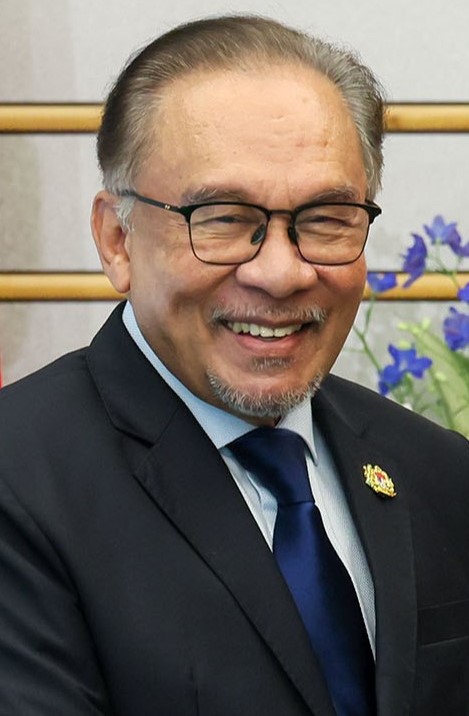
Prime Minister Anwar Ibrahim has moved to consolidate ties with Johor's leadership through a high-level meeting with the state's regent in Kuala Lumpur, signalling the federal government's determination to sustain cooperative relations with one of Malaysia's most influential states. The audience, arranged at the prime minister's initiative, underscores the importance Putrajaya places on maintaining political alignment with Johor, which holds considerable economic and strategic weight in the federation.
The meeting between Anwar and the Johor regent reflects a broader pattern of federal-state engagement that has become increasingly significant in Malaysian governance. With Malaysia's Westminster-derived system allocating substantial autonomy to state governments on matters including land, Islamic affairs, and local development, the relationship between federal and state administrations carries profound implications for policy implementation and national cohesion. Johor, as the nation's second-largest state by population and a major economic contributor through its manufacturing, agriculture, and tourism sectors, represents a crucial partner in achieving federal development objectives.
The emphasis placed by both parties on preserving good relations suggests underlying awareness of potential friction points between federal and state priorities. While Malaysia's constitutional framework provides mechanisms for centre-state coordination, tensions occasionally emerge over resource allocation, administrative jurisdiction, and political representation. The proactive engagement by the prime minister's office demonstrates commitment to preventing such tensions from undermining the effectiveness of governance across both levels.
From a Malaysian political perspective, this meeting carries significance beyond routine diplomatic courtesy. The strength of federal-state relations influences economic development trajectories, infrastructure investment decisions, and the implementation of national policies at the grassroots level. When these relationships function smoothly, state governments can effectively serve as implementation partners for federal initiatives while pursuing their own development agendas. Conversely, friction between these tiers creates inefficiencies and can delay critical projects affecting ordinary Malaysians.
Johor's position as a gateway state bordering Singapore adds an additional dimension to the importance of federal-state cooperation. Trade flows, border security, cross-border infrastructure projects, and economic integration with Singapore all require seamless coordination between federal agencies and the Johor state government. The regent's role as constitutional head of state and custodian of Johor's interests makes the regent's office a vital channel for such coordination.
The timing of this audience may also reflect calculations about political dynamics within Johor. The state has witnessed electoral competition between different political coalitions, and maintaining institutional relationships at the highest levels helps ensure continuity of governance regardless of electoral outcomes. This institutional approach to centre-state relations reduces the volatility that can occur when personal political rivalries dominate interactions between federal and state leadership.
For Southeast Asian observers, Malaysia's approach to federal-state relations offers lessons in managing political pluralism within a constitutional monarchy. Unlike unitary states, Malaysia's federal structure requires constant negotiation between different power centres. The willingness of federal leadership to proactively engage state rulers demonstrates recognition that governance legitimacy depends on respecting constitutional roles and maintaining institutional respect across different governmental tiers.
The meeting also reflects practical considerations affecting Malaysian citizens. Federal programmes addressing healthcare, education, transportation infrastructure, and social welfare all require state government cooperation for effective delivery. When federal and state administrations work in concert, Malaysians experience smoother access to services and more coordinated development initiatives. Conversely, administrative friction at the state-federal interface often translates into bureaucratic delays affecting ordinary people.
Looking forward, the consolidation of federal-state relations through such high-level meetings establishes foundations for tackling shared challenges. Issues including flood management, environmental protection, economic diversification, and human capital development benefit significantly from integrated planning and resource coordination between federal and state authorities. Johor's specific challenges, including managing rapid urbanization in the Klang Valley's expansion and maintaining agricultural productivity, exemplify areas requiring sustained federal-state collaboration.
The commitment to preserving good relations also carries implications for Malaysia's broader regional positioning. States like Johor that engage productively with federal structures enhance national coherence and project stability to international partners and investors. Economic confidence in Malaysia partly depends on perceptions of stable, functional governance, and visible cooperation between federal and state leadership reinforces such perceptions.
Moreover, this engagement demonstrates how Malaysian governance institutions can accommodate diverse political interests while maintaining functional unity. The Johor regent, positioned above partisan politics as constitutional head of state, provides a channel through which federal leadership can engage substantive state interests without necessarily framing discussions in party-political terms. This institutional mechanism enables productive dialogue even when different political coalitions control different tiers of government.
As Malaysia navigates complex challenges including economic transformation, climate adaptation, and social cohesion, the quality of federal-state cooperation will significantly influence outcomes. The proactive engagement demonstrated by this meeting suggests that the federal government recognizes this reality and views investment in these relationships as essential to effective national governance. For Malaysians dependent on state and federal services, such institutional commitment to cooperative relations ultimately translates into more effective delivery and better outcomes.