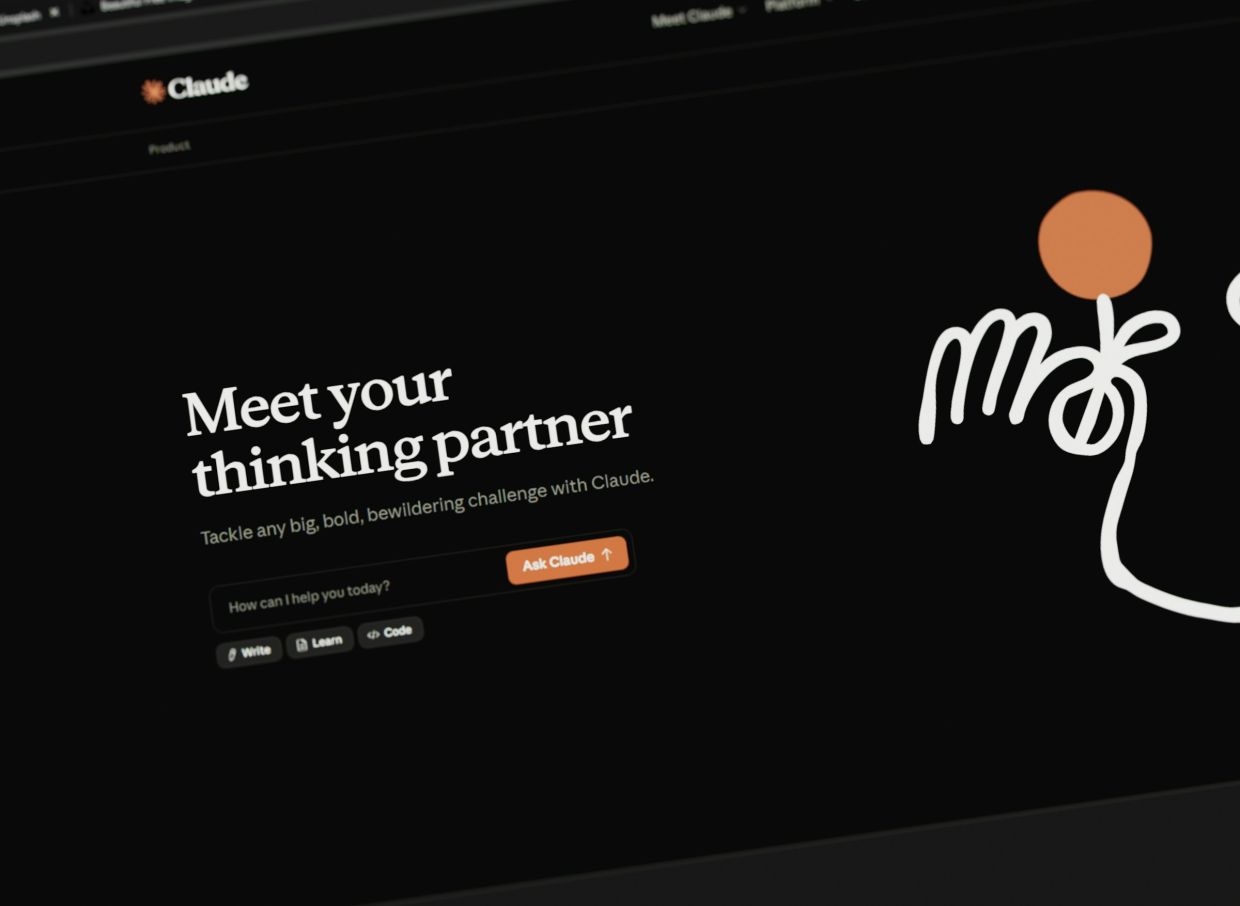
Anthropic, the San Francisco-based artificial intelligence firm now valued at US$965 billion (RM4 trillion), is expanding Claude's presence in workplace communication platforms through a significant new offering unveiled on June 23. The latest feature, Claude Tag, represents a meaningful evolution in how enterprise teams can leverage AI within their daily workflows, particularly through Slack, the dominant workspace messaging platform used across the region and globally. The tool fundamentally changes the nature of AI assistance at work by shifting from reactive responses to proactive engagement, positioning Claude as an active participant in team communications rather than a tool employees summon when needed.
The new feature empowers users to deploy Claude across an entire Slack channel, where the AI system operates on their behalf by continuously monitoring conversations and taking predetermined actions. When configured with specific instructions, Claude Tag can identify posts relevant to a user's responsibilities, dispatch timely notifications about developments that may influence their workday, contribute substantive comments to ongoing discussions, and even troubleshoot programming issues autonomously. This capability introduces a form of delegated intelligence, where the AI learns what matters to individuals and acts accordingly without requiring explicit prompts for each task. The implications extend beyond simple automation; they suggest a reframing of how knowledge workers might structure their attention and collaboration in increasingly complex digital environments.
Anthropicjs leadership framed the launch within the broader context of Silicon Valley's current competitive intensity. Both Anthropic and its rival OpenAI have invested heavily throughout the past year in building AI systems tailored to vertical industries and specific professional functions. These efforts span financial services, healthcare, legal research, and software development, each representing substantial markets where enterprises might justify significant expenditures on AI infrastructure. The underlying strategic motivation is transparent: expanding the addressable market for AI services and constructing defensible competitive advantages that justify the astronomical valuations these companies command. For Anthropic, with an estimated worth exceeding US$965 billion, proving sustained enterprise demand is essential as the company positions itself for a potential initial public offering, a prospect that would test investor appetite for AI infrastructure companies still operating at losses.
Cat Wu, Anthropic's product leader overseeing Claude Code and Cowork initiatives, revealed internal metrics demonstrating the transformative potential of this technology. Within Anthropic's own product development teams, approximately 65 percent of code output now originates from an internal version of Claude Tag, suggesting that the feature has already reshaped how the company itself operates. Wu characterised the shift in workplace methodology as foundational, stating that it has precipitated significant changes to their development processes. This internal validation carries particular weight because it demonstrates functionality at scale within a complex, technically demanding environment where flaws would immediately surface. It also provides a proof-of-concept that should resonate with potential enterprise customers contemplating similar AI adoption.
The technical foundation underlying Claude Tag reflects the current complexities in AI development and geopolitical influence on technology deployment. Anthropic had originally intended for Claude Tag to leverage Fable 5, the company's most sophisticated AI model, in conjunction with Opus 4.8, which was introduced in May. However, less than two weeks before the Claude Tag announcement, Anthropic disabled user access to Fable 5 and Mythos 5 following an executive order from the Trump administration aimed at restricting foreign nationals' access to advanced American AI technology. This constraint forced significant compromises to the product roadmap. Wu acknowledged that Fable 5 remains the optimal model for Claude Tag's intended functionality, surpassing Opus 4.8 in its capacity to execute complex coding assignments, manage tasks with minimal human guidance, and make autonomous decisions about when to participate in conversations. The inability to deploy Fable 5 internationally represents a meaningful downgrade in the product's capabilities, illustrating how geopolitical considerations now directly shape AI product development.
For Malaysian and Southeast Asian technology leaders evaluating AI adoption, this development carries multiple layers of significance. First, it demonstrates how regulatory environments in the United States increasingly determine what capabilities companies in the region can access, a constraint that was previously unthinkable in the cloud computing era. Second, the Claude Tag functionality addresses a genuine pain point in distributed work environments, particularly relevant as Southeast Asian companies navigate hybrid and remote arrangements. The ability of AI systems to maintain awareness of organisational activity while filtering information according to individual priorities speaks to productivity challenges that persist across the region's rapidly digitising enterprises.
The integration with existing workplace infrastructure also merits attention. Claude Tag extends existing Claude functionality within Slack, where the chatbot was already available in limited forms. Rather than positioning Claude Tag as a separate application, Anthropic is replacing the existing Slack integration with an expanded system that grants enterprise and team subscription users substantially greater capabilities. This architectural choice reflects a strategic commitment to embedding AI within the communication infrastructure where work already happens, avoiding the friction of requiring teams to adopt new platforms or change established workflows. For organisations that have already adopted Slack as their primary communication layer, the upgrade path to more sophisticated AI assistance becomes smoother and more economical.
The requirement for users to connect Claude Tag to auxiliary data sources and services such as calendars and email systems introduces interesting complexity considerations. To fulfil its most ambitious functions, Claude Tag must access and interpret information from across an organisation's digital ecosystem, creating new data governance challenges. Malaysian enterprises with stringent data protection requirements or those subject to regulatory scrutiny will need to carefully evaluate what information Claude Tag requires access to and how Anthropic's systems process and retain that data. The integration capability is powerful but not risk-free, requiring thoughtful implementation strategies and clear policies around AI system access to sensitive business information.
The competitive implications for the Southeast Asian technology landscape deserve consideration as well. As Anthropic and OpenAI advance their enterprise offerings, local and regional technology companies face decisions about whether to build proprietary AI capabilities, integrate with established platforms like Claude or OpenAI's systems, or pursue hybrid approaches. For Southeast Asian software developers and technology firms, the availability of these advanced AI systems represents both opportunity and challenge. Claude Tag's ability to handle coding tasks independently suggests that routine development work may become increasingly automated, while simultaneously creating demand for engineers who can architect systems, supervise AI output, and solve novel problems that remain beyond current capabilities.
The timing of Claude Tag's rollout reflects Anthropic's acceleration in bringing advanced capabilities to market despite regulatory headwinds. Even with constraints imposed by geopolitical considerations and the inability to deploy the company's flagship models in certain markets, Anthropic is advancing aggressively into enterprise segments where it believes it can capture significant value. For Southeast Asian companies contemplating AI investments, this trajectory suggests that the window for understanding and adopting these systems early remains open, though it may narrow as regulatory frameworks solidify and vendor ecosystems mature around particular platforms and standards.

