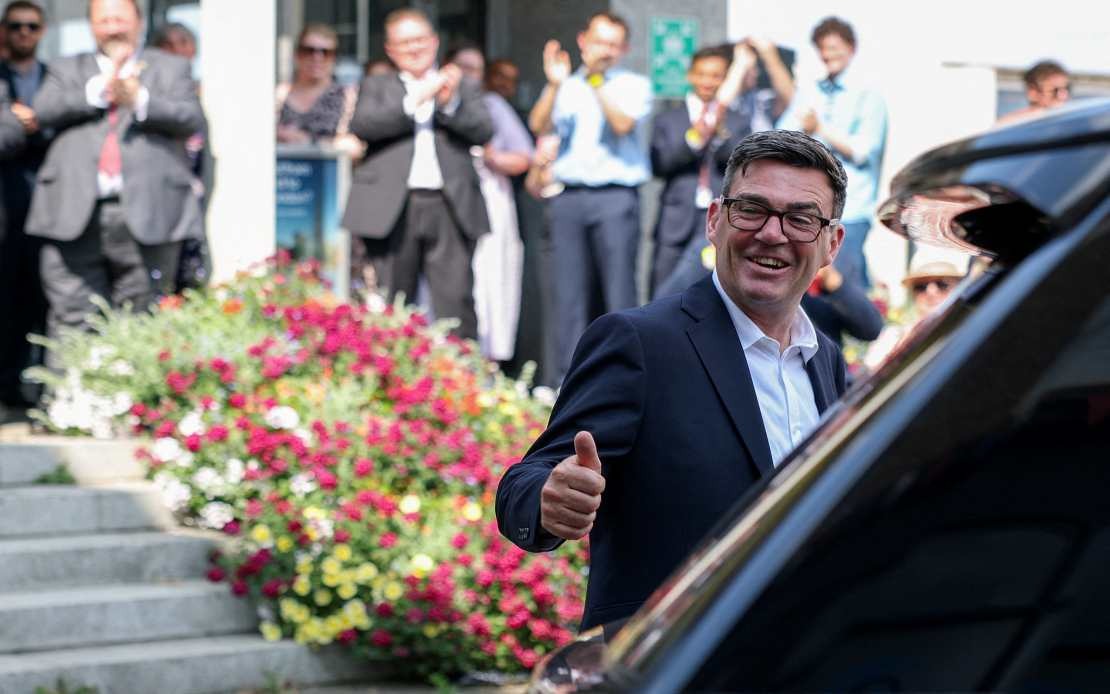
Andy Burnham assumes the position of United Kingdom Prime Minister on Monday, inheriting a nation seeking stability after a tumultuous decade of political upheaval. The former Greater Manchester mayor plans to deliver his maiden speech as premier following a formal audience with King Charles III, positioning himself as a leader committed to rebuilding trust in government institutions that have suffered repeated shocks from rapid leadership changes. His central message will emphasise the British public's need for breathing room—particularly regarding household finances—alongside a government capable of demonstrating genuine competence in tackling the nation's structural problems.
The leadership transition comes at a pivotal moment, with Burnham acutely aware that the United Kingdom has cycled through seven different prime ministers in just ten years, a statistic that underscores the volatility Westminster has endured. This instability has left considerable damage to public faith in political institutions and governance capacity. Burnham's rhetoric will stress the importance of returning to steadier, more accountable politics that prioritises long-term problem-solving over reactionary policymaking. His framing of the current moment as one of "reflection and resolution" signals an intention to take stock of accumulated challenges whilst demonstrating immediate action on issues affecting ordinary households.
Remarkably, Burnham arrived at the Labour leadership without facing a contested election, ascending to the top job merely weeks after returning to Parliament. This unusual pathway means his governing agenda remains substantially underdeveloped compared to predecessors who underwent lengthy campaigns articulating detailed policy positions. Nevertheless, he has signalled several key priorities that will shape his premiership's opening phase. Devolving power away from London's centralised control ranks among his leading commitments, reflecting his deep roots in regional governance and understanding of the frustrations provincial Britain feels towards metropolitan dominance in political decision-making.
One of Burnham's most immediate acts will be scrapping his predecessor's digital identification scheme, a controversial initiative that attracted criticism from privacy advocates and civil liberties organisations. By abandoning this flagship programme, he aims to redirect resources and political capital towards addressing what households identify as their most pressing concern: the cost of living. This represents a recalibration of priorities away from technological infrastructure projects towards tangible, bread-and-butter issues that directly impact household budgets and financial stability. Environmental campaigners have, however, begun mobilising opposition to another anticipated move within his government's first weeks—potentially expanding North Sea oil and gas drilling to suppress energy costs.
The environmental lobby argues that expanding fossil fuel extraction contradicts Labour's 2024 manifesto commitment against issuing new drilling licences, and that such expansion would yield minimal downward pressure on energy bills. Burnham faces considerable pressure to balance his campaign promises regarding climate commitments against public demands for cheaper energy. His government's opening weeks may include broader energy policy announcements designed to ease household bills, marking a central pillar of his "breathing room" pledge. These early moves will establish whether Burnham intends to govern as a radical reformer or as a pragmatist willing to compromise environmental objectives for immediate cost-of-living relief.
Threading another contentious issue, Burnham must decide whether to temporarily nationalise Thames Water, the struggling utility saddled with approximately £20 billion in debt. The water company's deteriorating finances pose risks to essential infrastructure stability across Southeast England, and its creditors have signalled openness to negotiating rescue arrangements with Burnham's administration. Burnham has previously expressed sympathy for greater public control of critical utilities, suggesting he may favour interventionist solutions over pure market mechanisms. How he resolves the Thames Water situation will send important signals about his government's willingness to deploy state power in stabilising strategically important sectors facing existential threats.
Upon delivering his opening address from Downing Street, Burnham will turn his attention to constructing his Cabinet—an exercise fraught with factional implications within Labour. The chancellorship competition has generated particular scrutiny, with Energy Secretary Ed Miliband and Home Secretary Shabana Mahmood emerging as the leading contenders. This selection carries enormous weight, as the chancellor shapes fiscal policy and often emerges as the second-most powerful figure within government. Miliband brings experience with energy portfolios during a period of acute energy crisis, whilst Mahmood commands significant influence within the party's internal networks. Burnham's choice will reveal much about whether he intends to prioritise energy security or domestic law-and-order messaging in his government's public presentation.
For Malaysian and Southeast Asian observers, Burnham's premiership carries implications for regional trade relationships and Commonwealth connections. The UK under Burnham may recalibrate its approach to global trade relationships, potentially affecting bilateral arrangements with Malaysia and regional partners. His emphasis on devolved governance and provincial empowerment could influence British-ASEAN engagement patterns, particularly around trade agreements and investment frameworks. The domestic focus he has outlined—prioritising cost-of-living relief and political stability—may temporarily reduce Britain's international diplomatic activism, though Commonwealth bonds and historical relationships typically endure regardless of prime ministerial priorities.
Burnham's rise represents a genuine rupture with recent Westminster patterns, as his local government background and regional political credentials mark a departure from the technocratic, London-centric style of recent premiers. His appointment follows Labour's landslide victory in 2024, providing him substantial parliamentary majorities and legislative capacity to advance his agenda. However, inheriting a government that has already shifted direction from its predecessor creates immediate credibility challenges—the public must perceive Burnham's administration as fundamentally different and more effective, not merely another iteration of revolving leadership. His first weeks will prove critical in establishing whether he can translate his promise of stability and breathing room into demonstrable improvements in living standards and governmental competence that restore public confidence in British political institutions.

