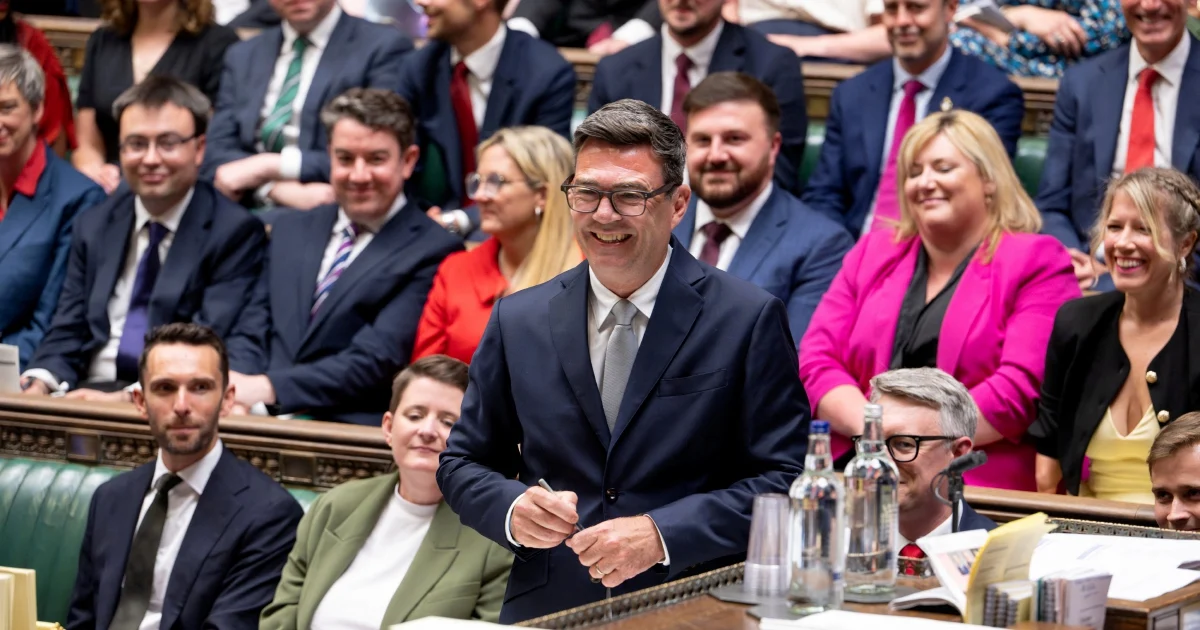
Andy Burnham, the high-profile mayor of Manchester, has suddenly become the focal point of British Labour politics following Keir Starmer's surprise announcement that he is stepping down as party leader. When Burnham entered parliament on Monday, he received a hero's welcome from backbenchers and party members, a symbolic moment that underscores his growing stature within the party and his apparent positioning as the heir apparent to the top job.
Burnham's trajectory in British politics has been marked by a deliberate cultivation of regional power and populist appeal. Unlike many Westminster insiders who shuttle between London clubs and parliamentary offices, Burnham has built his political brand around championing the interests of northern England, earning him the unofficial title of the "King of the North." This regional identity has become an asset rather than a liability, particularly as the Labour Party grapples with how to reconnect with voters beyond its traditional metropolitan strongholds and recover from the electoral damage of recent years.
The Manchester mayor has developed a reputation for direct confrontation with government policy that he views as disadvantageous to the North. His vocal criticism of Whitehall decisions, particularly regarding funding and devolution, has resonated with voters across the northern regions who feel neglected by Westminster elites. This combative approach differs markedly from Starmer's more technocratic style, suggesting that a Burnham-led party might adopt a more confrontational stance toward the Conservative government and adopt different policy priorities altogether.
Burnham's potential leadership carries implications far beyond British internal politics. Southeast Asian observers monitoring UK political developments would note that a change in Labour leadership could signal shifts in Britain's engagement with the region. His regional focus and emphasis on local economies might influence how a future Labour government approaches trade relationships and regional development initiatives, including those affecting Asian partners and diaspora communities in Britain.
The parliamentary reception Burnham received reflects not merely personal popularity but also a broader party frustration with Starmer's leadership and the electoral setbacks Labour has faced. Backbenchers who invested hope in Starmer's promised renewal appear eager to explore alternative leadership models, and Burnham's outsider status relative to the London establishment appeals to those seeking a departure from recent strategies. His roots in health policy and regional governance offer a different skill set from Starmer's background in law and prosecution.
One significant factor in Burnham's favour is his demonstrated ability to win elections outside the metropolitan Labour heartlands. His mayoral tenure has included consolidating power in a region where Labour is strong but not unchallenged, and his communication skills with voters have proven effective in both online spaces and traditional media. He has cultivated an image of pragmatism, willing to engage with business and community leaders across political boundaries when it serves regional interests.
However, Burnham's path to the leadership is not without obstacles. Some within Labour's metropolitan wing view his populist rhetoric with scepticism, fearing it might alienate progressive voters in London and southern university towns. Additionally, his previous campaigns for national leadership have not succeeded, raising questions about whether he can translate regional dominance into national electoral appeal. Other potential contenders for the leadership may emerge from parliament or from the devolved nations, fragmenting the field and complicating the succession process.
The timing of Starmer's resignation creates both opportunity and vulnerability for Burnham. While he enters the contest as the apparent favourite, the leadership election process could introduce unexpected dynamics. Party members voting on leadership decisions have historically favoured candidates with strong left-wing credentials or particular ideological commitments, and Burnham's centrist positioning might not automatically guarantee victory among the broader membership base. The coming weeks will reveal whether his parliamentary reception translates into tangible support from MPs and the wider party.
Burnham's potential ascension to Labour leadership would mark a significant moment in British politics, signalling a turn away from the metropolitan professional class that has dominated the party in recent years. His emphasis on regional renewal, though focused on England's north, reflects broader concerns about geographic inequality and the concentration of political and economic power in London. Should he become leader, the political conversation could shift toward questions of economic devolution, regional investment, and the relationship between Westminster and communities beyond the capital.
The symbolism of Burnham's parliamentary welcome matters as much as the political calculations beneath it. It represents Labour activists and MPs signalling their eagerness for a fresh direction, one that combines electoral ambition with regional authenticity and working-class credibility. Whether these sentiments translate into a decisive mandate in a formal leadership election remains to be seen, but Burnham has clearly established himself as the figure to beat in the coming months as Labour determines its future course and prepares to challenge for national power once more.

