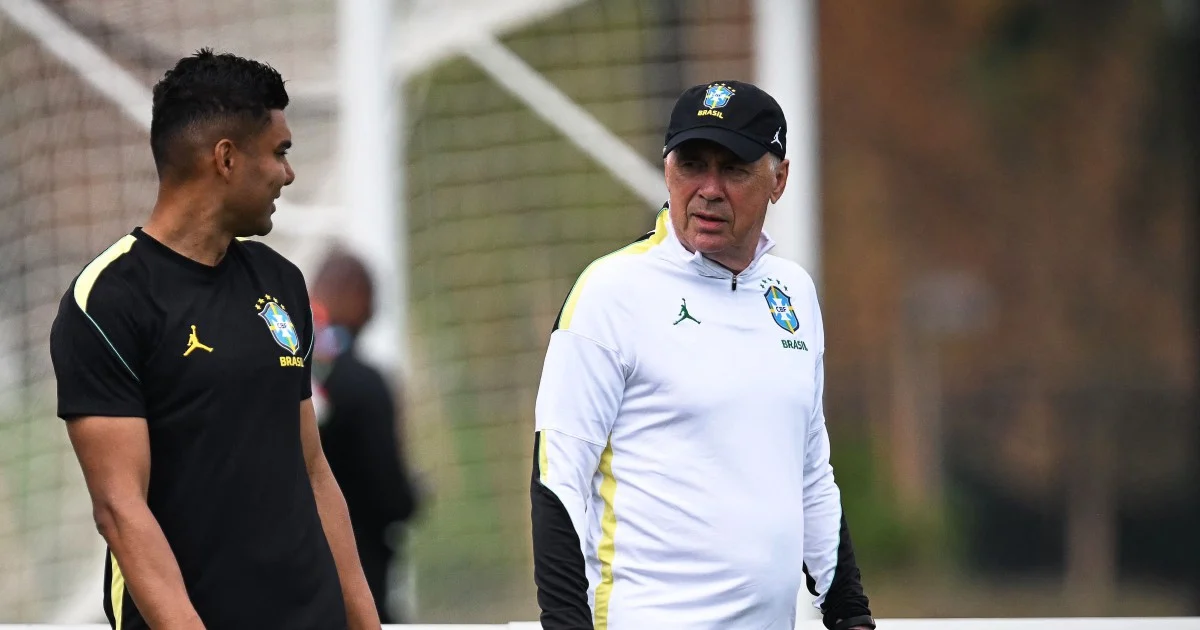
Brazil's quest to reclaim World Cup glory has begun tentatively, with their opening fixture against Morocco producing a disappointing stalemate rather than the commanding performance their supporters anticipated. Yet coach Carlo Ancelotti displayed characteristic composure in the aftermath, refusing to succumb to the panic that often grips nations when early tournament results deviate from expectations. The Italian tactician's measured response reflects both his extensive pedigree at football's highest levels and a pragmatic assessment that one match in a group stage provides insufficient evidence of a team's true capabilities.
The 1-1 draw exposed several uncomfortable truths about Brazil's current defensive organisation, a concern that has lingered throughout their qualifying campaign despite their attacking prowess. Ancelotti's task now involves translating this recognition into concrete tactical adjustments before Haiti arrives in Philadelphia on Friday for what should theoretically be a far more straightforward examination. The coaching staff faces the challenge of maintaining confidence within the squad while simultaneously addressing the lapses that allowed Morocco to trouble a side expected to dominate possession and territorial control.
For Malaysian observers and Southeast Asian football enthusiasts, Ancelotti's steady demeanour offers instructive lessons about elite-level crisis management. The former Real Madrid, Chelsea, and Bayern Munich manager has navigated considerably more treacherous circumstances throughout his career, suggesting that perceived setbacks in tournament football rarely prove insurmountable when technical quality and professional experience remain intact. Brazil's squad contains sufficient individual talent that rectifiable mistakes in one fixture need not derail their tournament ambitions.
Haiti presents a markedly different proposition from Morocco, a North African nation with established world rankings and tactical sophistication. The Caribbean island's relative inexperience on this scale should theoretically allow Brazil to implement corrective measures with reduced risk of further complications. However, the nature of tournament football means complacency carries genuine danger, as smaller nations increasingly demonstrate the capacity to punish lapses in concentration or mechanical execution. Ancelotti's insistence on thorough analysis rather than dismissive rhetoric suggests awareness of this modern reality.
The Group C configuration places Brazil alongside Morocco, Haiti, and Spain, creating a competitive environment despite the South Americans' status as tournament favourites. Accumulating maximum points against Haiti becomes strategically important not merely for confidence restoration but for maintaining pressure on rivals who occupy similar points tallies. The mathematical reality of group stage competition means that correcting Friday's potential outcome assumes genuine significance for progression scenarios.
Ancelotti's decision to emphasise the diagnostic opportunity rather than catastrophise reflects the emotional intelligence required when managing international teams. Players respond positively to coaches who acknowledge problems while maintaining perspective and belief, rather than those who oscillate between excessive optimism and despair based on individual results. The communication process matters profoundly in tournament settings where psychological factors can amplify or diminish the impact of technical deficiencies.
Brazil's defensive issues appear addressable through relatively minor adjustments rather than fundamental structural problems. The recruitment of additional protective midfield presence or subtle positional modifications could substantially improve how they manage transitions and set-piece situations. Such refinements fall well within Ancelotti's extensive tactical repertoire, suggesting he possesses the strategic flexibility to mount swift corrections without wholesale squad alterations.
The experience differential between these opponents cannot be overstated. Morocco's Morocco's national team has competed consistently at high international levels, boasting players familiar with European club competitions where technical demands remain considerable. Haiti, by contrast, features a considerably less experienced collective, though individual competence within their pool should prevent the mismatch from becoming theatrical. This contextual difference means Brazil can reasonably expect to showcase improvements without facing equivalent resistance to that provided by their opening fixture.
Ancelotti's track record suggests that early tournament wobbles often precede impressive recoveries when underpinned by technical quality and professional standards. His various championship wins across multiple clubs and nations provide evidence that initial results prove poor predictors of ultimate performance when proper frameworks exist. Brazil's squad composition indicates such frameworks remain intact despite the Morocco disappointment.
The Friday encounter therefore assumes significance extending beyond mere points accumulation. It represents an opportunity for Ancelotti to demonstrate tactical adaptability while simultaneously reinforcing that setbacks are manageable rather than existential threats. The manner in which Brazil responds—with composure, precision, and measured aggression—will communicate more about their tournament prospects than the Morocco result itself. For supporters and analysts alike, this fixture offers crucial intelligence about whether Ancelotti's calm reflects genuine situational control or misplaced optimism regarding deeper structural deficiencies.

%22%2F%3E%3C%2Fpattern%3E%3C%2Fdefs%3E%3Crect%20width%3D%22100%25%22%20height%3D%22100%25%22%20fill%3D%22url(%23ph4itmfg)%22%2F%3E%3Crect%20width%3D%22100%25%22%20height%3D%22100%25%22%20fill%3D%22url(%23ph4itmfp)%22%2F%3E%3Ctext%20x%3D%2250%25%22%20y%3D%2250%25%22%20text-anchor%3D%22middle%22%20dominant-baseline%3D%22central%22%20fill%3D%22rgba(255%2C255%2C255%2C0.95)%22%20font-family%3D%22Georgia%2C%20'Times%20New%20Roman'%2C%20serif%22%20font-weight%3D%22700%22%20font-size%3D%22136%22%20letter-spacing%3D%22-0.02em%22%3EDeveloping%3C%2Ftext%3E%3C%2Fsvg%3E)