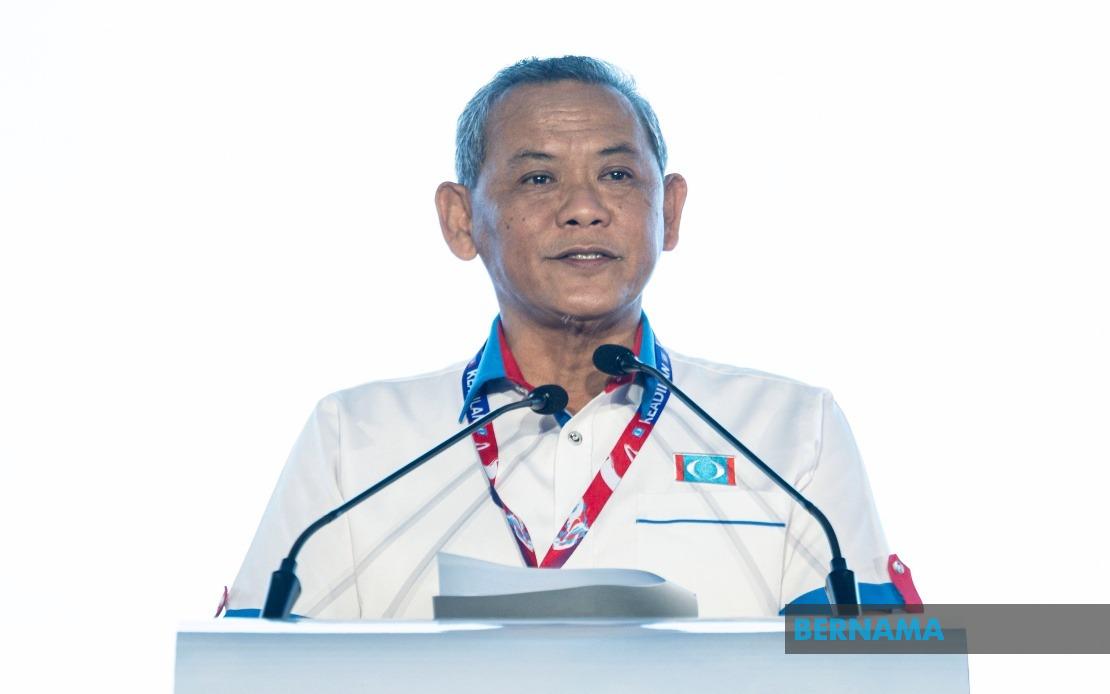
Former Negeri Sembilan Menteri Besar Datuk Seri Aminuddin Harun has agreed to relinquish his position as chairman of the Negeri Sembilan State Leadership Council of Parti Keadilan Rakyat (PKR), accepting full responsibility for the party's catastrophic showing in the recent state election. Speaking during the closing session of PKR's National Congress at the Melaka International Trade Centre, Aminuddin publicly endorsed the calls made by six state-level party branch leaders who demanded accountability following an election outcome that left the party badly weakened in the state.
The Negeri Sembilan state election held on August 1 proved to be a watershed moment for PKR's political fortunes in the state. The party managed to retain only the Chuah and Sri Tanjung seats out of fifteen constituencies it contested, a result that triggered internal criticism and soul-searching within the organization. The magnitude of the defeat—losing thirteen of the fifteen seats it fought for—prompted grassroots party members to seek explanations and demand leadership changes, creating pressure that ultimately led to Aminuddin's decision to step aside.
Aminuddin's statement represented a notable departure from the defensive posturing that often characterizes Malaysian political responses to electoral defeats. Rather than deflecting blame or offering elaborate justifications, he acknowledged the legitimate grievances raised by party branch leaders and accepted the consequences without reservation. His willingness to take personal responsibility, expressed in unambiguous language, reflected both the severity of the party's predicament and a recognition that credibility required accepting accountability for strategic failures.
The party leader's own electoral performance at the Linggi state seat underscored the broader collapse of PKR support across Negeri Sembilan. Aminuddin contested in what should have been a stronghold given his previous position as Menteri Besar, yet he was defeated decisively by Barisan Nasional incumbent Datuk Mohd Faizal Ramli. The margin of defeat—2,976 votes—was substantial enough to eliminate any doubt about the depth of voter rejection. Aminuddin garnered 6,163 votes against Mohd Faizal's 9,139 votes, while Bersatu candidate Datuk Zamri Md Said polled only 391 votes in the three-cornered contest.
This particular loss carried symbolic weight beyond the raw numbers. A former chief minister losing his seat represents more than an individual electoral setback; it signals fundamental erosion of party support and raises questions about leadership credibility and political strategy. For PKR, which has positioned itself as a reform-oriented alternative to entrenched political establishments, such a reversal in a state where it had held executive power suggests significant organizational or messaging failures that demanded addressing.
Aminuddin's measured approach to resignation, however, contained an important caveat that revealed his continued commitment to the party's broader mission. He explicitly stated that the electoral defeat, while humbling, should not precipitate a withdrawal from political engagement or a crisis of confidence in PKR's long-term viability. Instead, he reframed the loss as an opportunity for institutional renewal and strategic reassessment, suggesting that the party could emerge from this setback with stronger foundations if it undertook genuine reform of its state-level operations.
The implicit critique embedded in Aminuddin's remarks extended to the party leadership at the federal level. By emphasizing that he was prepared to accept whatever decisions the party hierarchy determined necessary, he created space for a comprehensive review of PKR's approach in Negeri Sembilan without appearing to challenge the central leadership. This diplomatic framing allowed him to take responsibility while simultaneously signaling that broader organizational changes might be warranted beyond simple replacement of state-level officials.
For PKR more broadly, the Negeri Sembilan outcome and Aminuddin's response reflect the precarious position of the party within Malaysia's coalition politics. As the largest component of the Pakatan Harapan alliance at the federal level, PKR carries responsibility for sustaining the broader reform agenda, yet its performance in state-level contests remains inconsistent and often disappointing. The Negeri Sembilan result adds to a pattern of underwhelming electoral outcomes that have prompted questions about whether the party's organizational capacity matches its political ambitions.
The timing of this development, announced during the party's national congress, provided a platform for broader party reflection on its strategic direction. National congresses typically serve as venues where competing factions can air grievances and contest party positions, so Aminuddin's preemptive acceptance of responsibility may have been calculated to forestall more divisive internal contests over the state leadership. By voluntarily stepping aside, he potentially prevented a protracted internal struggle that could have further damaged the party's image and cohesion.
Aminuddin's decision also carries implications for PKR's representation within the broader Pakatan Harapan coalition. Negeri Sembilan is not a state where any coalition partner holds dominant influence, making it a complex political terrain where PKR must compete with multiple parties including Umno's Barisan Nasional and Bersatu. The party's inability to translate its federal-level political standing into effective state-level performance suggests that coalition dynamics at the state level do not necessarily reinforce federal-level political advantages, a lesson that may influence PKR's strategic planning in other state contests ahead.
Moving forward, the selection of Aminuddin's successor as state PKR chairman will offer important signals about the party's commitment to reform and its willingness to promote new leadership voices. Whether the party promotes a figure from within the existing state structure or brings in someone from outside will indicate whether this is a symbolic change or the beginning of more substantial organizational restructuring in Negeri Sembilan. The manner in which PKR handles this transition will likely influence internal party dynamics and the confidence of state-level party members in the central leadership's commitment to addressing electoral failures.

