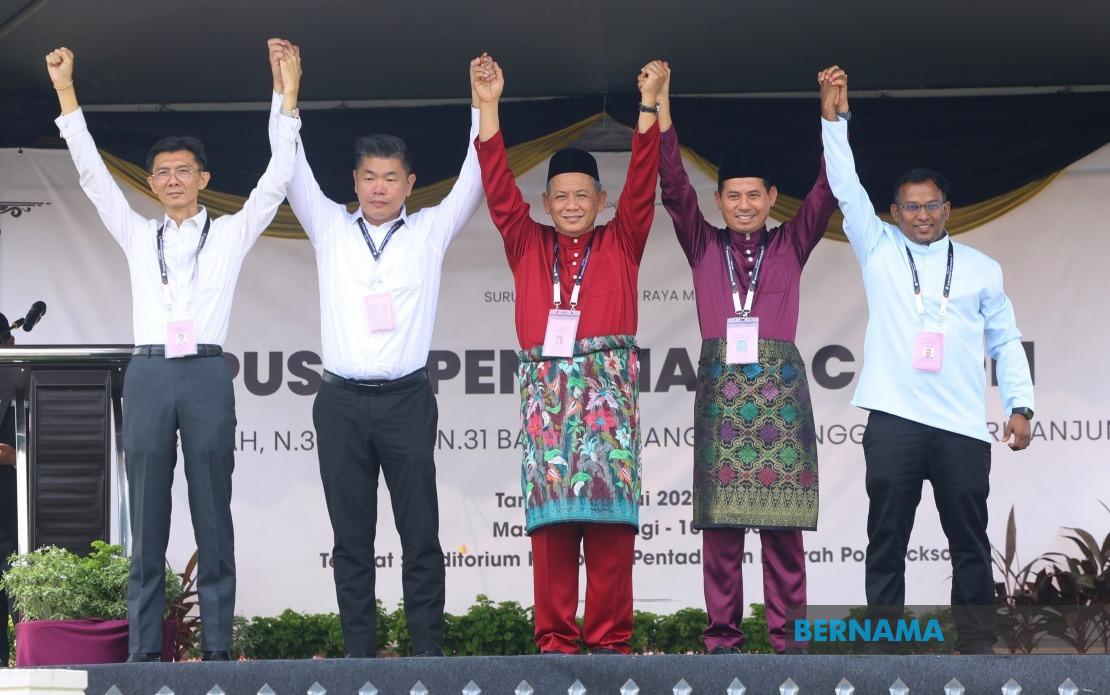
Negeri Sembilan Menteri Besar Datuk Seri Aminuddin Harun has announced ambitious development proposals for the Linggi state constituency, centring on the construction of a port facility and an accompanying industrial estate designed to transform the region's economic landscape. Speaking in Port Dickson after the nomination process for the 16th Negeri Sembilan state election, Aminuddin framed these infrastructure initiatives as cornerstones of a comprehensive modernisation strategy aimed at bolstering economic prospects and enhancing living standards across the constituency.
The Pakatan Harapan chairman characterised the proposed projects as part of a wider vision to strengthen basic infrastructure networks throughout Linggi, a region that has historically been dominated by the opposition coalition. His pronouncements suggest that the ruling coalition intends to counter Barisan Nasional's electoral advantage in the area through tangible pledges of economic rejuvenation. The port development, in particular, could unlock new commercial opportunities and position Linggi as a maritime gateway for the central region, provided adequate funding and planning expertise materialise.
Aminuddin did not shy away from acknowledging the formidable challenge confronting his candidacy. Running against incumbent Datuk Mohd Faizal Ramli, a Barisan Nasional stalwart in a constituency long considered a BN stronghold, demands considerable political capital and organisational capability. Nevertheless, Aminuddin expressed resolute confidence that the Pakatan Harapan electoral machinery possesses the organisational discipline and volunteer mobilisation to conduct an effective campaign throughout the two-week nomination-to-polling period.
The Menteri Besar indicated that his port and industrial zone proposal originated from his personal initiative, which he subsequently presented to senior party leadership. The fact that the proposal received approval from Pakatan Harapan's decision-making hierarchy underscores the party's willingness to invest political credibility in sweeping infrastructure commitments. Such pledges reflect a broader electoral strategy of presenting voters with specific, costed development visions rather than relying solely on partisan rhetoric or attacks on opponents.
For Malaysian voters accustomed to abstract campaign promises, Aminuddin's specificity regarding maritime and industrial infrastructure offers concrete parameters against which to measure eventual performance. The Linggi constituency, geographically positioned along the Strait of Malacca's inner approaches, possesses inherent locational advantages for port development. A functioning maritime facility could facilitate regional trade flows and attract logistics-oriented industries, generating employment across multiple skill levels and potentially addressing youth unemployment concerns endemic to many Malaysian constituencies.
Aminuddin's framing of the contest as a test of voter wisdom reflects the competitive intensity surrounding the 16th Negeri Sembilan election, scheduled for August 1. The three-cornered battle featuring Aminuddin, Mohd Faizal, and Datuk Zamri Md Said of Bersatu introduces unpredictability into what might otherwise be predictable polling patterns. Bersatu's entry into the Linggi race complicates Barisan Nasional's traditional vote consolidation strategy, potentially fragmenting the anti-Pakatan Harapan vote if Bersatu supporters mobilise effectively.
Mohd Faizal's subsequent remarks, emphasising that Barisan Nasional cannot treat Linggi as a guaranteed victory despite its historical dominance, suggest that BN strategists recognise genuine competitive pressure. His appeal for a campaign characterised by factual engagement rather than inflammatory rhetoric indicates concern that excessive negativity might undermine his candidacy or provoke voter backlash. This tone contrasts sharply with certain other regional contests where candidates have deployed more aggressive tactics.
The timing of these development announcements merits consideration within the electoral calendar. Aminuddin's unveiling of port and industrial proposals immediately following nomination formalises party commitments into the public record, making retreat or revision politically costly. Such early specification of platform elements allows voters adequate time to evaluate feasibility and assess candidate credibility. Conversely, it exposes proposals to scrutiny regarding financing mechanisms, environmental clearances, and land acquisition logistics—practical hurdles that frequently stall Malaysian infrastructure projects.
For Negeri Sembilan's broader development trajectory, the outcome of this contest carries implications extending beyond partisan considerations. Port development at Linggi could strengthen the state's positioning within Malaysia's maritime logistics network, complementing existing industrial zones elsewhere in the region. Industrial estate expansion offers manufacturing relocation opportunities for firms seeking alternatives to congested areas within Klang Valley and Penang. These factors render infrastructure commitments substantive policy issues rather than mere election rhetoric.
The Pakatan Harapan strategy in Linggi reflects lessons learned from previous electoral cycles, where specific infrastructure pledges tangibly influenced constituency-level voting patterns. By anchoring the campaign to identifiable, location-specific projects, Aminuddin positions his candidacy around deliverables rather than abstract governance philosophies. This approach acknowledges that voters frequently prioritise concrete economic benefits—ports generate cargo handling employment, industrial zones attract manufacturing investment—over partisan ideology.
Regionally, the Negeri Sembilan election outcome will provide insights into electoral dynamics across central Peninsular Malaysia, where Pakatan Harapan has struggled to penetrate traditional Barisan Nasional strongholds. A Pakatan Harapan victory in Linggi would validate infrastructure-centred campaigning as a viable strategy for contesting opposition-held constituencies. Conversely, a Barisan Nasional consolidation would suggest that incumbent advantages and organisational machinery remain decisive despite competitive pledges.
The electoral contest unfolds against Malaysia's broader infrastructure modernisation agenda. Port expansion initiatives and industrial estate development align with national objectives regarding economic diversification and regional development equity. Aminuddin's Linggi proposals thus occupy intersection points between electoral promises and structural economic policy, lending them significance beyond constituency-specific considerations.
As polling on August 1 approaches, voters will assess whether Aminuddin's port and industrial development vision constitutes credible transformation strategy or ambitious campaign rhetoric destined for post-election obscurity. The Menteri Besar's political capital and administrative authority, combined with Pakatan Harapan's institutional resources, provide a foundation for project implementation should voters deliver the mandate Aminuddin seeks. Conversely, Barisan Nasional's defensive posturing suggests recognition that Linggi represents genuinely contested terrain in this election cycle.

