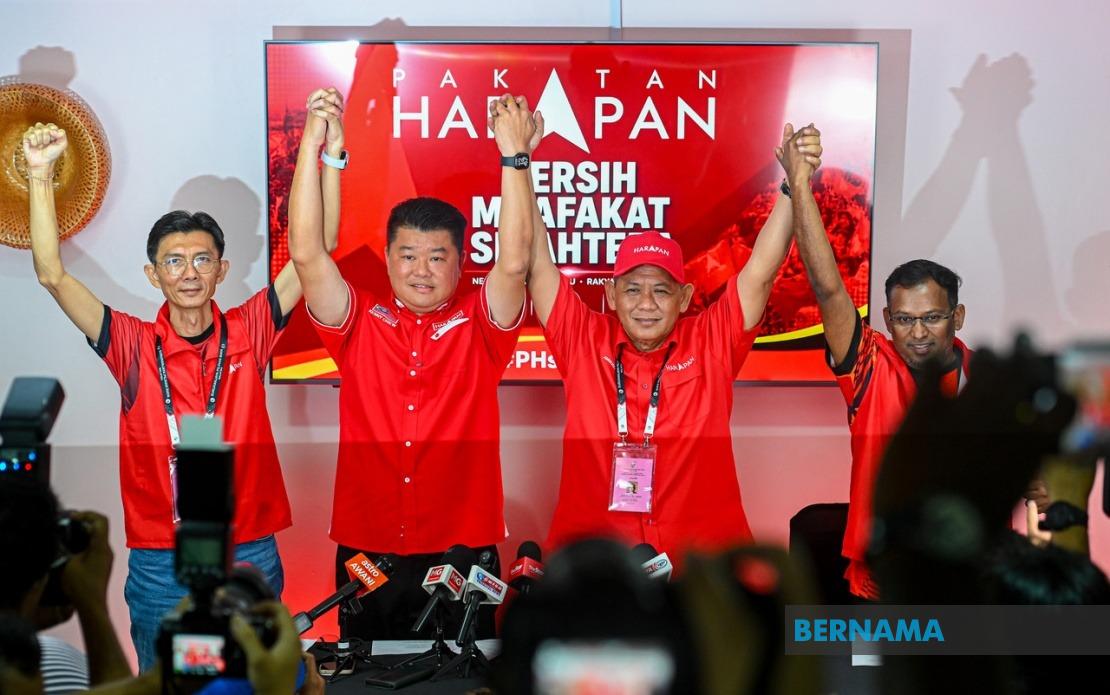
Datuk Seri Aminuddin Harun, the Negeri Sembilan Pakatan Harapan chairman, has moved to quash persistent rumours of fractures within the opposition coalition's ranks as the Port Dickson parliamentary constituency prepares for its state elections. Speaking at a press conference in Port Dickson on July 20, Aminuddin rejected characterisations that internal tensions or leadership disagreements were hampering the coalition's electoral prospects, asserting instead that both the party apparatus and campaign machinery across the five state seats remain aligned and functioning effectively.
The Negeri Sembilan menteri besar, who doubles as the State PKR chairman, directed particular attention toward addressing concerns that had circulated on social media regarding the re-nomination process for the Chuah constituency incumbent. The episode had sparked speculation about potential divisions within the coalition, particularly involving Port Dickson PKR deputy division chief Datuk Kenny Chiew Chi Kin, whose own political positioning had become a point of public discussion during the candidate selection phase. Aminuddin characterised these narratives as deliberate attempts by external actors seeking to portray Pakatan Harapan in an unfavourable light, rather than genuine reflections of internal discord.
The menteri besar elaborated on the resolution of this particular matter, explaining that discussions had taken place through proper internal channels and that harmony had been restored. He emphasised that Datuk Kenny Chiew Chi Kin had subsequently reaffirmed his commitment to the coalition's broader electoral objectives, pledging complete support for all Pakatan Harapan candidates competing in the forthcoming state election. This assurance, according to Aminuddin, provided clear evidence that any disagreements that may have existed during the candidate selection process had been reconciled and would not impede the coalition's campaign efforts.
In his assessment of Chiew's contributions to the party despite not being selected as a candidate, Aminuddin acknowledged the deputy division chief's longstanding dedication to strengthening organisational capacity within the Port Dickson division. Rather than viewing the non-nomination as a source of lasting grievance, Aminuddin framed it within a broader narrative of collective commitment to electoral success, suggesting that individual disappointments were secondary to the coalition's overarching goal of capturing seats across the constituency. This framing attempted to position party loyalty and pragmatic unity as prevailing over personal political ambitions.
The Port Dickson MP himself serves as Pakatan Harapan's candidate for the Linggi state constituency, placing him directly in the electoral fray and lending additional weight to his assertions about internal coherence. By positioning himself as both a participant in the election and a coordinator of broader coalition strategy, Aminuddin effectively demonstrated the interconnected nature of electoral success at both state and parliamentary levels. His dual roles underscore the complexity of managing coalitional politics in Malaysian electoral contests, where constituency-level outcomes can significantly influence parliamentary-level dynamics.
The five state constituencies nominally falling within the Port Dickson parliamentary seat—Chuah, Lukut, Sri Tanjung, Bagan Pinang, and Linggi—represent a diverse electorate across Negeri Sembilan. Aminuddin's emphasis on securing all five seats reflects the ambitious scope of Pakatan Harapan's objectives in this region, suggesting that the coalition views this particular electoral theatre as strategically significant for its broader performance in the state. The geographic concentration of these constituencies within a single parliamentary boundary potentially allows for coordinated campaign messaging and resource allocation.
The electoral history of this area provides instructive context for understanding the current contest. In the 2023 state election, Datuk Yew Boon Lye retained the Chuah seat with a comfortable majority of 6,298 votes, decisively defeating Perikatan Nasional candidate Tang Jay Son. This victory represented both personal validation for Yew and evidence of Pakatan Harapan's competitive positioning in this particular constituency. However, the political landscape has shifted since that contest, with Barisan Nasional now presenting Pau Jeou Ching as the challenger, introducing a different competitive dynamic compared to the previous three-cornered contest.
The timing of the current election cycle places particular pressure on coalition unity, as early voting is scheduled for July 28 with the main polling day set for August 1. This compressed electoral calendar leaves limited time for the coalition to consolidate its messaging and mobilise its voter base effectively. Internal discussions about candidate selection and political positioning must be resolved quickly to allow unimpeded focus on broader campaign activities and voter outreach during the final weeks before polling.
The nature of the social media-driven speculation that Aminuddin referenced reflects broader patterns in Malaysian electoral politics, where informal networks and digital communication channels frequently amplify internal party matters into public discourse. The characterisation of such speculation as deliberately engineered to damage coalition perception suggests that opposition actors view narratives about internal division as strategically valuable—whether or not such divisions actually exist. For Malaysian voters and political observers, distinguishing between genuine organisational tensions and manufactured controversy remains an ongoing challenge.
Packatan Harapan's performance across these five constituencies will carry implications extending beyond Port Dickson itself. As the coalition seeks to consolidate its position in Negeri Sembilan and demonstrate competitive viability across the state, success or failure in this particular parliamentary seat's constituent constituencies becomes emblematic of the coalition's broader electoral strength. The Port Dickson contest thus serves as a microcosm of larger dynamics shaping Malaysian electoral politics, encompassing questions of coalition cohesion, candidate selection legitimacy, and the balance between different parties' relative influence within opposition alliances.
For the broader Southeast Asian context, Malaysian electoral contests increasingly demonstrate how digital media, internal party dynamics, and coalition management interact to shape political outcomes. The Port Dickson situation illustrates how technical issues of candidate selection and leadership positioning can generate public narratives that potentially undermine electoral performance, regardless of the underlying reality. This dynamic is not unique to Malaysia but reflects broader regional trends as political parties across Southeast Asia navigate simultaneous pressures from internal stakeholders, media narratives, and voter expectations in increasingly digitalised electoral environments.

