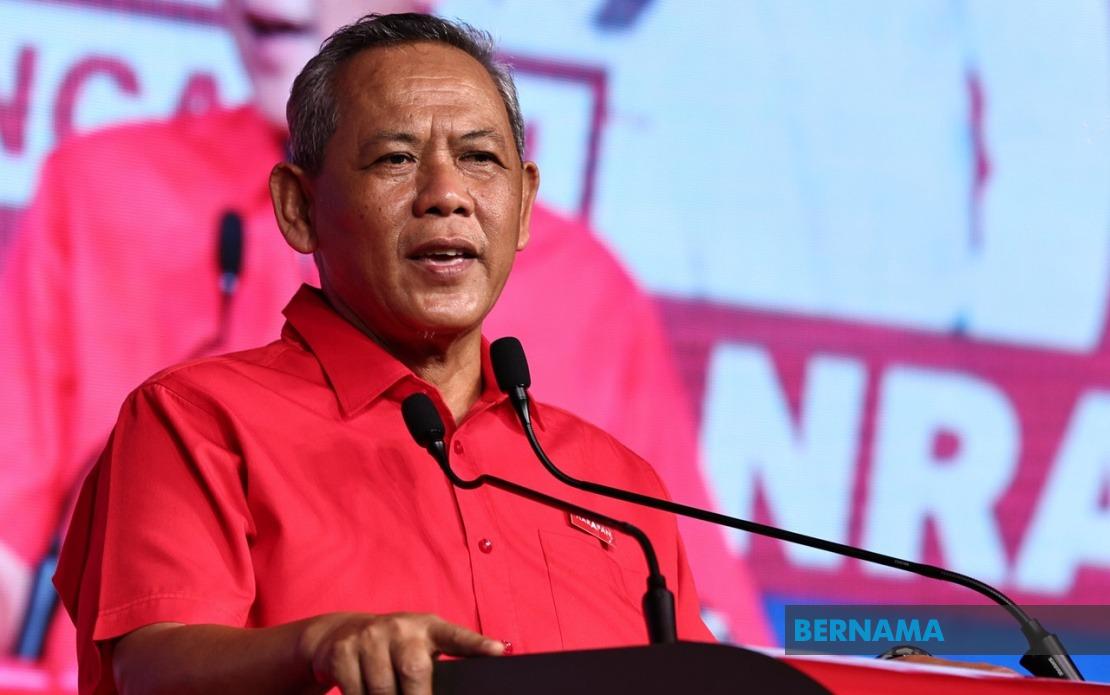
Negeri Sembilan's Menteri Besar Datuk Seri Aminuddin Harun has pushed back against suggestions that his decision to contest the Linggi state assembly seat in the forthcoming Negeri Sembilan election represents a calculated move to escape defending his Sikamat constituency. In a statement released from Seremban on July 16, the seasoned politician characterised the transition as his personal determination to pursue a fresh challenge rather than a defensive manoeuvre designed to sidestep potential electoral headwinds.
Aminuddin, who also chairs the Negeri Sembilan branch of Pakatan Harapan, articulated his vision for the Linggi constituency by drawing parallels to his four-decade relationship with Sikamat. He expressed confidence that should voters grant him their mandate in the upcoming balloting, he would dedicate himself to advancing the prosperity and welfare of Linggi's residents with undiminished energy. His remarks underscore a calculated repositioning within Negeri Sembilan's political landscape as the state prepares for its sixteenth legislative assembly election.
The Menteri Besar took the opportunity to reflect upon his extended tenure in Sikamat, painting a vivid portrait of political evolution and community transformation. Beginning with modest beginnings—operating from a compact office space situated above a shophouse with constrained financial resources during the coalition's years in opposition—Aminuddin chronicled how his constituency team innovated within severe budgetary limitations. Through collective fundraising initiatives, targeted assistance programmes, and community engagement activities, the representatives worked to address local needs despite structural disadvantages inherent to their opposition status.
These formative experiences, Aminuddin suggested, have equipped him with resilience and practical wisdom that would translate into effective stewardship in a new electoral division. The narrative he constructs positions his Sikamat years not as a fixed endpoint but as preparatory ground for expanded responsibilities. This framing attempts to recast the transition from one constituency to another as natural career progression rather than tactical repositioning, a subtle but important rhetorical distinction in Malaysian electoral discourse.
Acknowledging the Sikamat electorate's sustained confidence across multiple election cycles, Aminuddin expressed profound gratitude for their support throughout his representation. He emphasised that the memories formed through shared challenges and collaborative problem-solving would remain indelible markers of his political identity. This sentimental reflection serves multiple purposes simultaneously: it honours his departing constituents, demonstrates continuity of values, and implicitly vouches for his integrity in seeking fresh opportunities.
A critical element of Aminuddin's transition strategy involves endorsing his successor in Sikamat. He expressed optimism that Nor Azman Mohamad, the designated Pakatan Harapan candidate to replace him, would maintain the constituency's developmental momentum and preserve the institutional relationships cultivated over sixteen years of representation. This endorsement carries particular weight in Malaysian politics, where outgoing representatives' blessing can substantially influence voter confidence in successor candidates and maintain coalition support bases across electoral transitions.
The timing of Aminuddin's repositioning occurs within a highly competitive electoral environment. He anticipates facing Barisan Nasional's incumbent Linggi assemblyman Datuk Mohd Faizal Ramli in direct contest, positioning the race as a symbolic clash between opposing national coalitions. The incumbent advantage that Faizal possesses must be weighed against Aminuddin's profile as Menteri Besar and his demonstrated capacity to mobilise grassroots support, creating uncertainty regarding the constituency's electoral trajectory despite Linggi's historical leanings.
The electoral mechanics of Negeri Sembilan's sixteenth state election will unfold across a compressed timeline, with nomination procedures occurring on Saturday, early voting scheduled for July 28, and general polling set for August 1. This condensed calendar compresses candidate campaign periods and intensifies resource allocation demands for political parties attempting to contest multiple constituencies simultaneously across the state. Aminuddin's candidacy in Linggi requires substantial party investment in both financial and organisational resources at a moment when Pakatan Harapan faces multiple competitive races throughout Negeri Sembilan.
For Malaysian political observers, particularly those tracking leadership succession and coalition strategy in key peninsular states, this episode illuminates how senior politicians navigate career transitions while managing perception management. Aminuddin's insistence that personal choice rather than strategic necessity motivated his shift reflects broader patterns wherein Malaysian political figures must simultaneously project strength and adaptability. The narrative he constructs—emphasising continuity of values, gratitude for past support, and confidence in successors—provides a template for dignified repositioning without undermining either personal credibility or party unity.
The Linggi contest carries significance beyond two individual candidates competing for assembly representation. It functions as a proxy assessment of Pakatan Harapan's capacity to retain power in Negeri Sembilan amid evolving political dynamics at both state and federal levels. Aminuddin's personal electoral performance will be scrutinised by national coalition strategists as an indicator of voter sentiment regarding the ruling coalition's governance record and future prospects. His success or failure in wresting Linggi from Barisan Nasional control could influence broader conversations about Pakatan Harapan's competitiveness in other peninsular states facing concurrent or imminent elections.

