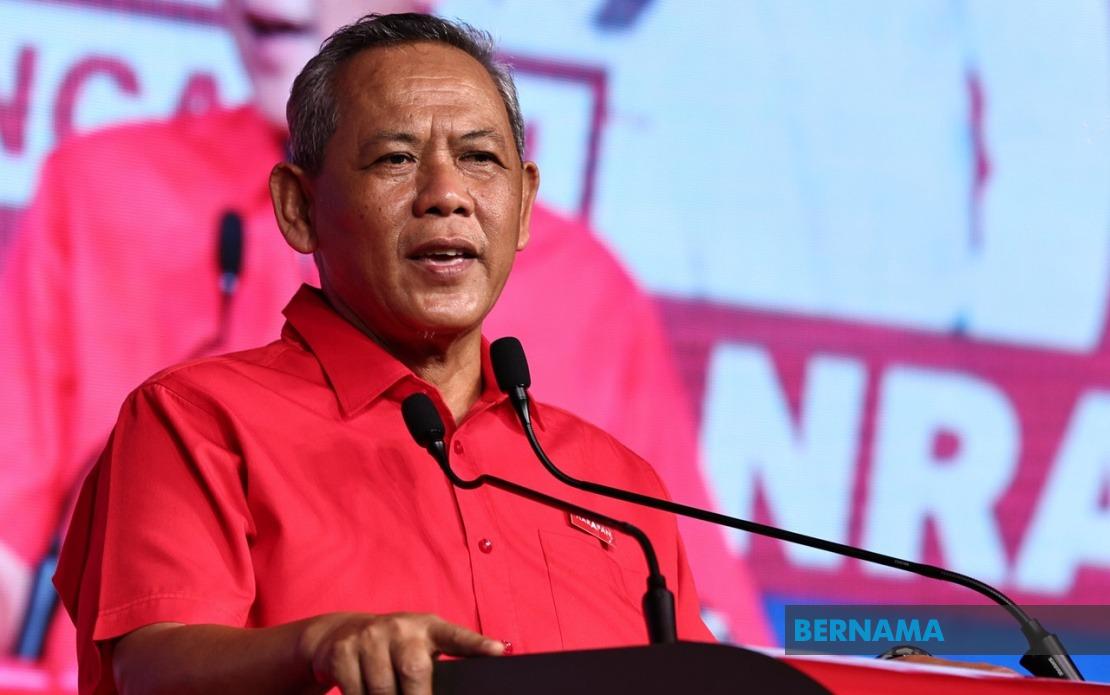
With the Negeri Sembilan state election entering its final stretch, Menteri Besar Datuk Seri Aminuddin Harun is making an appeal that goes beyond the usual campaign rhetoric: he wants voters in the Linggi constituency to judge his administration on tangible flood mitigation work rather than political posturing. Speaking to journalists after Friday prayers in Seremban on July 17, Aminuddin, who is the Pakatan Harapan candidate for the Linggi seat, acknowledged that flooding has long plagued the area and conceded that recent social media attention has brought renewed scrutiny to the government's response.
The flooding issue in Linggi has become increasingly visible on social networks, with residents highlighting how heavy rainfall regularly inundates the constituency. Rather than dismiss such concerns as mere political noise—a temptation many politicians succumb to during election season—Aminuddin framed the matter as requiring serious governance and infrastructure investment. He stressed that the state administration takes the problem seriously and has moved beyond rhetoric to concrete action, with two separate flood mitigation projects now in active implementation through a cooperative arrangement between Negeri Sembilan and the federal government.
What distinguishes Aminuddin's messaging is his implicit critique of a campaign strategy that exploits community anxieties for electoral advantage. He warned explicitly against allowing Linggi's flooding to become "an issue" in political terms, signalling awareness that opponents may weaponise the problem to cast the government as neglectful. This defensive posture reveals underlying tensions within Negeri Sembilan politics, where development and service delivery claims are vulnerable to scrutiny if visible problems persist. For Malaysian voters accustomed to politicians overpromising quick fixes, Aminuddin's insistence that such projects "take time to complete and cannot be resolved within a day or two" represents a notably candid acknowledgement of realistic timelines.
The two approved projects constitute the government's primary evidence of commitment to resolving Linggi's drainage and flood management challenges. However, Aminuddin provided limited detail about project scope, investment amounts, or expected completion dates—information that would strengthen his case substantially. This omission may reflect either genuine constraints on public disclosure or a calculation that detailed technical discussion holds less electoral sway than broad assurances about governmental competence. For residents directly affected by recurring floods, the absence of specific timelines for relief naturally fuels frustration and political vulnerability.
The Negeri Sembilan PH chairman's broader electoral strategy hinges on positioning his coalition as proven administrators deserving renewed confidence. By contrasting the government's methodical approach—"resolving problems through proper planning and the implementation of infrastructure projects"—against what he characterises as opposition strategy built on "playing on sentiments," Aminuddin attempts to elevate the campaign discourse above emotional appeals. This framing presupposes that voters prioritise competent delivery over sentiment, an assumption that may or may not align with electoral reality in Negeri Sembilan.
Yet this approach carries inherent risks for the administration. When a specific, visible problem like recurrent flooding affects constituents directly, the distinction between "proper planning" and "sentiment" becomes blurred in lived experience. A voter whose home floods repeatedly cares less about the philosophical elegance of the government's approach than about dry feet and functioning infrastructure. This gap between administrative self-conception and public experience represents a persistent challenge for incumbent governments across Malaysia and the region.
The timing of Aminuddin's remarks—just days before the 16th Negeri Sembilan state election cycle formally commences—underscores how critical the Linggi seat has become for PH's state performance. The constituency has clearly emerged as a focal point for opposition criticism, suggesting the government's hold on the area may be shakier than desired. For a ruling coalition, having to publicly defend performance on a long-standing infrastructure problem two weeks before polling day indicates incomplete narrative control heading into the campaign proper.
The Election Commission's schedule—with nomination day set for July 18, early voting on July 28, and polling on August 1—compressed the formal campaign window considerably. Within this tight timeline, Aminuddin's investment in addressing the flooding narrative directly suggests his campaign team views it as a material threat to electoral prospects. The fact that the issue "went viral on social media" indicates it has already transcended the constituency and entered broader state-level political consciousness, a development that typically hardens voter opinions rather than softens them.
From a broader Southeast Asian perspective, Aminuddin's emphasis on infrastructure delivery as an electoral proposition reflects wider trends across the region. In Malaysia, Thailand, and Indonesia, citizens increasingly demand visible development and competent service delivery from their governments, even as they retain traditional political loyalties. However, when infrastructure projects lag or fail to materialise, the credibility gap widens rapidly. The Negeri Sembilan electorate will ultimately judge whether two approved but incomplete flood mitigation projects constitute sufficient evidence of governmental seriousness, or whether they represent administrative tokenism masking deeper inadequacies in state capacity.
The broader lesson from this episode extends beyond Linggi alone. Persistent, visible problems in constituencies represent ongoing political liabilities for ruling coalitions. While Aminuddin's appeal for voters to evaluate outcomes rather than rhetoric is admirable in principle, governance ultimately requires actual results. The next several weeks will reveal whether the combination of claimed administrative competence, flood mitigation projects in progress, and appeals to voter maturity prove sufficient to retain the Linggi seat for Pakatan Harapan, or whether accumulated frustration over years of flooding finally tips the balance toward alternatives. For Malaysian political observers and residents elsewhere in Southeast Asia facing similar infrastructure challenges, Linggi's August 1 result will offer instructive lessons about the electoral consequences of incomplete problem-solving.

