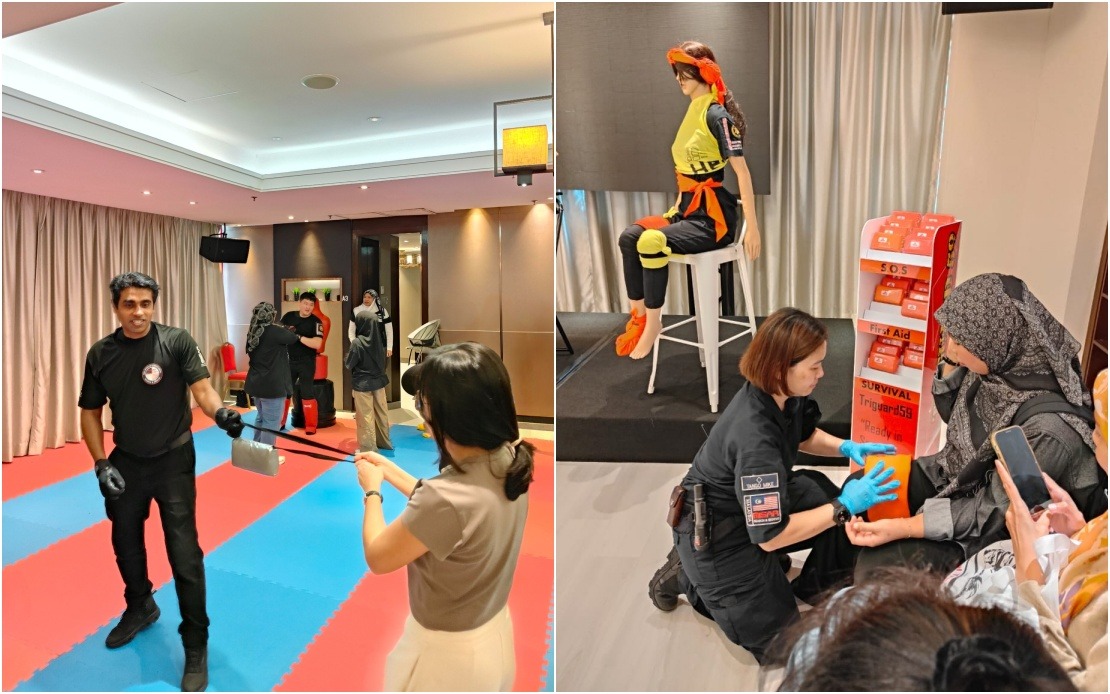
Allianz Malaysia has expanded its community safety efforts through a collaborative street crime awareness initiative with Kelab Marshal Keselamatan Jalan Raya Kuala Lumpur (RSMC), delivering the ninth edition of a programme designed to empower women against urban security threats. The campaign, conducted at Wisma Huazong YTL Hall in Seri Kembangan, Selangor, brought together 200 women participants to engage with practical training and expert guidance on navigating safety challenges in their daily lives.
The programme's curriculum addresses a comprehensive range of security concerns that disproportionately affect women in urban Malaysia. Participants received instruction on recognising and responding to home break-ins, a persistent concern in residential areas across the Klang Valley and beyond. The training also covered handbag snatching techniques used by opportunistic criminals, helping attendees understand vulnerability patterns and protective measures. Road-related scams, an increasingly sophisticated threat targeting motorists at traffic lights and petrol stations, formed another critical component of the education delivered.
Beyond property crime, the initiative tackled interpersonal safety risks that often receive less public attention. Stalking, a form of harassment that frequently escalates without intervention, was examined through both awareness and response frameworks. Carjacking scenarios were presented with tactical guidance on de-escalation and situational awareness. Accident response protocols were taught to ensure women felt confident in managing emergency situations on Malaysian roads, where traffic incidents remain a leading cause of injury and death.
Self-defence training represented a practical component that extended beyond physical techniques to encompass confidence-building and threat assessment. The programme framed self-defence not as violent resistance but as the ability to recognise danger early and respond appropriately, reducing panic and improving decision-making under pressure. Emergency preparedness education equipped participants with knowledge about contacting authorities, first aid fundamentals, and creating personal safety plans adaptable to their specific circumstances.
A notable enhancement in this iteration involved structured dialogue sessions between participants and RSMC experts. This interactive format moved beyond passive information delivery to enable women to articulate their particular safety anxieties and receive tailored guidance. The discussions created space for sharing real-world experiences, normalising conversations about personal security that often remain taboo in Malaysia's conservative social environment. Participants could raise specific concerns related to their neighbourhoods, workplace commutes, or family situations, receiving practical solutions grounded in local context.
Allianz Malaysia's commitment to this partnership reflects the insurance sector's broader recognition that risk mitigation extends beyond financial protection to encompass community resilience. Chief Executive Officer Sean Wang emphasised that programme success should be measured not merely by attendance figures but by knowledge dissemination within extended networks. His observation that community leaders requested similar initiatives for their neighbourhoods suggests the programme achieved the critical threshold of creating local advocates capable of perpetuating safety culture independently.
This multiplier effect represents significant value for Malaysian communities. Rather than relying solely on government resources or corporate initiatives, empowered community members can facilitate peer-to-peer learning, establish informal neighbourhood safety networks, and create cultural shifts around personal security consciousness. Women trained in these programmes become trusted sources of safety information within their families, potentially influencing behaviour across multiple generations and social circles.
RSMC founder Captain K. Balasupramaniam articulated a philosophy positioning street crime awareness as fundamentally about personal agency. His framing challenges victimhood narratives that sometimes discourage women from engaging with public spaces after dark or pursuing independence due to exaggerated fear. Instead, knowledge and practical skills restore agency, enabling informed risk assessment rather than blanket avoidance of situations. This approach aligns with contemporary safety education emphasising that informed behaviour modification, rather than restrictive lifestyle changes, represents the most sustainable security strategy.
The targeting of women aged 16 and above reflects recognition that safety threats manifest differently across life stages. Teenagers face distinct risks from older women—including vulnerabilities during school commutes, social situations with peers, and initial experiences navigating urban environments independently. By including younger participants, the programme addresses formative years when safety habits and threat assessment capabilities develop. Early intervention potentially prevents years of unnecessary anxiety or risky behaviour patterns established through ignorance.
Malaysia's urban crime landscape has evolved significantly over the past decade, with opportunistic street crimes remaining persistent despite police initiatives. Petty theft, particularly bag snatching from motorcycles targeting busy commercial areas, continues affecting residents' confidence in public spaces. The geographic concentration of such crimes in metropolitan areas like Kuala Lumpur and Selangor makes targeted community initiatives increasingly important, particularly given resource constraints on universal police presence.
The nine-year continuity of this partnership between an insurance provider and community safety organisation suggests sustained commitment rather than one-off corporate charity. Institutional knowledge accumulated across iterations likely improves programme design, trainer expertise, and curriculum relevance. The programme's evolution to include dialogue sessions indicates responsive adaptation to participant feedback, demonstrating that stakeholders remain receptive to refining approaches based on real community needs rather than imposing standardised solutions.
For Malaysian readers, particularly women navigating major urban centres, this initiative offers practical reassurance that accessible safety education remains available through community channels. The emphasis on translating awareness into action, coupled with documented interest from community leaders in replicating the model, suggests sustainable expansion potential beyond the current reach. As Malaysia continues urbanising and women increasingly participate in all sectors of public and economic life, normalising safety conversations and practical preparedness becomes essential infrastructure for inclusive urban development.

