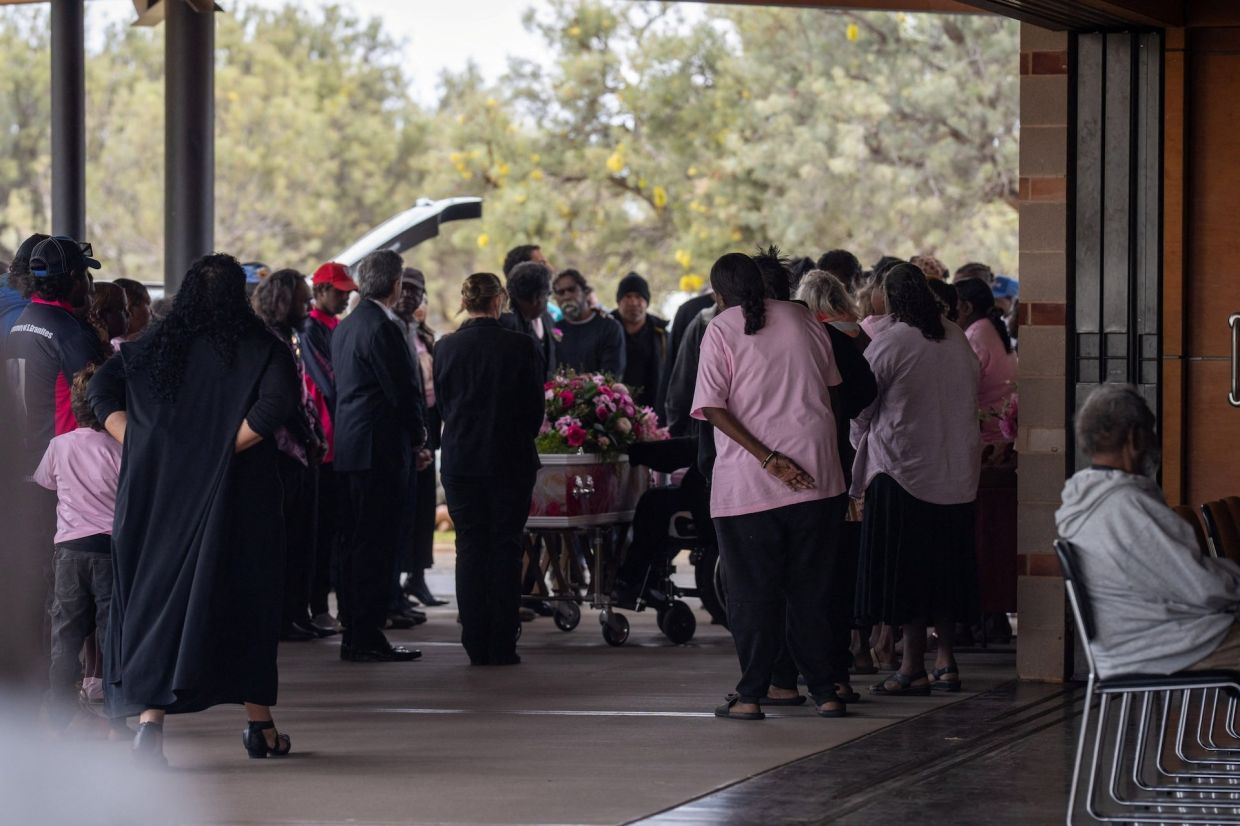
A community in mourning filled Alice Springs' Garden Cemetery on Saturday as residents gathered to farewell five-year-old Kumanjayi Little Baby, whose death four months earlier sent shockwaves through Australia and ignited confrontations that laid bare longstanding grievances in the remote outback town. The funeral service, attended by hundreds according to local reports, drew mourners who honoured the young girl by wearing pink—her favourite colour—in a visible display of collective grief that extended far beyond the immediate family.
The circumstances surrounding the child's death in April transformed a personal tragedy into a broader reckoning with social and economic failure in one of Australia's most isolated population centres. Located roughly 1,250 kilometres south of Darwin in Australia's Northern Territory, Alice Springs is home to about 25,000 people, of whom approximately one-fifth are Indigenous Australians. The arrest of the suspected killer, 47-year-old Jefferson Lewis, who was apprehended after being discovered and assaulted by local residents, catalysed a wave of civil unrest that revealed the depth of frustration simmering within the community.
The funeral proceedings reflected the cultural significance of "sorry business"—the mourning practices and ceremonial obligations that follow the death of an Indigenous person within Aboriginal traditions. These extended observances, which can span weeks or months, represent far more than a funeral service in the Western sense; they encompass communal healing, spiritual reconciliation, and the reaffirmation of cultural bonds. For the extended family and broader Indigenous community in Alice Springs, Saturday's ceremony marked a crucial moment in this solemn process, though the pain of loss remained evident in every aspect of the gathering.
The apparent simplicity of a funeral service belied the systemic challenges that have long plagued Alice Springs and numerous other remote Australian locations where Indigenous populations face compounding disadvantages. Thousands of Indigenous people, including members of Kumanjayi Little Baby's family, reside in makeshift camp communities on the periphery of Alice Springs where basic infrastructure remains inadequate and essential services are chronically underfunded. These settlements have become flashpoints for national debate about government responsibility and resource allocation in remote Australia.
Prime Minister Anthony Albanese responded to the killing by publicly pressing Northern Territory authorities to accelerate improvements to living conditions in these outlying camps, acknowledging that substandard housing, limited access to healthcare, and insufficient educational facilities create environments where vulnerability and desperation flourish. His intervention underscored the severity with which the federal government viewed both the immediate tragedy and its broader implications for Indigenous welfare and social cohesion.
Jefferson Lewis faces formal charges relating to the child's death, along with two additional offences whose details remain confidential under Australian legal restrictions protecting case integrity during proceedings. The identity of the accused and the nature of certain charges have been subject to suppression orders—a common procedural measure designed to ensure fair trial principles are upheld and that media reporting does not compromise judicial processes or prejudice potential jury members.
The violent aftermath of the arrest revealed how accumulated grievances within Alice Springs had reached a critical threshold. When residents located the suspect and engaged in beatings before his detention, their actions reflected not merely immediate anger but years of frustration with poverty, limited opportunity, and what many perceived as governmental indifference to community needs. The riots that followed transformed what might have been an isolated criminal matter into a wider commentary on inequality and neglect in remote Australia.
For Malaysian observers and Southeast Asian readers, the Alice Springs case illuminates challenges faced by indigenous and marginalised populations in developed nations—issues that parallel difficulties confronting Aboriginal communities across Australia and First Nations peoples in Canada, as well as minority populations throughout the region. The incident demonstrates how insufficient investment in community infrastructure and social services can precipitate crises that extend far beyond individual tragedies, affecting entire populations and demanding urgent policy responses.
The gathering at Garden Cemetery on Saturday represented a moment of pause within ongoing turmoil, allowing the community to acknowledge loss while confronting uncomfortable truths about systemic inequality. Yet for many observers, the funeral also marked the beginning of a more difficult phase—whether Australian authorities would translate expressions of concern into substantive improvements in housing, healthcare, employment, and educational opportunities for Indigenous residents in Alice Springs and comparable remote settlements. The test of genuine commitment would lie not in ceremony but in concrete action and sustained resource allocation to communities that have historically received insufficient attention and funding.

