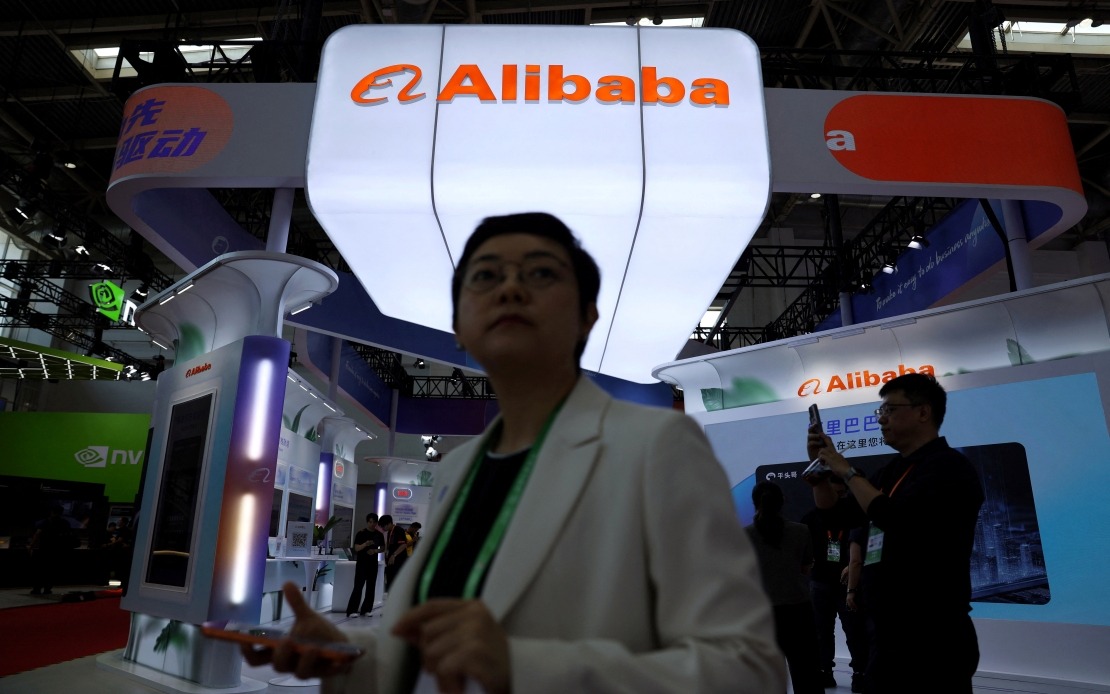
Chinese e-commerce and technology conglomerate Alibaba has initiated legal proceedings against the United States Department of Defense, challenging a controversial designation that classifies the company as linked to China's military-industrial complex. The lawsuit, filed in US court and disclosed on Tuesday, represents a significant escalation in tensions between American regulators and one of Asia's most influential technology firms, reflecting the deepening friction between Washington and Beijing over national security concerns in the technology sector.
Alibaba's legal challenge directly contests the Pentagon's June designation, which added the company to an expanding roster of Chinese firms deemed to have connections with the People's Liberation Army or military procurement apparatus. In its filing, Alibaba's legal team asserts that the determinations underlying this classification possess neither factual foundation nor legal justification, positioning the Pentagon's action as fundamentally flawed and potentially damaging to the company's business operations and reputation internationally.
The company emphasizes its corporate governance structure as a primary basis for contesting the military designation. According to the lawsuit, Alibaba operates under an independent board of directors, with no members possessing any military background, affiliation, or ties to the Chinese defence establishment. This governance argument suggests that the company maintains separation from state military interests and operates according to standard commercial principles rather than as an extension of military policy or procurement objectives.
Central to Alibaba's defence is the assertion that its entire business portfolio—encompassing retail commerce, supply chain logistics, and enterprise-grade information technology solutions—serves exclusively civilian and commercial purposes. The company contends that its operational focus, service offerings, and technology infrastructure are fundamentally designed for mainstream business applications rather than military applications or defence-related capabilities that might justify the Pentagon's military-linked classification.
Alibaba has further reinforced its position by highlighting its contractual commitments and compliance mechanisms, which explicitly restrict military utilization of its platforms and services. The company points to formal compliance policies that actively prohibit customers from deploying Alibaba's systems for military purposes, suggesting that the firm has constructed institutional safeguards specifically designed to prevent its technology from supporting military operations or defence manufacturing.
The company additionally notes that it lacks the certifications, licences, or regulatory clearances typically required for military contractors or defence suppliers in most jurisdictions. This absence of military credentials, Alibaba argues, distinguishes it fundamentally from genuine defence industry participants and supports its position that the Pentagon's designation rests on misunderstanding or mischaracterization rather than substantive evidence of military connections or dependencies.
The Pentagon's June designation swept in 188 Chinese companies across multiple technology, manufacturing, and telecommunications sectors, positioning the action as part of a broader strategic initiative to constrain the technological capabilities and commercial activities of firms with alleged military associations. Alongside Alibaba, the Pentagon's list included technology rival Tencent and electric vehicle manufacturer BYD, indicating that the Pentagon cast a wide net across multiple strategic industries considered vital to economic and defence competitiveness.
This legal confrontation carries substantial implications for the regional business environment and international technology relationships. For Malaysian and Southeast Asian technology companies, Alibaba's challenge to the Pentagon's classification authority may establish important precedent regarding how American regulators apply military-linked designations and whether companies can successfully contest such determinations through judicial means. The outcome could influence how regional firms navigate the increasingly complex landscape of US-China technology tensions.
The dispute also highlights the vulnerability of major technology companies to geopolitical classification systems that, from a corporate perspective, may appear arbitrary or lacking transparent evidentiary standards. Companies operating across multiple jurisdictions face potential designation risks regardless of their actual business activities or governance structures, creating uncertainty about how international regulatory frameworks will evolve in an environment where technology capabilities themselves sometimes attract security scrutiny.
Alibaba's legal strategy appears designed to establish that mere size, market prominence, or Chinese nationality cannot justify military-linked designations without concrete evidence of military collaboration or defence capability provision. If successful, the lawsuit could constrain the Pentagon's authority to list companies based on broad categorical assumptions about Chinese firms' relationships with military interests, potentially requiring more rigorous evidentiary standards for such designations.
The case reflects deeper questions about how democratic societies should balance national security interests against the rights of commercial enterprises to operate internationally and contest government actions. For Southeast Asian observers, the litigation demonstrates the tangible costs and business disruptions that can result from geopolitical classifications, reinforcing the region's complex position between major power competition.
Alibaba's formal legal challenge marks an important moment in corporate resistance to Cold War-style designation systems applied to technology companies. Whether American courts will accept the company's arguments or defer to Pentagon determinations will significantly influence how future disputes between commercial enterprises and security-focused government agencies are adjudicated in the US system.

