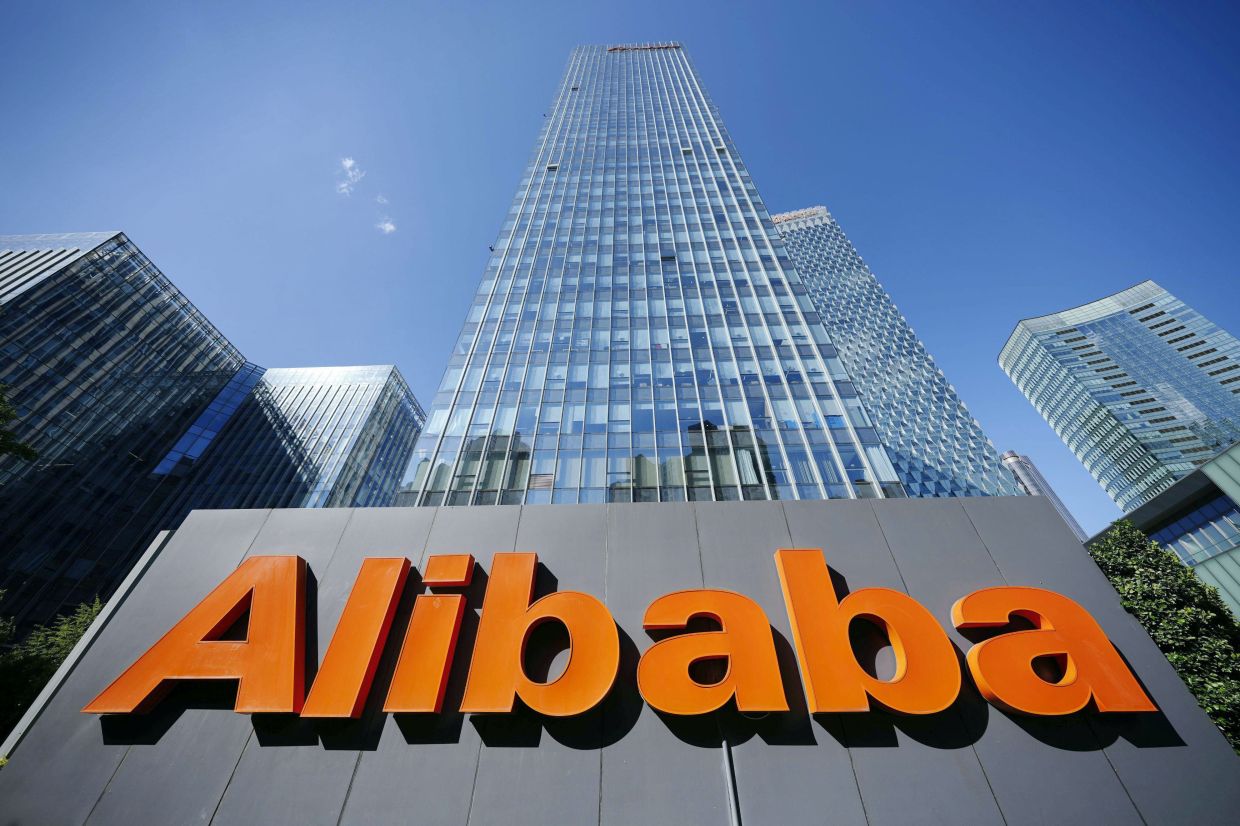
Alibaba Group Holding, the Chinese technology and e-commerce powerhouse, has initiated legal action against the US Department of Defence in a California district court, challenging its placement on a military blacklist that could hamper the company's access to American capital markets and government contracts. The lawsuit, filed Tuesday in San Jose, represents an aggressive pushback against what the Hangzhou-based company characterises as an arbitrary and unconstitutional designation that infringes on free speech rights and violates due process protections.
The Pentagon's blacklisting of Alibaba occurred on June 9, when the Defence Department added the company alongside fellow Chinese technology firms including electric vehicle manufacturers BYD and Nio, search engine giant Baidu, robotics maker Unitree Robotics, and networking equipment producer TP-Link to its official list of "Chinese military companies". These designations, made under Section 1260H of the National Defence Authorisation Act, target enterprises operating in sectors central to the strategic technological competition between Washington and Beijing, spanning artificial intelligence, biotechnology, solar energy, and telecommunications infrastructure.
While the Pentagon classification does not automatically impose direct sanctions, its consequences are significant and potentially far-reaching. The designation creates substantial obstacles for affected companies seeking to raise capital through US exchanges, secure lucrative American government contracts, and maintain business relationships with US entities constrained by export controls and procurement restrictions. For Alibaba specifically, which operates one of the world's largest e-commerce platforms and maintains significant financial technology operations, such limitations could prove economically damaging despite the company's dominant position in Chinese markets.
Alibaba's legal challenge directly contests two principal Pentagon assertions underlying the blacklisting decision. The company denies any indirect affiliation with China's State-owned Assets Supervision and Administration Commission, the government body overseeing state enterprises, and similarly rejects Pentagon claims linking it to military-civil fusion initiatives through alleged connections to the Ministry of Industry and Information Technology. Alibaba argues instead that its interactions with MIIT amount merely to routine regulatory compliance obligations facing all technology companies operating within China's regulatory framework, suggesting the Pentagon conflated ordinary business compliance with military coordination.
The company emphasised in its legal filing that it engaged directly with Pentagon officials during January meetings specifically regarding the potential designation, subsequently submitting detailed written responses in March that apparently failed to satisfy Defence Department concerns. This procedural chronology matters considerably, as it suggests Alibaba attempted good-faith engagement with American authorities before facing classification, potentially strengthening arguments regarding arbitrary decision-making and inadequate opportunity to respond meaningfully to accusations.
Alibaba's official position, articulated through company representatives, flatly denies any military nexus or participation in military-civil fusion arrangements, concepts that characterise integration between civilian commercial enterprises and defence-related research or production. The company has characterised the Pentagon's decision as capricious and arbitrary, language carefully chosen to suggest the Defence Department acted without rational justification or established evidentiary standards. The Pentagon declined to comment substantively on the ongoing litigation, offering only a standard response regarding ongoing legal proceedings.
Alibaba's legal challenge arrives amid escalating technological and economic tensions between Washington and Beijing that increasingly resemble a strategic competition for dominance across emerging technologies. The company's action follows similar opposition from other designated Chinese firms, with Baidu and BYD issuing strong public denunciations of the Pentagon's characterisations. The Chinese embassy in Washington reinforced this position, formally opposing what it characterised as Washington's exaggerated national security claims and discriminatory listing practices that it suggests misuse security rationales to pursue competitive advantage.
Beijing has responded to American designations with its own retaliatory measures. China's Ministry of Commerce added ten American companies to its export control list on Monday, including defence contractors Ball Aerospace & Technologies and Oshkosh Defense, alongside technology firms such as Red Cat Holdings and Teal Drones. The ministry framed these countermeasures as responses to Washington's "malicious actions," establishing the reciprocal escalation pattern that has characterised US-China technology relations throughout recent years.
Simultaneously, China's Ministry of Finance restricted 46 American companies from participating in Chinese government procurement, with immediate implementation. This list encompasses major defence contractors including Lockheed Martin, Raytheon Missiles & Defense, and General Dynamics Land Systems, along with the Javelin Joint Venture partnership between Lockheon and Raytheon. These measures, while formally termed "restrictions" rather than outright prohibitions, effectively prevent major American defence and technology companies from capturing government purchasing opportunities across China's vast public sector.
For Malaysian and Southeast Asian technology companies and investors, Alibaba's legal challenge carries significant implications beyond the immediate parties involved. The lawsuit underscores how geopolitical tensions between Washington and Beijing increasingly weaponise regulatory classifications and market access restrictions, creating unpredictability for regional companies navigating relationships with both superpowers. As Southeast Asia deepens technological integration with Chinese enterprises while maintaining security partnerships with the United States, precedents established through cases like Alibaba's designation and legal challenge will shape the operational environment for regional businesses.
The strategic calculation underlying Alibaba's aggressive legal response likely extends beyond narrow prospects of judicial victory. By challenging Pentagon authority in American courts, Alibaba seeks to establish legal precedent questioning the evidentiary standards and procedural fairness underlying military company designations, potentially protecting other Chinese technology companies facing similar classifications. The company's emphasis on constitutional protections and due process reflects sophisticated understanding of American legal culture and judicial receptiveness to procedural fairness arguments, even when involving foreign companies and national security matters.
This escalating US-China technology competition, manifested through competing blacklists and retaliatory designations, reflects deeper structural tensions unlikely to resolve through litigation or diplomatic negotiation. For regional stakeholders including Malaysia, the environment increasingly demands careful strategic positioning, as participation in either American security frameworks or Chinese technology ecosystems carries genuine costs and constraints. Alibaba's lawsuit thus represents not merely a corporate legal action but a visible manifestation of the technological fragmentation reshaping global commerce and competition.

