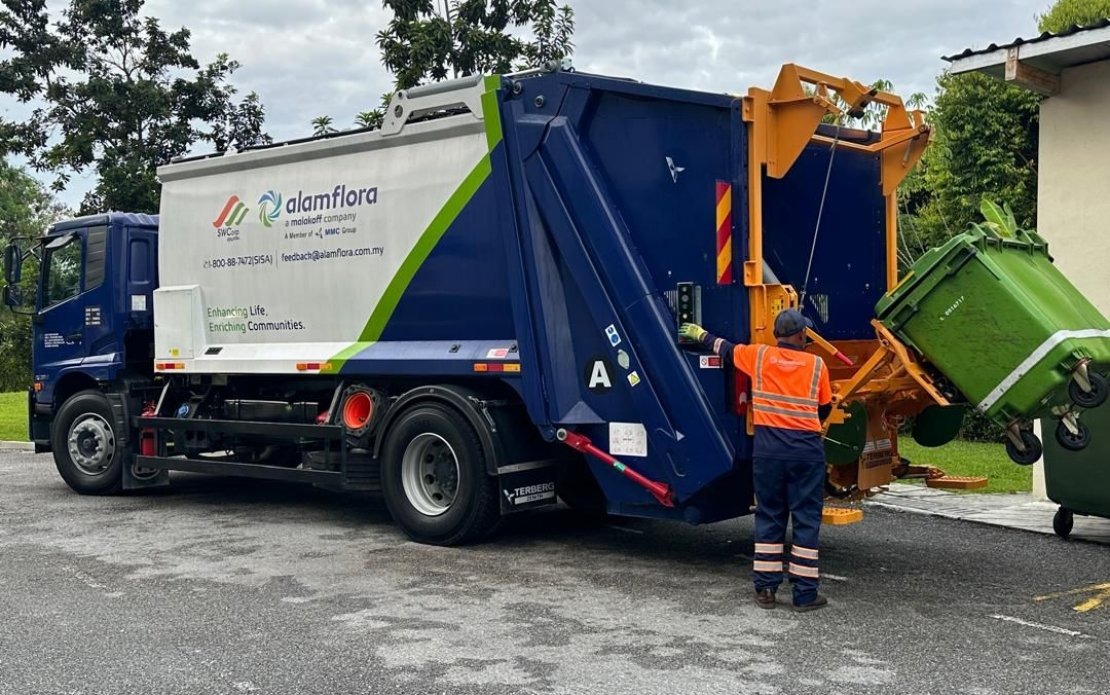
Alam Flora has committed itself to working closely with investigating authorities following an incident involving one of its compactor garbage lorries near Pantai Hillpark in Kuala Lumpur yesterday. The waste management company released a formal statement outlining its intention to provide all necessary assistance throughout the inquiry process, signalling its readiness to transparently address the circumstances surrounding the collision.
According to initial reports, the garbage lorry is suspected to have experienced brake failure in the early morning hours before subsequently losing control on Jalan Pantai Murni 1. The vehicle then struck the perimeter wall of an adjacent condominium, prompting emergency response and investigation by local authorities. The incident has sparked concerns about vehicle maintenance standards and safety protocols within the waste management sector, which operates daily across the capital with limited public oversight.
The driver involved in the crash promptly reported the matter to the Kuala Lumpur Traffic Police Station, and subsequent breathalyser testing by police officers confirmed that he had not consumed alcohol. This finding eliminates one potential causative factor, though it underscores the importance of mechanical maintenance as a fundamental operational responsibility. The swift reporting and the driver's sobriety suggest appropriate crisis response, though questions remain about pre-incident vehicle condition monitoring.
Adam Flora's formal response emphasises that worker safety, contractor welfare, and public protection constitute the company's foremost operational priorities. In the statement, the organisation acknowledged the gravity with which it treats such incidents and signalled its intention to implement any corrective measures that may emerge from the investigation. This stance aligns with expectations that organisations managing essential public services should maintain rigorous safety cultures and demonstrate accountability when incidents occur.
The investigation is proceeding under the framework of Section 43(1) of the Road Transport Act 1987, the relevant statute governing motor vehicle operations and operator responsibilities in Malaysia. The compactor lorry has been directed for comprehensive examination at the Computerised Vehicle Inspection Centre (Puspakom), Malaysia's primary facility for specialised vehicle diagnostic testing. This formal inspection process will establish the precise mechanical or systemic factors that precipitated the crash, providing an evidentiary foundation for any regulatory or corrective actions.
For Kuala Lumpur residents and the broader business community, this incident raises pertinent questions about the maintenance and oversight of commercial vehicles operating in urban areas. Waste collection represents critical urban infrastructure, yet the machinery supporting these operations frequently operates outside public consciousness. When failures occur—particularly those affecting residential safety—they expose potential gaps in preventive maintenance scheduling, driver training protocols, or fleet management systems that warrant industry-wide attention.
The implications extend beyond Alam Flora itself. Malaysia's waste management sector encompasses multiple operators managing thousands of vehicles across densely populated areas. Regulatory bodies and industry associations may view this incident as prompting broader review of safety standards, periodic inspection intervals, and driver certification requirements. The Road Transport Act framework provides mechanisms for enforcement, yet compliance effectiveness depends substantially on company commitment to voluntary best practices that exceed minimum legal thresholds.
Adam Flora's commitment to treating the matter with seriousness carries weight only insofar as it translates into concrete operational changes. The statement mentions that follow-up actions will be determined by investigation findings, a formulation that allows flexibility but also creates potential for minimal response if mechanical failure alone is attributed to the lorry rather than systemic management failures. Stakeholders—including residents in affected condominiums, workers operating similar vehicles, and regulatory authorities—should anticipate transparency regarding what the Puspakom examination reveals and what preventive measures the company subsequently implements.
The financial and reputational costs of such incidents incentivise companies to strengthen safety protocols. A crash into private property, regardless of whether injuries or major damage resulted, generates negative publicity, potential civil liability, and administrative scrutiny. For waste management operators competing for municipal contracts and maintaining public trust, demonstrated commitment to safety and transparent investigation cooperation represent both ethical imperatives and business necessities.
Moving forward, the Puspakom examination results will prove decisive in establishing whether the incident stemmed from mechanical defect, maintenance neglect, design vulnerability, or operator error. Each determination carries different regulatory implications. A mechanical defect may implicate manufacturing standards; maintenance failure points toward internal operational accountability; operator error suggests training gaps. Transparency in communicating findings to relevant authorities and affected parties will substantially shape public confidence in both Alam Flora and the regulatory architecture governing commercial vehicle operations throughout Malaysia.

