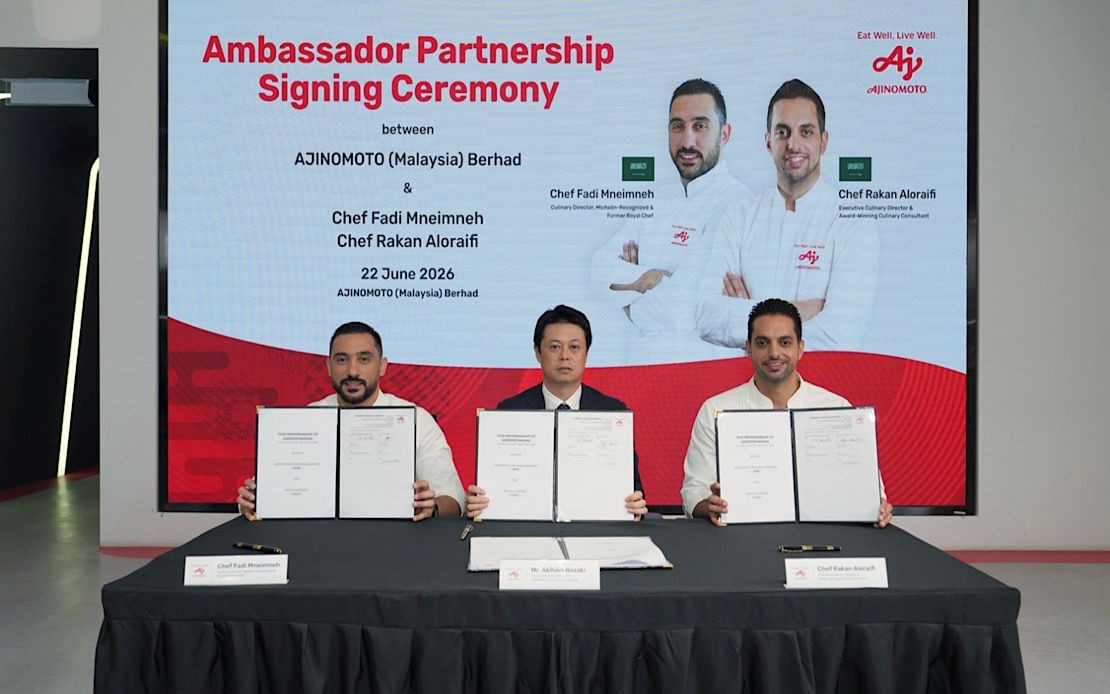
Ajinomoto (Malaysia) Berhad is making a calculated move into deeper Middle Eastern markets by forging a high-profile partnership with two of Saudi Arabia's most respected culinary figures, tapping into a region where halal-certified food products command premium positioning and growing consumer awareness. The collaboration with Chef Fadi Mneimneh, a Michelin-starred culinary director and former royal chef, alongside Chef Rakan Aloraifi, an award-winning executive chef and consultant, represents a shift toward leveraging local culinary authority rather than relying solely on brand reputation. For AMB, this strategy acknowledges a fundamental truth about food market penetration in the Middle East: acceptance from influential local chefs carries considerably more weight than overseas marketing campaigns, particularly when navigating the nuanced relationship between traditional cuisine and modern food innovation.
The partnership materialized following an exclusive factory visit by both chefs to AMB's manufacturing facility in Bandar Enstek, Negeri Sembilan, where they witnessed firsthand the company's halal certification processes and production standards. This transparency-focused approach serves multiple strategic purposes simultaneously. By inviting opinion-leading figures into its operations, AMB demonstrates confidence in its halal integrity and manufacturing rigour, while simultaneously educating these chefs—who will become natural ambassadors—about how umami-based products can enhance authentic Middle Eastern cuisine without compromising traditional flavours. The factory tour doubled as an educational session, with AMB providing comprehensive insights into umami science and its applications in contemporary culinary practice, addressing a knowledge gap that may exist even among experienced chefs unfamiliar with Japanese seasoning principles.
The highlight of the visit centered on live culinary demonstrations where Chef Fadi and Chef Rakan prepared authentic Middle Eastern dishes incorporating selected Ajinomoto products. These demonstrations proved particularly valuable as proof-of-concept, showing rather than merely asserting that umami depth can enhance traditional recipes. The messaging carefully positioned Japanese food innovation as complementary to Middle Eastern culinary heritage rather than competitive with it—a critical distinction in markets where authenticity claims matter significantly. By showcasing how umami can add complexity and flavour without altering the essential character of traditional dishes, AMB addressed a potential objection that Western food technology might somehow dilute cultural foodways.
Beyond the immediate factory engagement, this partnership opens systematic pathways for AMB to influence the region's hospitality and food service sectors. Both chefs operate within HORECA environments—hotels, restaurants and cafés—where ingredient selection carries competitive weight. When executive chefs and procurement professionals trust specific products because prominent peers have validated them, purchasing decisions follow naturally. The presence of AMB's Brunei distributor at the session also indicates emerging regional coordination, suggesting the company envisions this partnership extending across multiple Southeast Asian and Middle Eastern markets simultaneously rather than remaining Saudi-Arabia-specific. This network approach multiplies the partnership's value by creating knowledge-sharing infrastructure among regional partners.
The planned continuation of this partnership at the Hotel, Restaurant and Café event tentatively scheduled for October 2026 in Riyadh and Jeddah signals AMB's commitment to sustained engagement rather than a one-time publicity gesture. By securing both chefs to lead live demonstrations for HORECA professionals and procurement decision-makers at a major industry event, AMB positions itself as a serious ingredient supplier worthy of professional kitchen consideration. These events function as critical touch-points where purchasing managers encounter products under realistic operational conditions and receive validation from trusted culinary figures. The October 2026 timeline also suggests AMB is building medium-term strategic campaigns rather than reactive marketing, allocating resources to sustained presence in key markets.
From a broader market perspective, this initiative reflects the accelerating importance of halal certification as a competitive advantage in global food manufacturing. Malaysia has established itself as a trusted halal standard-setter, and AMB's strategy of leveraging both its halal credentials and Malaysian manufacturing base resonates across Islamic markets where provenance and certification carry significant purchasing weight. The Middle East, as the spiritual and cultural centre of Islam, operates with particularly acute awareness of halal standards and tends toward premium pricing for rigorously certified products. By combining Michelin-star culinary credibility with verifiable halal manufacturing, AMB creates a value proposition that appeals simultaneously to quality-conscious professional kitchens and consumers who prioritize religious compliance.
The emphasis on umami within these partnerships also reflects a sophisticated understanding of Middle Eastern culinary evolution. While traditional Middle Eastern cuisine relies heavily on spices, fresh herbs and slow-cooking techniques, the region's growing professional chef community increasingly incorporates umami-based elements to achieve greater depth and complexity in modern interpretations of classic dishes. By positioning umami as a tool for culinary sophistication rather than a replacement for traditional ingredients, AMB aligns with contemporary culinary trends while respecting established foodways. This nuanced messaging proves far more effective than simplistic arguments about product superiority.
The partnership also addresses supply-chain realities within the region. Saudi Arabia, as the Arabian Peninsula's largest economy and a major hub for hospitality and food service, influences purchasing patterns across neighbouring markets. Chefs and food service operators throughout the Gulf Cooperation Council region typically monitor developments in Saudi Arabia's culinary scene, making it a strategic market for establishing regional influence. Once AMB's products gain acceptance among Saudi Arabia's most respected chefs, penetration into other Gulf markets typically accelerates through normal professional networking and word-of-mouth endorsement.
From an investor perspective, this initiative demonstrates how Malaysian food manufacturers can compete globally by strategically leveraging the country's halal credentials and manufacturing reputation. Rather than competing on price—where international conglomerates maintain advantages—AMB competes on certification integrity, product quality and cultural alignment. This positioning allows AMB to maintain premium margins while building defensible market share in regions where these attributes command significant value. The strategy proves particularly effective in Islamic markets where Western manufacturers face implicit disadvantages regardless of actual product quality.
Looking forward, this partnership model may inform AMB's expansion strategy across other emerging markets. The approach of combining factory transparency, culinary collaboration and professional events addresses multiple stakeholder needs simultaneously: it reassures consumers about halal integrity, educates professional kitchens about product applications and builds long-term relationships with influential figures. As Middle Eastern markets continue expanding and diversifying, particularly with increasing investment in tourism and hospitality infrastructure, the demand for premium halal food products will likely accelerate. AMB's proactive positioning through culinary partnerships suggests it intends to capture substantial market share from this growth trajectory.

