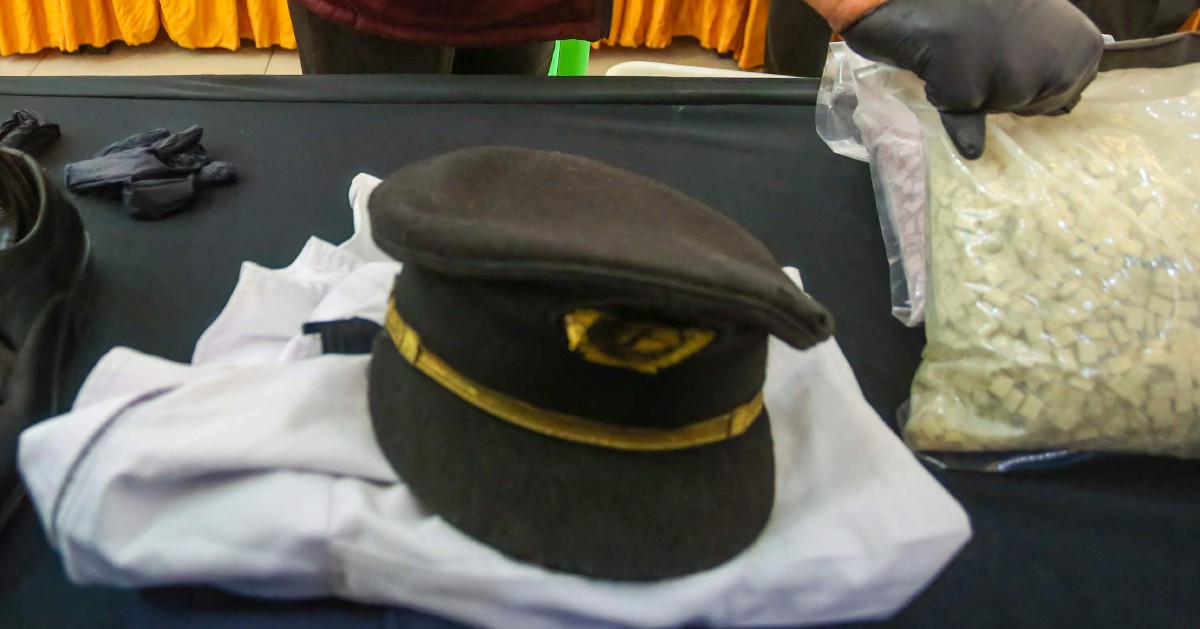
Investigators have zeroed in on an airport worker in his 30s as a potential key player in a troubling incident that has raised questions about security protocols at Malaysia's busiest aviation hub. The focus on this individual stems from an ongoing examination into how a Malaysia Airlines pilot managed to transport controlled substances through Kuala Lumpur International Airport while passing through security systems designed to intercept precisely such contraband.
The emergence of this person of interest represents a significant development in what appears to be a multifaceted security investigation. Police have been conducting their probe with particular attention to internal airport operations and the mechanisms that might have allowed prohibited items to slip through established checkpoints. The involvement of an airport employee suggests that authorities are exploring whether the breach resulted from procedural lapses, inadequate oversight, or potential collusion within the airport's operational framework.
The case strikes at the heart of aviation security, a concern that resonates across the entire Southeast Asian region where Malaysia's airports serve as crucial international transit hubs. KLIA's reputation as a modern, well-equipped facility makes the alleged breach particularly significant, as it challenges assumptions about the robustness of screening systems at major regional gateways. For Malaysian authorities, the investigation extends beyond the individual pilot to encompass broader questions about institutional safeguards and staff conduct.
The identification of an airport worker as a person of interest rather than a suspect indicates that investigations remain in preliminary stages. Police are likely examining the individual's duties, access levels, and interactions with the pilot during the relevant period. The positioning reflects standard investigative procedure where authorities cast an initial wide net before narrowing focus as evidence accumulates. This measured approach allows investigators to explore multiple angles without premature conclusions.
The aviation industry and regulatory bodies across Southeast Asia will be monitoring developments closely, given that weak security protocols anywhere in the region's airport network pose risks for the entire system. Airlines operating through KLIA depend on the integrity of ground operations and staff conduct. Any credible evidence of systematic failures or complicity could prompt wider reviews of security practices not just at KLIA but potentially at other major regional airports. Malaysia Airlines, in particular, faces scrutiny as the incident directly involves one of its pilots and reflects on the carrier's own vetting and compliance processes.
For Malaysia's authorities, the incident presents both a security challenge and an opportunity to demonstrate institutional responsiveness. A thorough, transparent investigation that holds all parties accountable—whether airport staff, airline personnel, or pilots—sends important signals about the country's commitment to aviation safety and regulatory compliance. Conversely, any perception of institutional cover-up or half-measures would damage confidence in Malaysian aviation security more broadly.
The broader implications extend to customs and border security frameworks. Airports function as critical checkpoints in national security architecture, tasked with protecting not just against drugs but against terrorism and other transnational threats. When controlled substances penetrate these barriers, it suggests vulnerabilities that criminal organisations and other bad actors may exploit. The investigation therefore carries significance beyond the immediate case, potentially revealing systematic weaknesses that authorities must address.
The involvement of a Malaysia Airlines pilot adds complexity to what might otherwise be viewed as a straightforward border security matter. Pilots occupy positions of trust within aviation systems and undergo significant vetting before employment. If a pilot became involved in drug smuggling, it raises questions about how existing background checks, ongoing monitoring, and occupational ethical standards functioned in this instance. Airlines must often grapple with the reality that comprehensive vetting cannot eliminate individual misconduct, but they are expected to maintain robust reporting and oversight mechanisms.
The airport employee's identification as a person of interest will likely prompt reviews of access protocols, checkpoint procedures, and staff supervision at KLIA. Authorities may examine shift records, security camera footage, and communications between airport staff during the relevant period. Such forensic examination can reveal whether the breach reflected isolated impropriety or symptoms of more endemic problems within specific departments or processes.
As the investigation unfolds, the case serves as a reminder that modern transportation security depends on multiple human actors performing their roles with integrity and vigilance. While technological screening systems play crucial roles, human elements—from checkpoint officers to airport management to airline personnel—remain central to effective security. A single individual's lapse or misconduct can compromise systems that appear robust on paper but prove vulnerable in practice.
The coming weeks will likely bring further developments as police deepen their investigation. Authorities must balance the need for swift action against the requirement for thorough evidence gathering. For Malaysian aviation stakeholders and Southeast Asian observers, the case represents a moment of institutional testing. How Malaysian authorities respond will influence regional confidence in the safety and security of air travel through the country's gateways.

