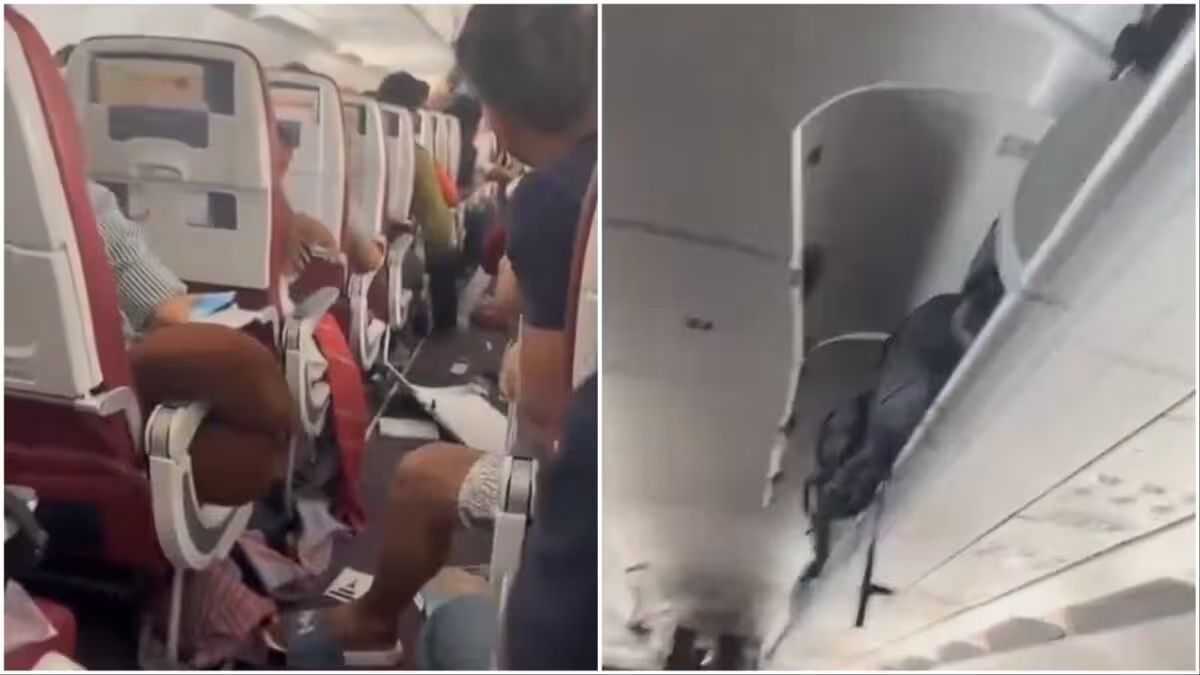
Airbus announced on Monday that it is deploying a team of specialists to New Delhi this week to support Indian aviation authorities investigating an Air India flight that underwent a sudden and alarming descent mid-air last month. The incident, which resulted in injuries to 17 people aboard the aircraft, has drawn the attention of the world's largest commercial aircraft manufacturer as part of an ongoing formal probe by India's Aircraft Accident Investigation Bureau. The move underscores the gravity of the situation and the complexity of determining what caused the Airbus A320 to lose approximately 300 feet of altitude on August 4 while en route from Phuket, Thailand to the Indian capital.
The flight, which carried 137 passengers and eight crew members, stabilised safely and landed without further incident in New Delhi, allowing authorities to conduct their investigation on a grounded aircraft. However, the harrowing nature of the descent—described as both sudden and dramatic—has kept the incident in public focus, particularly given mounting concerns about the Indian carrier's operational safety record. Air India confirmed in an official statement that the aircraft had experienced an unexpected loss of altitude and pledged full cooperation with investigators, while simultaneously notifying the aircraft's manufacturer of the serious occurrence.
India's civil aviation authority moved swiftly to classify the incident as a Serious Incident, triggering a formal investigation framework that requires comprehensive technical analysis and documentation. Airbus, for its part, has committed to providing what it describes as technical assistance to Indian investigators, recognising that understanding the root cause of such events benefits the broader aviation industry and passenger safety protocols. The manufacturer's involvement typically includes detailed examination of aircraft systems, maintenance records, and operational data recorded by the plane's flight data recorder and cockpit voice recorder.
Shadowing the investigation is a separate but potentially significant concern: psychoactive drug screening tests conducted on both pilots immediately after landing. While routine in Indian civil aviation procedure, the aviation ministry disclosed that the pilot-in-command's initial screening returned a result necessitating confirmatory testing. Samples have been forwarded for detailed laboratory analysis, though the final report has not been publicly released. This development has attracted considerable media attention in India and raised questions about pilot fitness for duty, a critical component of aircraft safety that regulators worldwide take extremely seriously.
In response to the positive screening result, both pilots have been removed from the flight roster pending completion of the investigation. This precautionary measure is standard practice when pilot conduct or medical fitness is questioned during an accident or serious incident investigation. The withholding of confirmatory test results from public disclosure reflects India's investigative protocols, which typically restrict sensitive information about individuals until findings are conclusively established. The delay in releasing final results has inevitably fuelled speculation in Indian media outlets, many of which have reported unconfirmed accounts of technical malfunctions affecting the aircraft moments before the altitude loss occurred.
Neither Air India, India's aviation ministry, nor Airbus has officially confirmed whether technical issues preceded or contributed to the descent, and the airline has explicitly stated it cannot comment on investigation findings while the probe remains active. This silence is consistent with international best practices for accident and incident investigations, which aim to prevent premature conclusions that might bias the investigative process or mislead the public. However, the absence of official clarity has allowed speculation to circulate unchecked, underscoring the tension between investigative confidentiality and public information demands in high-profile aviation incidents.
The incident occurs during a particularly turbulent period for Air India, India's largest full-service carrier, which has faced successive operational and reputational challenges that have strained its recovery efforts. The airline's management announced just last week that it has appointed Tewolde Gebremariam, former chief executive of Ethiopian Airlines, to lead the carrier forward. This leadership transition reflects stakeholder recognition that Air India requires experienced stewardship to navigate current difficulties and restore confidence among passengers, investors, and regulators.
The appointment comes in the shadow of Air India's catastrophic crash in June 2025, when Flight 171, a Boeing 787 Dreamliner departing from Ahmedabad bound for London, crashed shortly after takeoff. That disaster claimed 241 of the 242 passengers and crew aboard, along with 19 people on the ground, making it one of India's deadliest aviation accidents and a devastating blow to the carrier's safety reputation. The contrast between that tragedy and the relatively fortunate outcome of the August altitude incident—where skilled piloting and aircraft design allowed for recovery and safe landing—illustrates both the fragility and resilience inherent in modern aviation.
The August descent, occurring mere months after the June crash, poses a serious challenge to Air India's attempts to stabilise operations and passenger confidence. The airline's struggles have also been compounded by regional instability, with disruptions in Middle Eastern markets affecting flight schedules and revenue streams for carriers operating across South Asia and beyond. For Malaysian and broader Southeast Asian aviation stakeholders, the incident serves as a reminder of the interconnected nature of regional air transport networks and the importance of rigorous safety oversight across all carriers operating in the region.
As Airbus specialists arrive in New Delhi to commence their technical analysis, the investigation will likely examine multiple factors including aircraft maintenance history, engineering systems integrity, flight crew training and certification, and environmental conditions during the flight. The involvement of the world's leading commercial aircraft manufacturer in the investigation suggests authorities are treating the incident as potentially systemic rather than isolated, particularly given the high passenger load and the serious nature of an uncontrolled descent at cruising altitude.
The coming weeks will prove critical for determining whether the incident stemmed from mechanical failure, crew error, environmental factors, or some combination thereof. The findings will not only affect Air India's operational future and reputation but may also influence safety protocols across Asian carriers and inform broader discussions about fatigue, fitness-for-duty testing, and human factors in commercial aviation. For Southeast Asian passengers and the regional aviation sector, the investigation's conclusions carry implications that extend far beyond a single flight incident.

