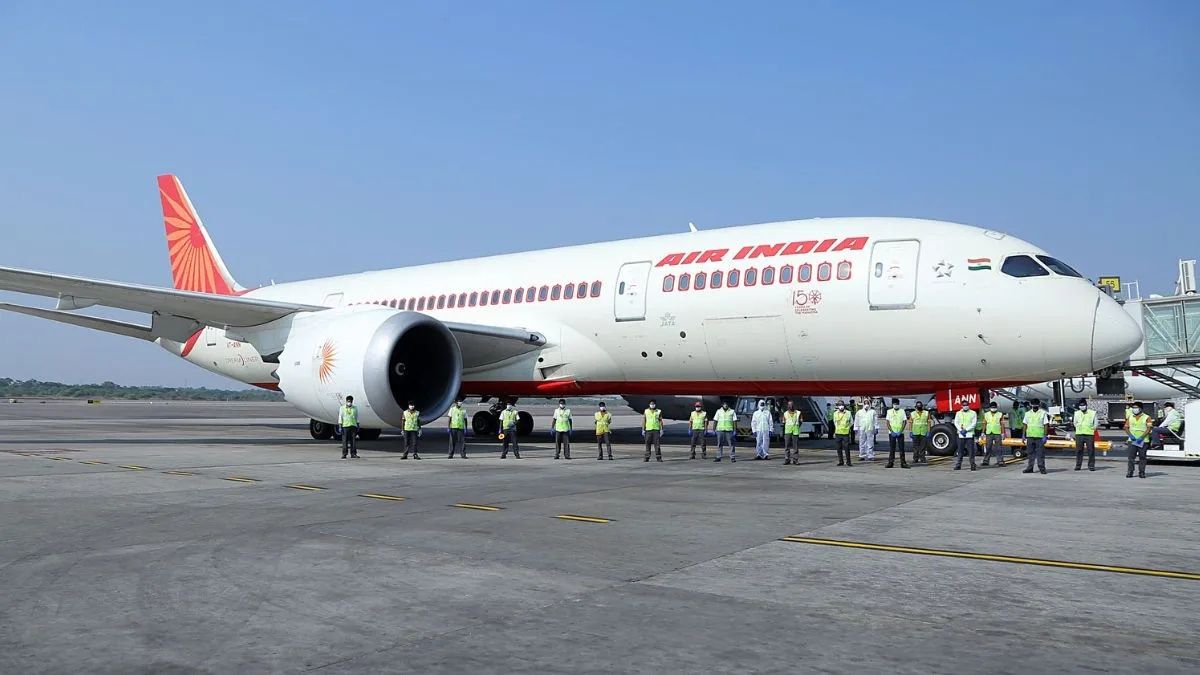
An Air India flight inadvertently strayed into Pakistani airspace on Monday night after encountering a technical malfunction in its navigation systems, marking another instance of an unintended border crossing in South Asian airspace. The Airbus A321, operating as Flight AI-463 on the Delhi-Amritsar route, experienced the deviation shortly after departing from Delhi's Indira Gandhi International Airport at 9.18pm on June 22. Aviation authorities confirmed the incident three days later, with sources indicating that Pakistani air traffic control played a crucial role in alerting the crew to the airspace violation before serious complications could develop.
The technical failure that triggered the westward drift represents a concerning vulnerability in commercial aviation operations across one of South Asia's most sensitive international boundaries. Navigation system malfunctions on modern aircraft are typically rare occurrences given the redundancy built into contemporary avionics, yet this incident demonstrates that equipment failures can still occur with potentially serious implications for bilateral airspace coordination. The flight's inertial navigation system apparently failed to maintain the proper course separation from the International Border, a critical safeguard that relies on both ground-based and aircraft-mounted systems working in concert to prevent such deviations.
The Pakistani Air Traffic Control Centre's swift response to the incursion reflects established coordination protocols between the two nations' aviation authorities, though formal procedures for handling such situations remain sensitive given the broader geopolitical context. Pakistani controllers promptly alerted Flight AI-463's crew to the airspace breach, enabling the pilots to immediately correct their trajectory and guide the aircraft back across the International Border into Indian territory. This coordinated response underscores the professional relationship that exists between aviation regulators despite political tensions between the two countries, and demonstrates that safety considerations often supersede diplomatic friction in the technical realm of air traffic management.
However, the flight's ordeal extended well beyond the initial navigation system failure and the brief incursion into Pakistani airspace. As the aircraft approached Sri Guru Ram Dass Jee International Airport in Amritsar around 10.30pm, air traffic controllers there informed the crew that the airspace was experiencing substantial congestion and no immediate landing slot was available. The combination of the delayed departure resulting from the navigation malfunction and heavy traffic volume at Amritsar airport left aviation authorities with limited options for managing the situation. Rather than attempt a holding pattern that could have compounded fuel concerns and operational stress on the crew, air traffic control made the decision to divert the flight back to Delhi for technical inspection and to allow the airspace situation in Amritsar to normalize.
The decision to return the aircraft to the capital rather than resolve the situation in Amritsar, while operationally sound, resulted in significantly extended travel disruptions for passengers aboard the flight. The aircraft landed back in Delhi for mandatory technical inspection procedures, allowing maintenance personnel to examine the navigation system failure and conduct necessary testing to determine whether the malfunction was isolated or symptomatic of broader avionics concerns. These technical checks are standard protocol following any in-flight system anomaly, particularly one that results in a deviation from the planned flight path, as they help establish that an aircraft is fully safe to resume service before returning to the air.
After completing technical inspections and obtaining clearance from air traffic authorities, the flight finally departed Delhi for its second attempt to reach Amritsar. The aircraft touched down safely at Sri Guru Ram Dass Jee International Airport at approximately 2.20am on Tuesday morning, nearly four hours behind its original scheduled arrival time. Passengers who had booked what was supposed to be a relatively brief domestic flight experienced a journey that consumed substantially more time and involved an unexpected diversion, though the professional handling by both Indian and Pakistani air traffic services and the flight crew ensured that safety remained paramount throughout the incident.
Neither Air India nor the Directorate General of Civil Aviation (DGCA), India's primary aviation regulator, has yet released detailed technical statements regarding the specific nature of the navigation system malfunction. Such failures typically undergo comprehensive investigation to determine whether the problem originated from hardware degradation, software configuration issues, or maintenance-related factors. Aviation authorities have launched a routine inquiry into the precise circumstances surrounding the route deviation, examining not only the technical aspects of the navigation system failure but also the cascade of decisions made by air traffic control on both sides of the border in response to the emergency situation.
This incident occurs against a backdrop of heightened sensitivity regarding airspace incursions in South Asia. Barely a month prior, a Pakistan International Airlines flight briefly entered Indian airspace while operating in challenging weather conditions, requiring intervention by Indian air traffic controllers to guide the aircraft back to its designated route. The recurrence of such incidents, despite relatively low frequency given the volume of daily flights in the region, highlights the inherent risks involved in operating commercial aviation services across an international boundary in a geopolitically sensitive area where normal diplomatic protocols may not apply during emergencies.
The broader implications for Malaysian and Southeast Asian aviation safety relate to the critical importance of maintaining robust navigation systems and implementing effective safety protocols that accommodate human error and equipment failure. Both the Air India incident and the earlier Pakistan International Airlines crossing demonstrate that even in well-established air corridors with regular surveillance and professional air traffic control services, technical failures can create dangerous situations that require split-second coordination between multiple agencies. The successful resolution of both incidents without casualties or serious incidents validates the effectiveness of existing coordination mechanisms, yet also underscores the need for continued investment in redundant navigation systems and regular training for air traffic controllers in managing emergency situations across international boundaries.

