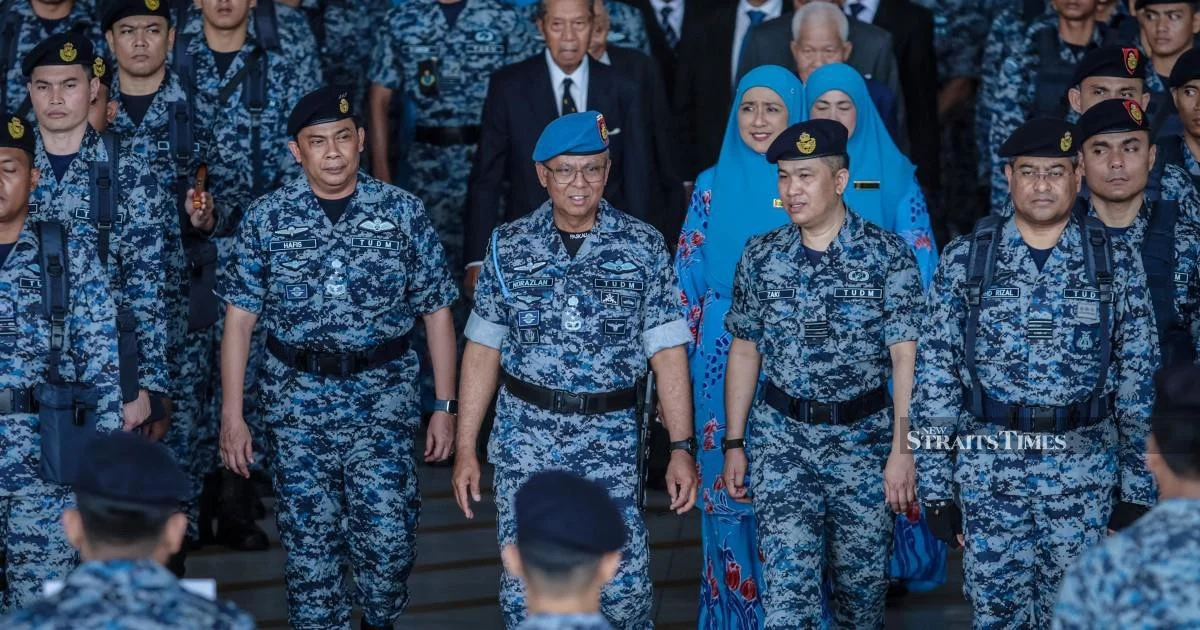
General Tan Sri Muhamad Norazlan Aris, commander of the Royal Malaysian Air Force, has underscored the mounting importance of aerial power in safeguarding Malaysia's crucial maritime corridors as the geopolitical landscape across Southeast Asia becomes increasingly unstable. Speaking at the air force headquarters in Subang, the senior military official flagged growing security concerns that demand renewed focus on strengthening Malaysia's airborne defence systems. His remarks come at a time when regional tensions continue to escalate, with several nations competing for influence and control over strategically vital waterways.
Malaysia's maritime environment faces a complex web of challenges that extend well beyond traditional piracy concerns. The nation sits astride some of the world's busiest shipping lanes, including routes through the Straits of Malacca and the South China Sea, where tensions over territorial claims have periodically flared. Goods worth trillions of dollars annually traverse these waters, making their security a matter of global economic importance. For Malaysia, protecting these routes translates directly into national prosperity, as the country benefits from transit fees, port activities, and the smooth functioning of its own trade operations. Any disruption to maritime traffic could have immediate ramifications for businesses across the nation and its regional neighbours.
The RMAF chief's emphasis on air power reflects a broader strategic shift in how modern nations approach maritime defence. Unlike traditional naval deployments alone, which require significant resource investment and constant repositioning, air-based surveillance and rapid response capabilities offer greater operational flexibility and cost efficiency. Aircraft can cover vast ocean expanses quickly, identify potential threats from a distance, and respond to emerging situations in real time. This advantage becomes particularly pronounced in a sprawling maritime zone like Malaysia's, where comprehensive surface coverage through ships alone would prove prohibitively expensive.
Regional developments have intensified pressure on Malaysian defence planners. The strategic rivalry between major powers, persistent territorial disputes in the South China Sea, and the increasing militarization of the region have all contributed to a more complex security environment. Smaller nations like Malaysia must navigate these tensions carefully while ensuring their own maritime sovereignty remains intact. Enhanced air capabilities would allow the country to project presence across disputed waters, conduct independent surveillance operations, and respond swiftly to any breaches of its maritime zones.
The challenge facing the RMAF extends beyond mere acquisition of modern aircraft. Operational readiness, pilot training, maintenance infrastructure, and sustained funding mechanisms must all align to create an effective air defence system. Many Southeast Asian nations struggle with these logistical and financial demands, often leaving their defence capabilities below optimal levels despite possessing technologically capable equipment. For Malaysia, ensuring consistent investment in both hardware and personnel development remains critical to translating the RMAF chief's strategic vision into concrete operational capability.
Current RMAF holdings include the Boeing F/A-50 Golden Eagle fighters, Hawk jet trainers, and various transport and reconnaissance aircraft. While these assets provide a foundation, defence analysts frequently note that the force's aging inventory requires modernization to maintain effectiveness against contemporary threats. Decisions on future procurement will shape Malaysia's aerial capabilities for decades, making current strategic assessments particularly consequential for long-term national security planning.
The economic dimension cannot be overlooked. Investment in air defence infrastructure stimulates domestic defence industries, generates skilled employment, and creates technological spillovers into civilian sectors. Countries that prioritise maritime air defence often develop expertise that extends into civilian aviation, aeronautical engineering, and related fields. For Malaysia, building stronger air capabilities could support broader economic diversification goals beyond the security benefits.
Regional cooperation also offers potential pathways to enhance collective maritime security. Coordinated air operations, information sharing, and joint training exercises with neighbouring countries could multiply the effectiveness of individual national capabilities. The concept of pooled resources and coordinated responses has gained traction in Southeast Asia, though political considerations sometimes complicate such arrangements. Nevertheless, the RMAF chief's comments implicitly suggest that Malaysia recognizes its security challenges cannot be addressed in isolation.
Domestic procurement constraints mean Malaysia must make strategic choices about defence spending priorities. Balancing investment between air power, naval capabilities, ground forces, and cyber defence requires careful analysis of threat assessments and operational doctrine. The RMAF chief's public statements serve as part of this broader strategic conversation, advocating for adequate resources while operating within national budgetary realities. Political leadership must ultimately weigh these military recommendations against competing domestic priorities such as healthcare, education, and infrastructure development.
Looking forward, the sustainability of air-based maritime defence depends on maintaining technical expertise and securing adequate funding streams. Training pipelines for pilots and maintenance personnel must remain robust, while procurement decisions should emphasise not just capability but also the domestic industrial capacity to support long-term operations. The RMAF chief's emphasis on air power protection reflects professional military assessment of contemporary security needs, but translating this strategic insight into policy requires broader governmental commitment and sustained political will across electoral cycles.

