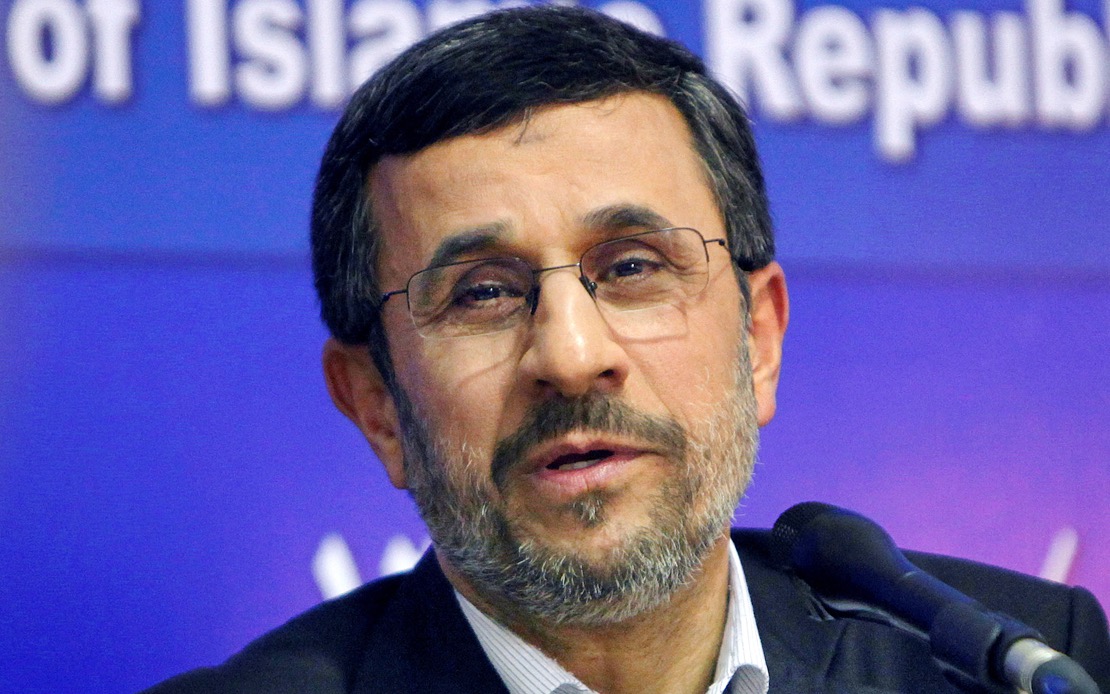
Former Iranian President Mahmoud Ahmadinejad has emphatically rejected allegations published by The New York Times that Israel's Mossad intelligence service attempted to recruit him as part of a covert operation to overthrow Iran's government. Speaking through his office in Istanbul on Tuesday, Ahmadinejad characterized the newspaper's claims as entirely without foundation and accused the publication of deliberately spreading misinformation intended to destabilize Iran and fracture its political coherence.
The Times' investigation, released Monday, presented an extensive narrative centred on purported Israeli efforts to gain Ahmadinejad's cooperation over recent years. According to the American newspaper's reporting, which cited unnamed American officials, Israel allegedly funnelled substantial sums toward the former leader's housing and travel expenses while orchestrating clandestine meetings with operatives in locations including Budapest. The cumulative portrait suggested an elaborate intelligence operation designed to position Ahmadinejad as a potential alternative leader amenable to Israeli interests.
Ahmadinejad's office issued a sweeping denial of the entire framework presented by the newspaper, emphasizing what it described as the fabricated nature of every component within the story. The statement challenged the credibility of The New York Times itself, suggesting the publication had abandoned journalistic standards in pursuit of a predetermined narrative hostile to Iran. This represents a forceful pushback against what would constitute, if true, a significant breach of national security involving foreign intelligence recruitment of a former head of state.
The Times report escalated its allegations by contending that Israeli intelligence moved toward concrete action during late February, when the opening phases of United States-Israeli military operations against Iran were underway. According to the newspaper's account, Israeli planners viewed this window of heightened military activity as an opportune moment to extract Ahmadinejad from Tehran and potentially position him to lead a transitional government favourable to Israeli and American interests. This element of the claim connects directly to broader documented Israeli and American efforts to weaken Iranian state institutions through military and covert means.
Specific operational details provided by The Times included allegations that an Israeli airstrike on February 28 targeted Ahmadinejad's compound, deliberately striking structures housing his personal security apparatus and destroying an armoured vehicle. The newspaper then cited unnamed Iranian and American officials who described the arrival of a black Peugeot automobile at the scene following the strike, allegedly carrying Ahmadinejad to a concealed facility within Iranian territory. The suggestion that Mossad operatives piloted this vehicle adds a layer of extraordinary allegation—that foreign intelligence services conducted active operations on Iranian soil during military operations.
The broader context of these allegations reflects genuine tensions within Iranian political circles and historical divisions regarding Ahmadinejad's presidency and subsequent activities. His tenure from 2005 to 2013 generated significant domestic controversy and international condemnation, while his post-presidential behaviour, including periodic public interventions on political matters, has occasionally positioned him at odds with Iran's current establishment. Whether such internal fissures might provide openings for foreign intelligence recruitment remains speculative, yet the Times presented its account with sufficient operational specificity to suggest serious investigative work, however contested its conclusions may be.
Ahmadinejad's emergence from relative public obscurity last week to attend the funeral of Supreme Leader Ali Khamenei marked his first significant public appearance since American-Israeli military operations began. That attendance by the former president—arguably the most internationally recognized face of Iran's presidency despite his controversial record—carries political symbolism within Iran's factional landscape. His reappearance contradicts any narrative of forced confinement, providing tangible evidence against the house arrest allegations, though it does not address the deeper questions regarding any historical intelligence contacts.
For Malaysian and Southeast Asian observers, this episode illuminates persistent complexities in Middle Eastern geopolitics where regime change operations, intelligence recruitment, and covert military operations intersect. The allegations, whether accurate or fabricated, underscore the vulnerability of political figures in nations targeted by hostile foreign powers and the capacity for intelligence agencies to launch sophisticated operations designed to exploit internal divisions. The very public nature of Ahmadinejad's denial—issued through formal channels rather than remaining private—suggests Iranian authorities view the allegations as sufficiently damaging to require immediate, forceful rebuttal.
The strategic dimensions of this controversy extend beyond personality disputes or individual recruitment efforts. If the Times account reflects genuine intelligence operations, it would constitute one element within a much larger American and Israeli campaign to isolate Iran, encourage internal factionalism, and create conditions favourable to regime change. Alternatively, if the allegations represent misinterpretation of intelligence reporting or deliberate disinformation intended to embarrass Iranian leadership, the episode reveals how contested the information space has become regarding Iran policy, particularly when major American publications claim access to official sources.
Ahmadinejad's categorical rejection carries particular weight given his profile as someone who has previously engaged in public disputes with Iranian authorities and global powers. His dismissal of the claims as devices intended to divide Iranians internally points toward Iranian concerns that foreign actors deliberately amplify internal political differences to weaken state cohesion. This defensive posture reflects anxieties about Western intelligence services exploiting legitimate political pluralism within Iran to advance regime change objectives—a concern that shapes Iranian security policy regardless of any particular individual's actual recruitment status.

