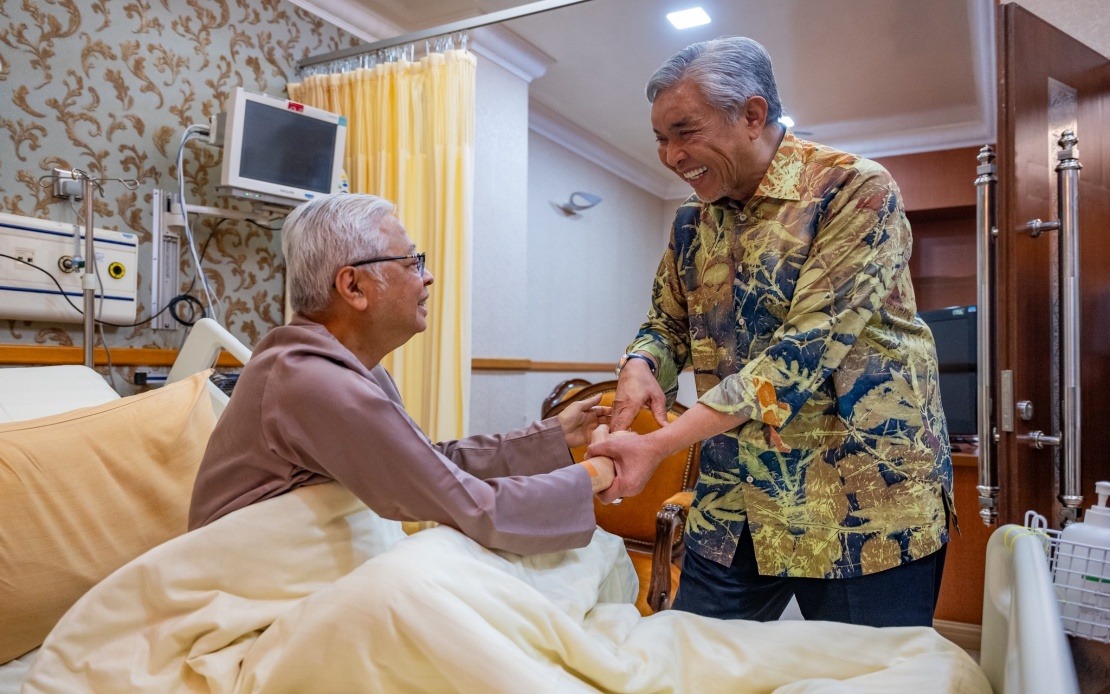
Malaysia's Deputy Prime Minister Datuk Seri Dr Ahmad Zahid Hamidi made a visit to the National Heart Institute in Kuala Lumpur to check on the well-being of former Prime Minister Datuk Seri Ismail Sabri Yaakob, who is currently receiving medical treatment at the facility. The gesture underscored the political establishment's concern for the health of the country's former leader, who has faced unexpected complications requiring advanced cardiac intervention.
Through a social media post, Ahmad Zahid conveyed his well-wishes to Ismail Sabri, expressing hope that the Bera Member of Parliament would make a complete recovery and regain his strength. The Deputy Prime Minister's message reflected broader sentiments within the government, emphasising that Ismail Sabri would be able to return to his regular duties and resume his contributions to public service once fully recuperated. The visit came at a time when the former PM's health situation had drawn attention from political figures and the public alike.
Ismail Sabri encountered medical difficulties on August 6 while at the Malaysian Anti-Corruption Commission's offices, where he had gone to provide a formal statement. The sudden onset of health complications necessitated his immediate transfer to the National Heart Institute, one of the country's leading cardiac facilities. The incident raised questions about his condition and sparked concern among colleagues and party members who have maintained close ties with the former administration.
At the institute, Ismail Sabri underwent a procedure to implant a wireless pacemaker designed to address an irregular heart rhythm condition. This type of intervention represents a significant advancement in cardiac treatment technology, offering patients a less invasive alternative to traditional pacemaker implantation. The wireless pacemaker allows for improved patient mobility and comfort while maintaining continuous monitoring and regulation of the heart's electrical activity.
The health episode involving a senior political figure highlights the unpredictable nature of cardiac events and underscores the importance of prompt medical response in potentially life-threatening situations. Ismail Sabri's case demonstrates how serious heart conditions can develop suddenly, even during routine activities, emphasising the need for immediate access to specialised medical facilities capable of providing emergency interventions.
For Malaysia's political landscape, the incident brings into focus the health vulnerabilities of key political leaders and raises broader conversations about healthcare preparedness and the availability of advanced medical treatments at the national level. The National Heart Institute, where Ismail Sabri received treatment, stands as a testament to Malaysia's capacity to deliver world-class cardiac care, a factor that likely contributed to the positive outcome of his medical emergency.
Ismail Sabri's tenure as Prime Minister from August 2021 to October 2022 was marked by significant national challenges, including the management of the COVID-19 pandemic and economic recovery efforts. His subsequent political role as a Member of Parliament for Bera has kept him engaged in legislative affairs and constituency matters. The health scare has provided a moment for the broader political community to reflect on the demands placed upon senior office-holders and the physical toll that high-pressure positions can exact.
The public expressions of concern from senior government figures like Ahmad Zahid demonstrate a level of political civility and personal regard that transcends partisan divisions. Such gestures carry symbolic weight in Malaysian politics, where personal relationships and mutual respect among leaders, despite differing political affiliations, remain culturally significant. The Deputy Prime Minister's visit and prayers for recovery project an image of national unity focused on individual welfare rather than political rivalry.
Looking forward, Ismail Sabri's recovery trajectory will likely be followed closely by political observers, media commentators, and the public. The successful implantation of the wireless pacemaker provides a foundation for his return to normal activities, though the recovery period and rehabilitation process will require careful management and medical supervision. His case also serves as a reminder for other political figures and members of the public about the importance of regular health check-ups and awareness of cardiovascular risk factors.
The incident also highlights the critical role played by the National Heart Institute and similar medical institutions in the Malaysian healthcare ecosystem. These facilities represent substantial investments in public health infrastructure and showcase the country's commitment to providing citizens with access to cutting-edge medical technology and expertise. The availability of such facilities has proven essential not only for politicians but for the broader population in managing serious health emergencies.

