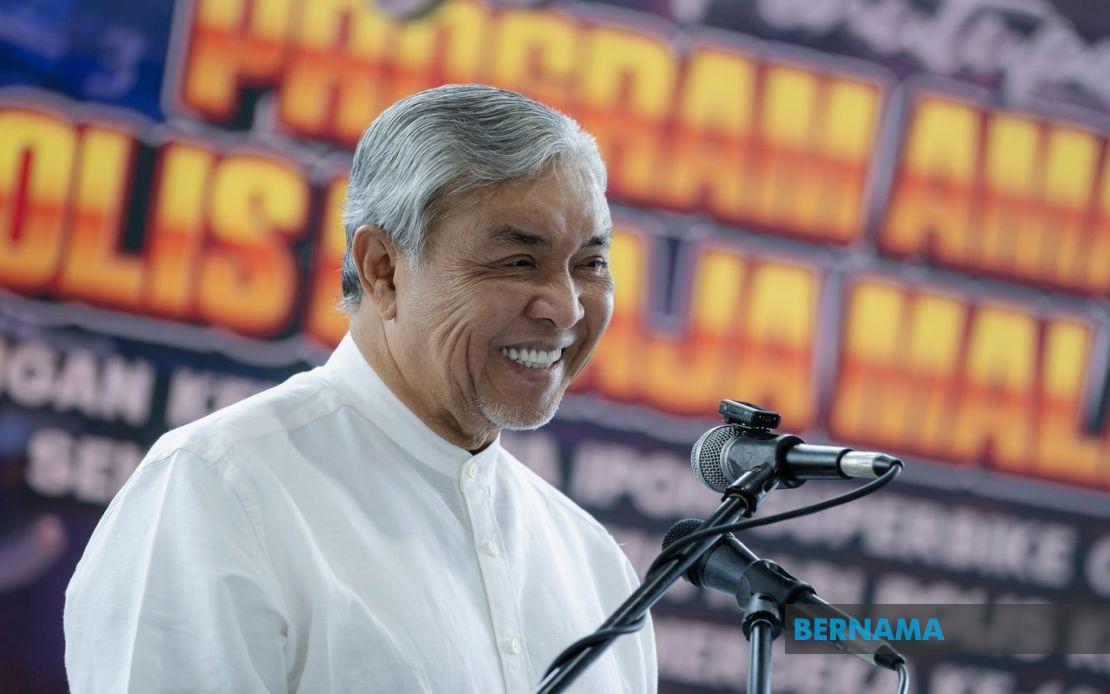
Deputy Prime Minister Datuk Seri Dr Ahmad Zahid Hamidi has emphasised the critical importance of Malaysian motorcyclists respecting and following traffic regulations in countries they visit, stating that compliance with local laws forms the foundation of healthy international relations within the ASEAN region. His remarks come as tensions simmer following a recent incident involving high-powered motorcycle riders from Malaysia who encountered Thai traffic authorities in Hat Yai and were issued multiple fines for various violations.
Addressing reporters at the closing ceremony of the Negeri Sembilan Contingent Charity Ride programme in conjunction with police anniversary celebrations at the Kuala Lumpur Police Contingent Headquarters, Ahmad Zahid underscored that motorcyclists must recognise the sovereignty of host nations and their right to enforce road safety standards. He stressed that the responsibility for maintaining cordial ASEAN relations extends beyond government-to-government dialogue to encompass the behaviour of individual citizens who cross borders for leisure or sporting pursuits.
The controversy erupted after a video circulated widely on social media suggesting that Thai traffic authorities had acted unfairly toward the Malaysian riders. The clip sparked concerns among local motorcycle enthusiasts about potential discrimination, with allegations that police had engaged in heavy-handed enforcement. However, Thai authorities have rejected these characterisations, clarifying that the summonses reflected genuine traffic code breaches rather than any bias toward foreign nationals.
Thailand's police force has detailed the specific infractions cited against the Malaysian group, which included the improper use of flashing lights and modifications to motorcycle exhaust systems that generated noise levels exceeding statutory limits. These violations represent common enforcement priorities across Southeast Asia, where authorities have grown increasingly strict about aftermarket modifications that compromise road safety and disturb residential areas. The incident highlights a recurring friction point between performance motorcycle enthusiasts and traffic enforcement agencies across the region.
Ahmad Zahid's comments reflect a broader diplomatic approach emphasising mutual respect and tolerance among ASEAN member states. He articulated a philosophy where each nation's regulatory framework deserves recognition and compliance from visitors, regardless of how those standards might differ from riders' home countries. This stance positions the Malaysian government as a defender of international law and order, even when it inconveniences its own citizens abroad.
The Deputy Prime Minister also signalled that Malaysia intends to examine instances where foreign-registered vehicles violate local traffic laws upon entering Malaysian territory. This reciprocal concern suggests a bilateral approach to enforcement, acknowledging that road safety issues flow in multiple directions across shared borders. The mention of reviewing foreign vehicle violations indicates that Malaysian authorities are equally vigilant about protecting their own road environment from potentially hazardous or non-compliant vehicles from neighbouring countries.
Ahmad Zahid indicated that disputes arising from such incidents could be escalated and resolved through established diplomatic channels, specifically mentioning the Annual Consultation Meeting mechanism involving Prime Minister Datuk Seri Anwar Ibrahim and fellow ASEAN leaders. This framework provides a structured pathway for addressing grievances without allowing isolated traffic enforcement incidents to escalate into broader bilateral tensions. The existence of such consultation platforms underscores ASEAN's commitment to dialogue-based conflict resolution across member states.
Beyond the traffic enforcement discussion, Ahmad Zahid praised the Negeri Sembilan Charity Ride initiative, which successfully accumulated RM102,000 in contributions from 53 participating companies. This charitable motorcycling event channelled passion for riding into meaningful community support, with the collected funds designated for distribution among 120 families of Royal Malaysia Police personnel and twelve welfare homes situated along the convoy's route. The programme demonstrates how motorcycle communities can contribute constructively to society when properly coordinated with official agencies.
The Deputy Prime Minister expressed enthusiasm about expanding charitable motorcycle initiatives, indicating his intention to participate in a large-scale convoy planned for next year's 70th National Day and 220th Police Day commemorations. He proposed enlisting at least 220 riders for this expanded event, suggesting growing appetite within government circles to harness the motorcycle community's organisational capacity and fundraising potential for public benefit projects. This approach seeks to channel the energy and camaraderie of motorcycle enthusiasts toward socially constructive ends.
The underlying message from Ahmad Zahid reflects a nuanced position balancing three considerations: defending Malaysian citizens' rights abroad, acknowledging legitimate regulatory concerns of neighbouring nations, and encouraging motorcycle enthusiasts to become responsible ambassadors for Malaysia. By framing legal compliance as essential to ASEAN harmony rather than mere bureaucratic obligation, he attempts to shift cultural attitudes toward traffic regulations among enthusiasts who may view enforcement as overly restrictive. This educational approach complements formal diplomatic channels in addressing cross-border friction arising from enforcement disparities.

