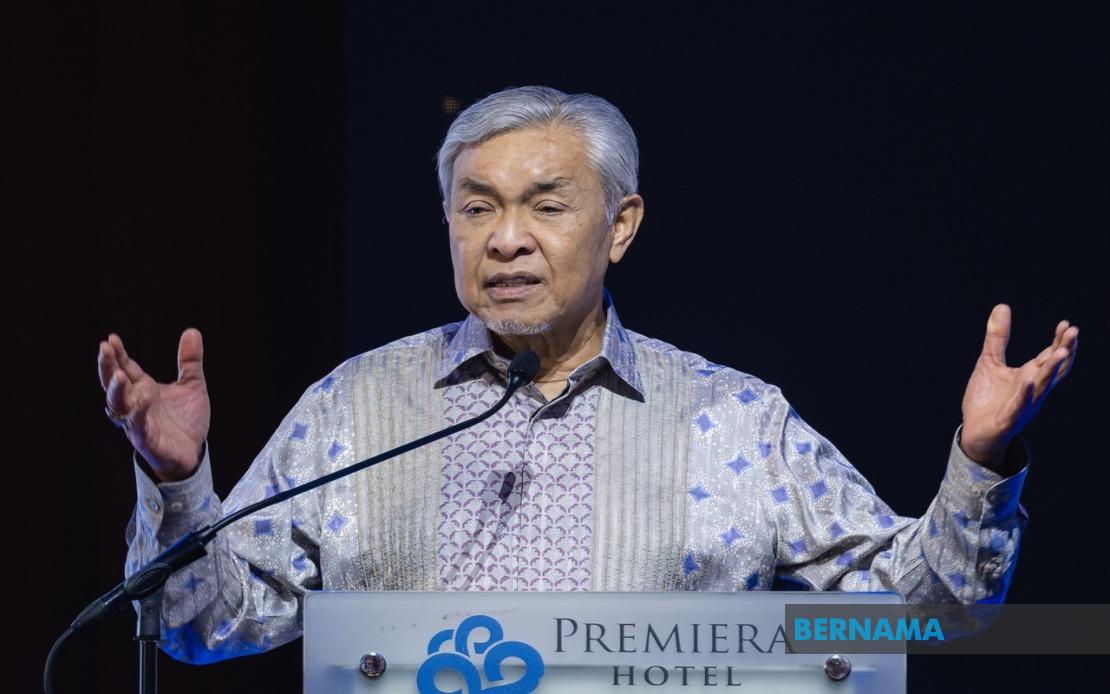
Deputy Prime Minister Datuk Seri Dr Ahmad Zahid Hamidi has signalled openness to funding new rural road projects across Sabah and Sarawak in the 2027 budget, provided that communities currently isolated from major urban centres are prioritised and the requisite approval processes are satisfied. Speaking after attending an awards ceremony for the Ministry of Rural and Regional Development in Kuala Lumpur, Ahmad Zahid outlined a framework where the ministry would evaluate outstanding requests for infrastructure connectivity against established criteria before advancing proposals for budgetary consideration.
As the minister overseeing rural and regional development, Ahmad Zahid emphasised that maintaining responsibility for rural road construction within his portfolio remains essential to the government's broader connectivity agenda. The ministry has reserved this function specifically to address infrastructure gaps in remote settlements, ensuring that isolated communities gain viable access routes to commercial hubs and established population centres. This delineation of responsibility reflects a recognition that rural road development requires dedicated oversight distinct from other transportation infrastructure initiatives.
The deputy prime minister's statement comes with important caveats regarding implementation. Any new rural road projects approved through the 2027 budget would remain contingent on compliance with regulatory frameworks administered by the Ministry of Finance and the Public Works Department. This multi-agency coordination requirement, while ensuring fiscal discipline and engineering standards, also means that securing budget allocation represents only the first step in a lengthier approval and execution timeline that beneficiaries should understand.
Ahmad Zahid indicated that the Ministry of Rural and Regional Development would commence detailed groundwork on specific proposals once ongoing consultations with relevant stakeholders conclude. This consultation phase appears designed to validate project priorities, assess feasibility, and build consensus among local authorities, state governments, and federal agencies. The timeline for completing these consultations and translating them into concrete budget proposals remains unspecified, though the reference to Budget 2027 suggests decisions would likely emerge through the mid-2026 budget formulation cycle.
Beyond the immediate question of road construction funding, Ahmad Zahid introduced a broader strategic reorientation within the rural development sector. He called for a "new discipline" requiring the ministry to discontinue programmes delivering negligible benefit to rural populations whilst simultaneously scaling up initiatives demonstrating tangible impact. This efficiency-focused mandate reflects frustration with underperforming projects and signals determination to redirect limited resources toward interventions generating measurable outcomes for target communities.
Critically, Ahmad Zahid redefined rural development to transcend conventional infrastructure provision. Rather than viewing the sector narrowly as road, bridge, and utility construction, he articulated a vision encompassing economic ecosystem development that generates sustainable income streams and employment pathways for rural residents. This conceptual shift suggests future budget allocations may emphasise complementary investments such as agricultural modernisation, small business incubation, and skills development alongside traditional infrastructure spending.
The minister also addressed the digital transformation agenda affecting government administration across Malaysia. Ahmad Zahid characterised public service reform as fundamentally a change management exercise requiring psychological and cultural shifts among civil servants, not merely the substitution of digital systems for manual processes. This observation acknowledges that technological adoption without corresponding mindset evolution frequently yields disappointing returns, a lesson relevant across the civil service but particularly acute in rural development where implementation capacity directly affects programme success.
Ahmad Zahid's statements carry particular relevance for Malaysian readers given the persistent disparities between Peninsular Malaysia and the Sabah-Sarawak regions. Both states possess substantial rural populations with significant infrastructure deficits inherited from earlier development periods. Enhanced rural road connectivity in these states would facilitate agricultural exports, reduce logistics costs for remote entrepreneurs, and improve access to government services and health facilities. For investors and businesses eyeing opportunities in Sabah and Sarawak's developing resource sectors, improved rural infrastructure represents a meaningful prerequisite for expansion.
The inclusion of Sabah and Sarawak specifically in Ahmad Zahid's announcement reflects acknowledgment that these states warrant targeted attention within national development planning. Their geographic remoteness, dispersed settlement patterns, and reliance on extractive industries create unique infrastructure challenges distinct from Peninsular Malaysia. By signalling receptiveness to Sabah-Sarawak rural road proposals for 2027, Ahmad Zahid indicated that balancing development across Malaysia's diverse regions remains a government priority, though actual implementation will depend on budget availability and the strength of individual project justifications.
Stakeholders in Sabah and Sarawak should interpret Ahmad Zahid's comments as a positive policy signal rather than a guaranteed funding commitment. The emphasis on consultation processes and compliance with Finance Ministry procedures means that communities and state governments must actively engage with the federal ministry to develop compelling cases for their specific road projects. Documentation of connectivity gaps, population benefits, and economic development linkages will likely prove crucial during the budget submission and evaluation process.
The stated evaluation framework suggests that projects demonstrating broad community benefit and clear economic rationale will receive priority over those addressing isolated pockets of need. This orientation aligns with international development practice emphasising cost-benefit analysis and scalability. Rural road projects proposed for Budget 2027 should consequently emphasise their role in connecting multiple settlements, supporting productive sectors, and facilitating regional integration rather than serving narrowly localised constituencies.
Ahmad Zahid's emphasis on performance-based programme management and discontinuation of underperforming initiatives indicates that Budget 2027 may actually constrain total rural development spending unless overall government finances improve. The "new discipline" mandate suggests existing budgeted programmes face potential cuts if they cannot demonstrate measurable impact, meaning new rural roads could be funded partly through reallocation rather than net budget growth. This internal resource competition makes the business case for individual projects even more critical.
Moving forward, the success of this initiative will depend on administrative follow-through. The Ministry of Rural and Regional Development must establish clear criteria for evaluating road construction proposals, establish timelines for consultation completion, and maintain momentum through the 2026 budget cycle when preliminary decisions typically occur. For constituencies in Sabah and Sarawak awaiting infrastructure development, Ahmad Zahid's commitment represents opportunity but requires sustained advocacy and rigorous project documentation to convert policy receptiveness into actual budget allocation and implementation.

