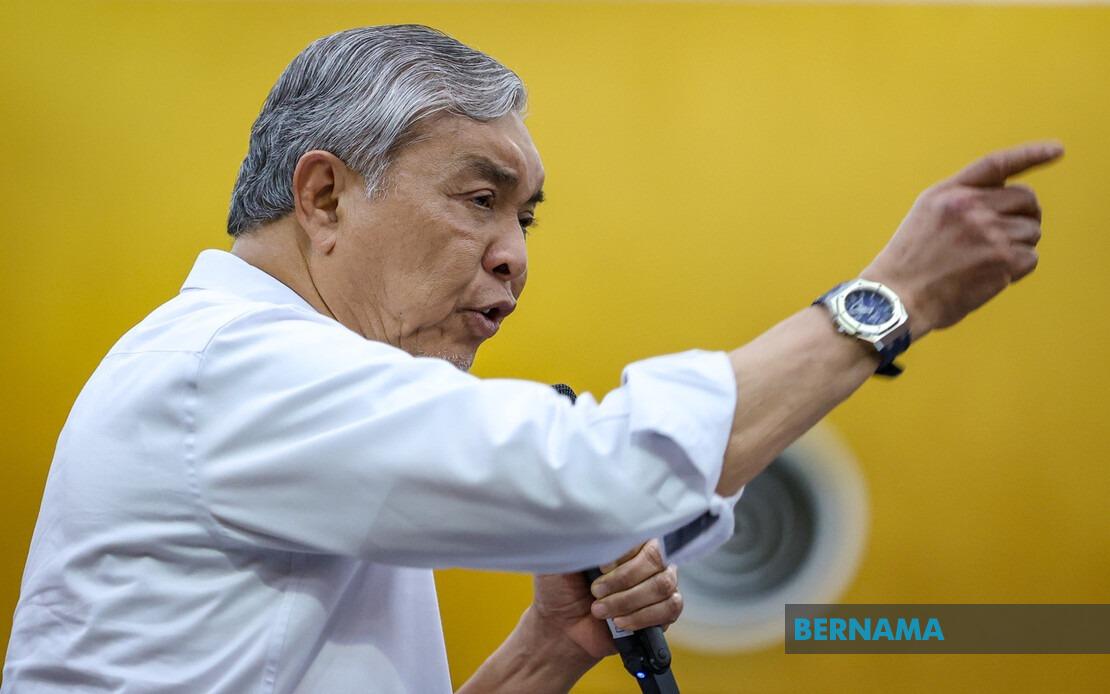
Deputy Prime Minister Datuk Seri Dr Ahmad Zahid Hamidi has outlined an initiative to strengthen political awareness among Malaysia's student leaders through structured educational programmes. Speaking in Johor Bahru on July 9, Ahmad Zahid proposed that Student Representative Councils at tertiary institutions nationwide participate in specialized courses designed to deepen their comprehension of democracy and the nation's evolving political landscape. The scheme reflects growing concern among senior government figures about ensuring the next generation of youth leaders possess adequate understanding of Malaysia's political system and the issues shaping the country's future direction.
The Deputy Prime Minister emphasized that such educational exposure serves a critical function in developing a more politically sophisticated cohort of young leaders. Rather than relying on incidental political exposure, Ahmad Zahid envisioned structured programmes that would systematically equip student representatives with knowledge about contemporary national challenges and the mechanics of Malaysia's democratic institutions. His framing suggests an understanding that leadership roles within universities increasingly carry responsibilities that extend beyond campus management into broader conversations about national direction and governance.
Financially, Ahmad Zahid indicated the government's readiness to shoulder the costs of implementing these courses across the country's higher education sector. The funding would operate contingent upon approval from Higher Education Minister Datuk Seri Dr Zambry Abd Kadir, suggesting the proposal has secured preliminary backing from relevant ministry leadership. This commitment to funding reflects the government's assessment that such political education programmes constitute a worthwhile investment in institutional development and youth engagement rather than an optional administrative extra.
The proposed curriculum would expose student leaders to Malaysia's political arena in deliberate and comprehensive ways. Ahmad Zahid specifically referenced equipping these young representatives to engage meaningfully with the country's political landscape and contribute informed perspectives to conversations about national development. The emphasis on "exposure" suggests the courses would go beyond theoretical instruction to include practical insights into how political systems operate and how various stakeholders interact within Malaysia's constitutional framework.
Crucially, Ahmad Zahid distinguished between political education and mandatory political participation. He stressed that eighteen-year-old voters and first-time voters need not become active political operatives, though those inclined to involvement should have the opportunity to pursue such engagement. Drawing on his own trajectory, Ahmad Zahid noted that his entry into political activity occurred during his student leadership period at Universiti Malaya, illustrating how university leadership positions can serve as gateways to broader political involvement. This personal example underscored his belief that institutions provide natural environments for developing political consciousness.
The fundamental imperative Ahmad Zahid articulated centered on ensuring young Malaysians maintain informed awareness of political developments regardless of their personal level of activism. In this framing, political literacy becomes a civic responsibility rather than the province of career politicians. Young voters should understand how elections function, what policy differences separate competing parties, and how their individual electoral choices contribute to determining national leadership and organizational direction. This approach recognizes that even non-activist citizens benefit from comprehending the political dynamics that shape their society.
Ahmad Zahid particularly highlighted the significance of informed voting behavior among young Malaysians. He cautioned against squandering voting opportunities through disengagement or uninformed choices, stressing that each ballot carries substantive weight in determining both leadership selection and party political orientation. This messaging implicitly addresses concerns about youth voter participation rates and the quality of engagement among first-time voters, suggesting that education-driven initiatives might meaningfully improve electoral outcomes by fostering more conscientious voting publics.
The timing of these proposals aligns with Johor's preparation for state-level polling on Saturday, with 56 contested seats, a context that lends immediate political salience to Ahmad Zahid's remarks on youth engagement and political understanding. Johor represents a significant electoral battleground within Malaysia's broader political framework, and Ahmad Zahid's emphasis on educating future leaders intersects with the practical dynamics of contemporary electoral competition. His role as Barisan Nasional chairman adds additional weight to his advocacy for such educational initiatives, positioning the proposal within the coalition's broader strategy for youth outreach and party renewal.
The proposal also reflects wider regional patterns in Southeast Asia where governments increasingly recognize that young voters constitute decisive electoral demographics. Malaysia's expanding electorate of first-time voters following electoral reforms creates both opportunities and challenges for established political coalitions. By proposing structured political education programmes, Ahmad Zahid suggests that proactive institutional investment in youth political literacy could strengthen democratic participation while potentially benefiting political coalitions capable of articulating compelling visions for national development.
Implementing such programmes would require coordination across Malaysia's diverse higher education landscape, including public universities, private institutions, and polytechnics. Each institution maintains distinct governance structures and student populations, necessitating flexible programme design that accommodates these variations while maintaining core educational objectives. The involvement of the Higher Education Ministry indicates that implementation would follow existing institutional pathways rather than imposing entirely new bureaucratic structures, potentially facilitating faster adoption.
Critically, the success of such initiatives depends significantly on programme content and delivery quality. Political education can meaningfully enhance democratic participation or inadvertently narrow political discourse depending on pedagogical choices and presenter neutrality. Malaysian student communities have historically demonstrated sophisticated political engagement, and academic credibility will prove essential for earning student leader confidence in government-funded educational initiatives. The proposal thus contains both promise and potential pitfalls requiring careful institutional management.

