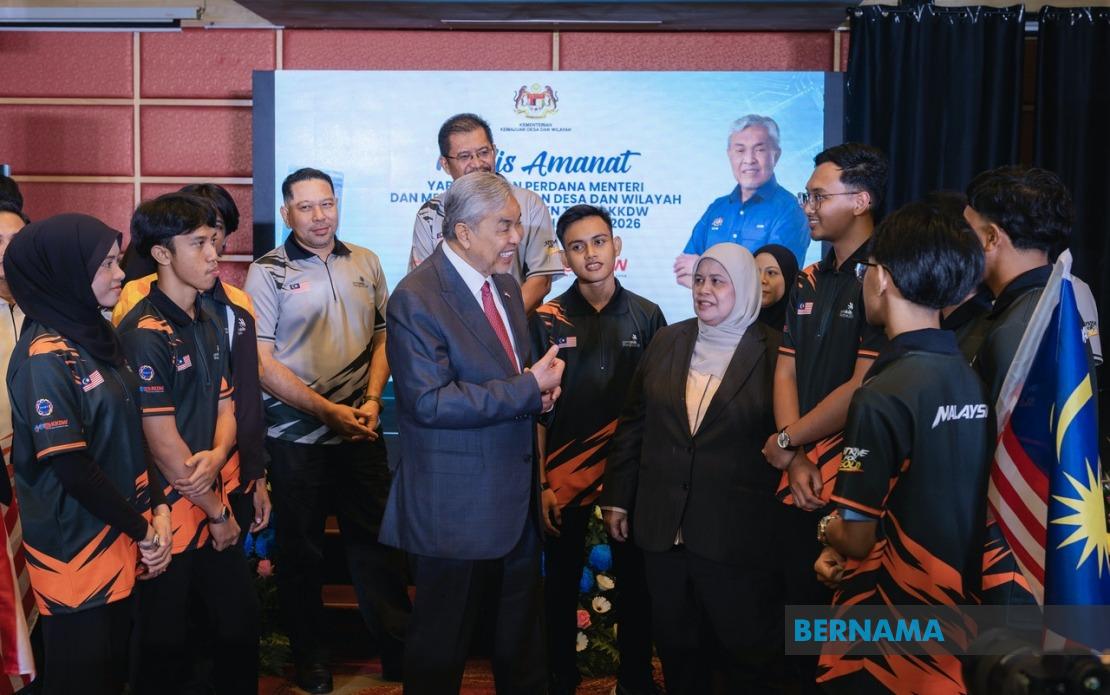
Deputy Prime Minister Datuk Seri Dr Ahmad Zahid Hamidi has made an ambitious commitment to reward excellence in vocational training, pledging his personal funds to sponsor umrah pilgrimages for Malaysian gold medallists competing at the WorldSkills Competition (WSC) 2026 in Shanghai, China, scheduled for September 22 to 27. The initiative underscores growing government attention to technical and vocational education as a pathway for youth advancement in Malaysia's evolving economy.
Ahmad Zahid, who concurrently holds the portfolio of Rural and Regional Development Minister, framed the umrah sponsorship as a gesture of appreciation for participants from Technical and Vocational Education and Training (TVET) institutions operating under the Ministry of Rural and Regional Development (KKDW). By committing personal resources rather than drawing from ministry budgets, he has signalled that recognition of achievement in international skills competitions merits individual commitment from senior government figures. This approach reflects broader efforts to elevate the prestige of vocational pathways relative to traditional academic routes.
The incentive structure carries unusual breadth, extending beyond individual participants to include their families. Ahmad Zahid pledged that gold medallists' parents would also receive fully funded umrah sponsorships, a provision designed to acknowledge the familial investment underlying each competitor's preparation. With nine Malaysian TVET participants entering the Shanghai competition, the commitment theoretically encompasses up to 27 people—nine competitors plus 18 parents—should all Malaysia's contingent secure top honours in their respective categories.
The nine-member Malaysian contingent represents diverse technical specialisations reflecting contemporary skills demands. Nadratulliyana Ab Malek competes in Fashion Technology, while Haziq Syahmi Nazri specialises in Automobile Painting and Amirul Sharif Sharifudin in Electronics. Mohammad Ezaly Iman Ramli brings expertise in Cyber Security, an increasingly critical field as Southeast Asia confronts growing digital threats, whilst Wan Hamiz Ozai Wan Hamidzi represents Rail Vehicle Technology—a sector pertinent to Malaysia's infrastructure expansion agenda. Khairul Idham Bahari focuses on Cabinetmaking, Muhamad Nashrul Zulkifli on Digital Construction, Muhammad Haziq Lailla Zamri on Electrical Installations, and Muhammad Huzairy Mohamad Thes on Mechanical Engineering CAD.
WorldSkills competitions function as crucial international benchmarks for technical education quality. Success at these biennial events generates prestige for host nations and validates vocational training investment, offering tangible demonstration that Malaysian TVET systems produce globally competitive graduates. For Malaysia, placing medallists at Shanghai 2026 would reinforce messaging that technical careers command respect and opportunity comparable to university-track professions, addressing persistent perception gaps that discourage talented youth from vocational pathways.
Ahmad Zahid's initiative arrives amid intensifying regional competition for vocational education leadership. Southeast Asian neighbours increasingly highlight technical skills development as economic differentiators, recognising that demographic advantages and globalised supply chains reward nations capable of rapidly upskilling workforces in manufacturing, infrastructure, and emerging technology sectors. Malaysia's performance at international skills competitions reflects positioning within this competitive landscape, with gold medals serving as credible signals of educational quality to multinational employers and investors.
The Deputy Prime Minister's personal funding commitment also carries symbolic weight regarding ministerial accountability and institutional pride. By guaranteeing the umrah sponsorship from personal resources, Ahmad Zahid has created binding obligation beyond routine bureaucratic processes, effectively placing his political reputation alongside competitor performance. Such personalised investment resonates particularly within Malaysian political culture, where individual leadership visibility remains significant to public perception of government efficacy and commitment.
The umrah component deserves particular consideration within Malaysia's Islamic context. Umrah pilgrimages hold deep spiritual significance for Muslim Malaysians, and positioning them as achievement rewards explicitly connects vocational excellence with religious practice. This framing potentially resonates with families and communities that may view technical education sceptically, demonstrating that success in secular skills domains carries recognition within religious and cultural frameworks valued by target constituencies.
For TVET institutions under KKDW's purview, the pledge represents external validation of their preparation efforts and educational quality. Institutional leaders can reference the Deputy Prime Minister's confidence in their contingent to attract future students and justify continued resource allocation to technical programmes. The competitive environment surrounding WorldSkills creates genuine stakes—gold medals become publicly recognised achievements with tangible rewards, distinguishing outstanding performers from peers.
Implementation will require coordination between government agencies and pilgrimage organisers, though specific logistical details remain undisclosed. The timing of umrah sponsorships relative to competition outcomes, processing of family documentation for Malaysian parents, and selection of reputable tour operators require advance planning. Transparency regarding these operational dimensions would strengthen public confidence in the initiative's credibility.
Looking toward Shanghai 2026, Ahmad Zahid's commitment establishes clear performance expectations whilst offering recognition scaled to achievement levels. Although the pledge focuses exclusively on gold medals, the announcement itself elevates international visibility of Malaysia's TVET sector and the nine selected competitors. Whether measured solely by medal counts or by broader gains in vocational education prestige, the initiative demonstrates high-level government acknowledgment that technical excellence deserves celebration equivalent to traditional academic distinctions.
The broader implication suggests Malaysia is incrementally reshaping messaging around vocational pathways, positioning technical skills not as fallback options for academically struggling students but as legitimate, respected career foundations worthy of senior governmental recognition and personal ministerial investment. If Malaysian competitors perform strongly in Shanghai, the resulting visibility and reward structure may influence future cohorts' educational choices, gradually shifting demographic flows toward TVET programmes addressing Malaysia's evolving labour market requirements.

