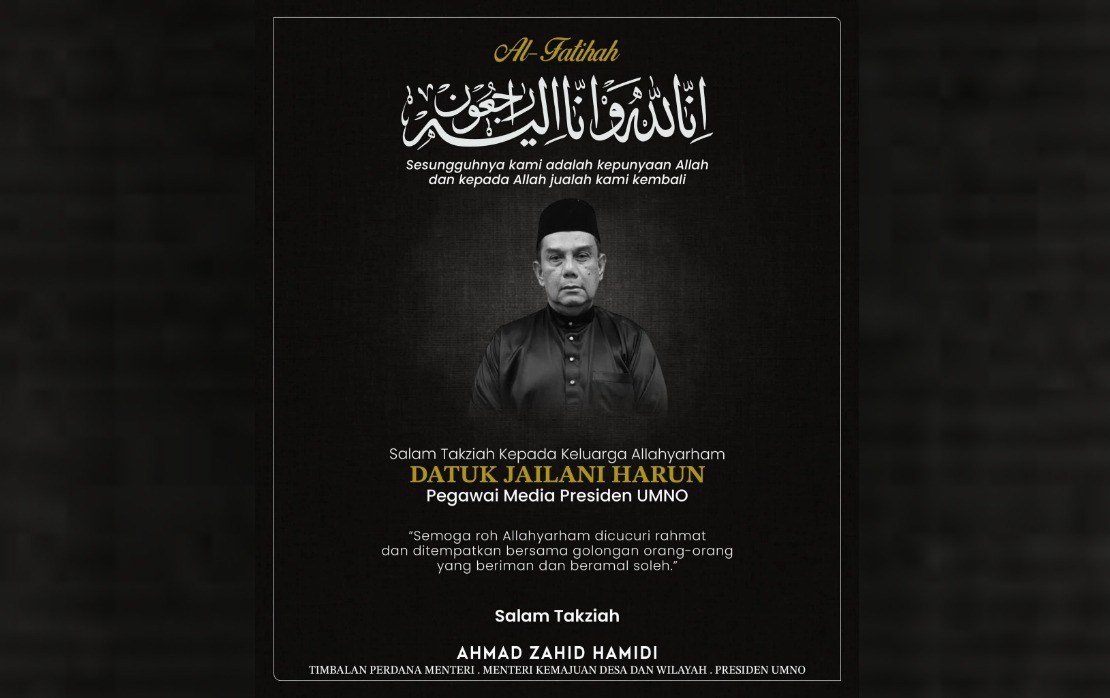
Deputy Prime Minister Datuk Seri Dr Ahmad Zahid Hamidi has conveyed his deepest sympathies to the family of Datuk Jailani Harun, a well-known journalist and media officer who served at the UMNO President's Office, following the latter's passing on July 7. The UMNO president's expression of condolences underscores the loss of a figure who had earned considerable respect within the party's leadership circles and the broader Malaysian media landscape.
Ahmad Zahid visited Jailani at Serdang Hospital in the early hours of the day the latter died, witnessing firsthand the deterioration of his health. In recounting that visit through a Facebook post, the Deputy Prime Minister characterised Jailani as someone distinguished by his kindness, humility, and the esteem in which he was held by colleagues and associates. The poignant nature of Ahmad Zahid's words reflected the emotional weight of the moment, as he described his hopes that Jailani might recover even as the situation appeared grave.
The Deputy Prime Minister's statement carried religious significance, with Ahmad Zahid invoking Islamic prayers for Jailani's soul. He sought divine forgiveness for the deceased's transgressions and prayed that Allah would extend His mercy and grant Jailani a place among the righteous and faithful in the afterlife. Such expressions are customary in Malaysian political circles when public figures pass away, serving both as a mark of respect and a reflection of the predominantly Muslim composition of the nation's leadership.
Jailani, aged 66, breathed his last at Serdang Hospital at 11:34 in the morning on the day of his death. His career spanned journalism and communications work, with his most recent and prominent position being that of media officer at the office of the UMNO president, a role that placed him at the intersection of party politics and media relations during a particularly dynamic period in Malaysian political history. This positioning meant he had interaction with senior party figures and served as a conduit between UMNO's leadership and the press.
The arrangements for his final rites reflected Islamic funeral customs practised in Malaysia. Jailani was to be laid to rest at the Alam Damai Muslim cemetery located in the Cheras area of Kuala Lumpur, with the burial scheduled to occur following the asar prayer, the mid-afternoon Islamic prayer. This timing and location are typical for Muslim burials in the capital and would have allowed colleagues, friends, and family members to pay their respects during the funeral prayer ceremony.
Jailani's death represents a loss to Malaysia's media fraternity, a profession that has undergone significant transformation over recent decades. Those who worked in media relations during the period when Jailani was active would have witnessed the transition from traditional print and broadcast journalism to the digital age, navigating increasingly complex relationships between political parties, the media, and the public. His experience bridging these worlds likely provided valuable institutional knowledge to the organisations he served.
The prominence afforded to Jailani's passing by the Deputy Prime Minister himself indicates the regard in which he was held within UMNO's hierarchy. Such public acknowledgements of death by senior government officials serve multiple functions in Malaysian political culture—they honour the deceased, acknowledge their contributions, and demonstrate the interconnectedness of the country's political and media ecosystems. For readers familiar with Malaysian political circles, Jailani's name would have been recognisable from decades of coverage involving UMNO announcements and party-related communications.
For the broader Malaysian public and particularly those working in journalism and political communications, Jailani's passing marks the end of an era for someone who spent considerable years navigating the intricate relationship between media and political power. His background as a journalist who transitioned into communications work reflects a common career trajectory in Malaysia, where media professionals often move into roles advising political parties and government agencies. This crossover has historically been a significant feature of how information flows within Malaysian political structures.
The condolences expressed by Ahmad Zahid and the ceremonial aspects of Jailani's funeral arrangements reflect the respect accorded to those who have served in senior administrative and communications positions within major political parties. While Jailani may not have been a household name to the general public, his contributions to UMNO's media operations and his relationships with party leadership ensured that his death would be marked as a significant moment within the party and the broader Malaysian political establishment. The Deputy Prime Minister's personal visit to the hospital and subsequent public tribute underscore this significance.

