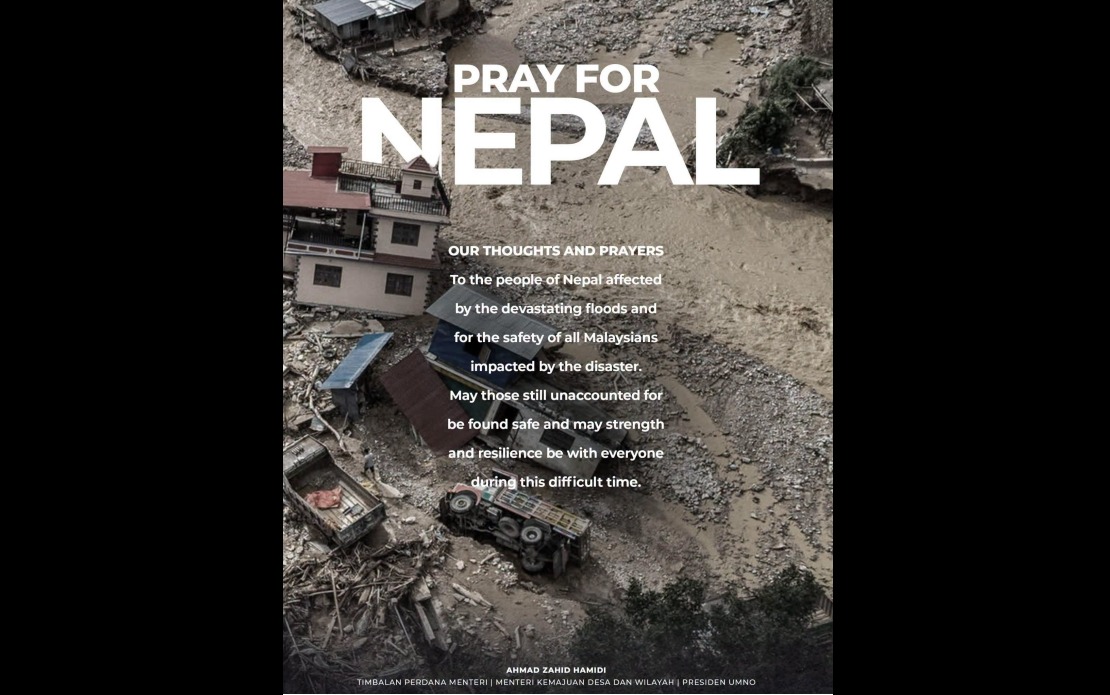
Deputy Prime Minister Datuk Seri Dr Ahmad Zahid Hamidi has publicly expressed alarm over the safety of Malaysians caught in Nepal's devastating flood disaster, calling for the safe return of those unaccounted for and extending condolences to bereaved families in both nations. His statement underscores Malaysia's humanitarian response to a regional crisis that has brought widespread destruction across the Himalayan nation.
In a Facebook post issued on August 27, Ahmad Zahid conveyed his profound sorrow at the scale of the calamity, which has left countless people dead, displaced entire communities, and wreaked havoc across critical infrastructure. His remarks reflect the Malaysian government's active concern for its citizens abroad during emergencies and its broader commitment to regional solidarity during natural disasters.
The Deputy Prime Minister's message specifically highlighted the anguish of families waiting for updates on missing loved ones, articulating the emotional toll that such catastrophes inflict across borders. He expressed hope that ongoing rescue efforts would be intensified and that those still in peril would be recovered alive. This sentiment carries particular weight given the unpredictability of flood situations, where rescue windows narrow rapidly as waters recede and terrain becomes increasingly difficult to navigate.
Ahmad Zahid's statement also extended beyond Malaysian concerns to embrace the broader suffering of Nepal's population. His expression of solidarity with the Nepali people represents a diplomatic acknowledgement of shared vulnerability to natural disasters in the region and Malaysia's willingness to stand with affected neighbours during periods of crisis.
According to data from Nepal's tourism board tallied as of 5.30 pm local time on Thursday—equivalent to 7.45 pm Malaysian time—the death toll from the flash floods had climbed to 359. This figure underscores the magnitude of the disaster and reflects the severe and ongoing nature of the emergency situation unfolding across Nepal.
Flash floods in mountainous regions like Nepal present particularly acute challenges for rescue operations. Torrential water flow can strike with minimal warning, sweeping away entire structures and leaving survivors stranded on elevated terrain or trapped in isolated pockets. The topography of Nepal, with its steep valleys and narrow river corridors, amplifies the destructive force of water and complicates search and rescue efforts that typically require specialized equipment and training.
For Malaysia, which sits in a tropical region prone to its own flooding events during monsoon seasons, this tragedy carries resonance and serves as a reminder of the indiscriminate nature of extreme weather phenomena. The presence of Malaysian nationals in Nepal—whether as tourists, trekkers, or workers—highlights the increasing interconnectedness of the region and the importance of swift diplomatic coordination during emergencies.
The Malaysian government's response mechanism for citizens abroad typically involves coordination between the Ministry of Foreign Affairs, diplomatic missions, and local authorities in affected countries. Ahmad Zahid's public statement serves to reassure Malaysian families that the government is actively monitoring the situation and remains committed to supporting those affected.
Nepal's tourism sector is a significant part of its economy, drawing visitors from across South and Southeast Asia, including Malaysia. The country's natural attractions, particularly trekking routes in the Himalayas, appeal to Malaysian adventure tourism enthusiasts. This disaster raises questions about the safety infrastructure and early warning systems in place for vulnerable regions frequented by international visitors.
The broader context of climate change and increasing frequency of extreme weather events adds another dimension to this tragedy. Southeast Asian nations, including Malaysia, have observed shifting precipitation patterns and more intense weather systems in recent years. Cooperation on disaster preparedness, information sharing, and emergency response mechanisms becomes increasingly critical for regional stability and the protection of citizens travelling across borders.
Ahmad Zahid's invocation of prayers and expressions of hope reflect the emotional weight that such disasters carry for government leaders tasked with representing national interests while maintaining humanitarian values. His call for strength and resilience to be given to affected families acknowledges the long recovery process that typically follows major natural disasters, which often extends far beyond immediate rescue operations.
The disaster also underscores the vulnerability of mountainous and geographically challenging terrain where infrastructure development is limited and rescue resources may be stretched thin. Nepal's capacity to respond to such large-scale emergencies is often constrained by economic limitations and the logistical challenges of reaching remote areas.
As search and rescue operations continue, the Malaysian government's prioritization of locating and assisting its nationals remains paramount. The Deputy Prime Minister's public commitment to this effort sends a clear signal to affected Malaysians and their families that their safety is a matter of national concern and that diplomatic channels remain engaged to facilitate assistance and information sharing with Nepali authorities.

