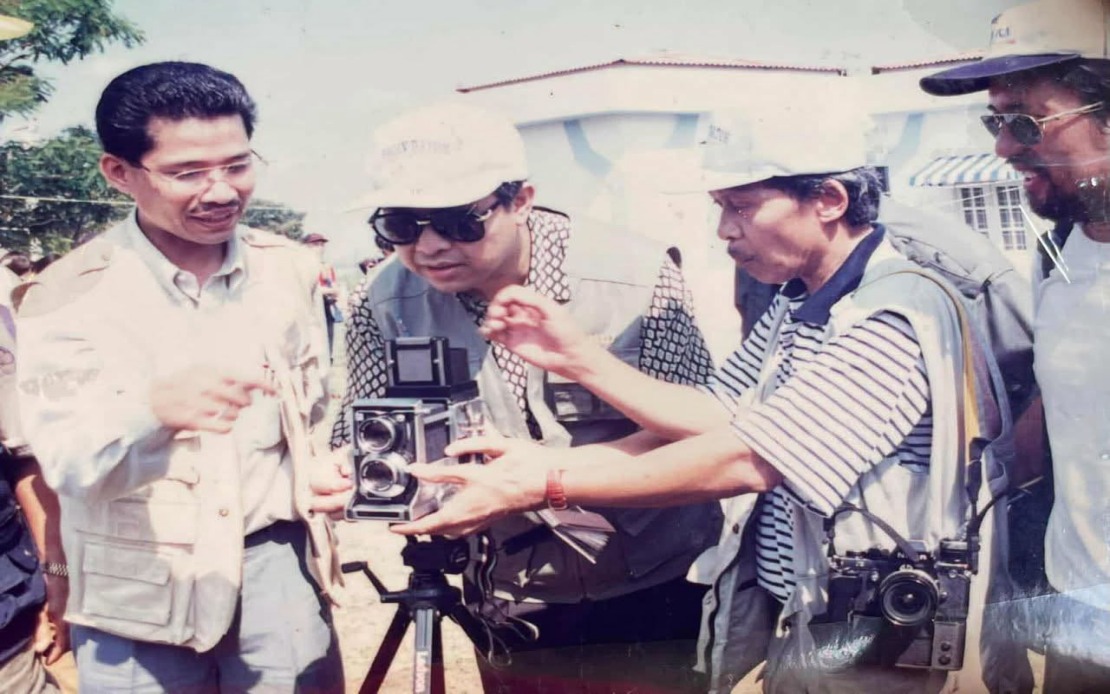
Deputy Prime Minister Datuk Seri Dr Ahmad Zahid Hamidi has extended greetings to photographers everywhere on the occasion of World Photography Day 2026, underscoring the profound importance of those who dedicate themselves to the craft of visual storytelling. In a message shared on social media, Ahmad Zahid recognised the diverse community of image-makers whose work ranges from professional studios to family gatherings, all united by their commitment to preserving moments in time.
The tribute cast a particularly broad net, acknowledging not merely the established photography profession but also the often-overlooked role of informal documentarians within communities and families. Ahmad Zahid pointed to the significance of those who serve as de facto historians within their social circles—relatives and friends who shoulder the responsibility of recording life's significant occasions. This inclusive recognition reflects a growing appreciation for how photography operates at multiple levels within society, from commercial and journalistic enterprises to deeply personal domestic archives.
Central to Ahmad Zahid's message was the observation that photographs function as more than aesthetic objects or temporary keepsakes. Many images eventually transcend their original purpose to become historical documents, serving future generations as windows into how previous eras looked and felt. This transformation of the everyday photograph into historical evidence underscores why the craft deserves formal recognition and respect. Such archival value extends beyond national boundaries—photographs taken today in Malaysia may eventually illuminate global historical understanding.
The Deputy Prime Minister emphasised the technical and artistic discipline underlying successful photography. Each image represents the culmination of observation, patience, and precise timing, qualities that cannot be rushed or mechanised despite technological advances. The photographer must remain alert, anticipating moments of significance and possessing the judgment to determine when conditions align perfectly for the shutter to close. This demanding combination of skills—part artistic sensibility, part technical mastery, part intuitive reading of situations—deserves recognition as a legitimate form of professional and creative expertise.
Ahmad Zahid noted the seemingly paradoxical nature of photography's impact: what occupies mere fractions of a second in the moment of capture can crystallise into imagery that endures for decades or centuries. This compression of time—fleeting reality preserved in static form—represents photography's distinctive power. A single image can encapsulate complex emotions, historical circumstances, or family narratives that might otherwise be lost to failing memory or the passage of generations. The photographer thus functions as a guardian of temporal experience itself.
The diversity of photographic purposes Ahmad Zahid acknowledged carries particular significance for Malaysia, a multicultural nation where family, community, and national commemorations occur continuously across different cultural contexts. Photographers working within these varied traditions serve essential functions in validating and preserving the identities and experiences of different communities. Professional photographers serving weddings, religious ceremonies, and cultural festivals play roles that extend beyond commercial service into cultural documentation and community memory-building.
The World Photography Day recognition also carries implications for how societies value visual documentation during periods of rapid social change. As Malaysia continues its development trajectory, photographs from the present era will inevitably become historical resources, documenting urban transformation, technological change, and social evolution. Current photographers, whether professionals or informal documentarians, are therefore engaged in work of genuine historical consequence, even when they are unaware of this dimension.
For the Malaysian photography industry specifically, Ahmad Zahid's formal acknowledgment from the highest governmental levels offers validation of a sector that sometimes struggles for recognition and support. Professional photographers in Malaysia compete in an increasingly digital marketplace where artificial imagery and generative tools are proliferating, yet human photographers retain irreplaceable advantages in capturing authentic moments, human emotion, and contextual truth. Official recognition from national leadership may help reinforce the enduring value of skilled, intentional image-making in an age of algorithmic content generation.
The message also implicitly acknowledges photography's democratic dimensions—the way that affordable digital technology has distributed image-making capability far beyond professional gatekeepers. Contemporary Malaysia benefits from millions of citizens capable of documenting their own experiences, contributing to a vastly richer collective visual archive than would have been possible in earlier eras. This democratisation does not diminish professional photography but rather creates multiple layers of documentation that together form a more complete historical record.
Ahmad Zahid's framing of photographs as repositories of memory resonates across cultural and generational lines, touching universal human experiences of loss, nostalgia, and the desire to preserve connections with people and places. In Malaysian context, where family networks and communal gathering remain central to social life, photographs function as particularly potent artefacts, serving as proof of relationships and participation in significant collective moments. The preservation of such memories through skilled image-making thus becomes a form of cultural and personal maintenance.
The World Photography Day greeting ultimately articulates a vision of photography not as a luxury pursuit or mere commercial service but as a fundamental human activity with both personal and collective significance. By encouraging photographers to continue their work with the assurance that their efforts contribute to tomorrow's memory and historical understanding, Ahmad Zahid positioned image-making as a form of service to society. This framing elevates the everyday act of pointing a camera and pressing a shutter into something worthy of celebration and support.

