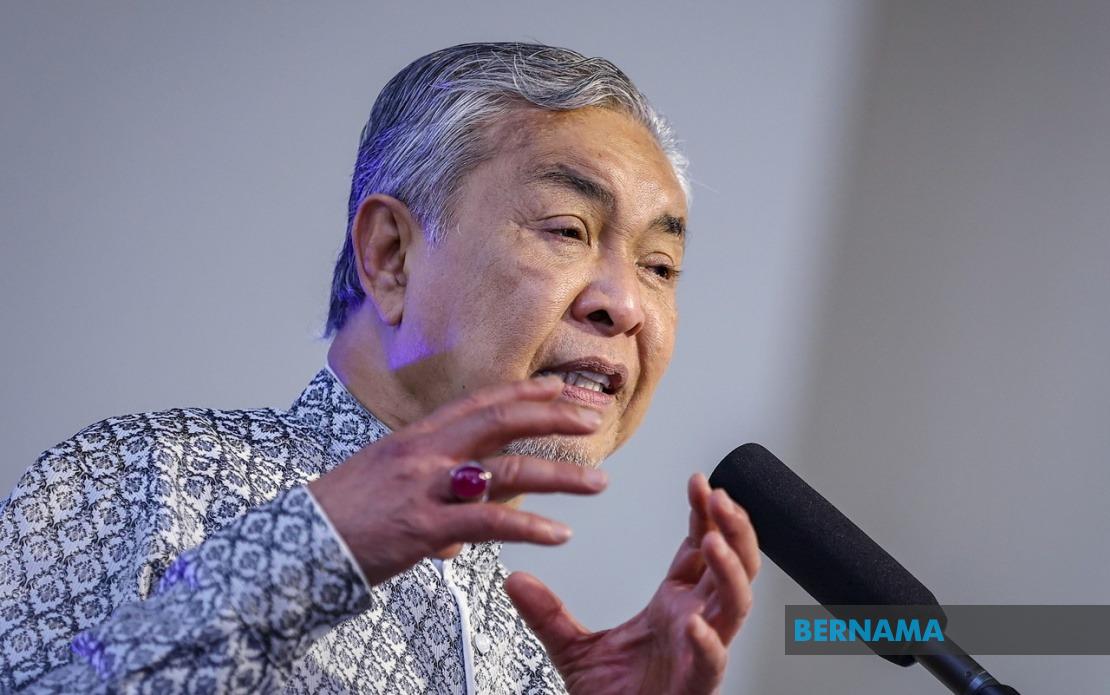
As Malaysia's political landscape shifts toward the Johor state election, Barisan Nasional chairman Datuk Seri Dr Ahmad Zahid Hamidi has issued a pointed appeal for campaign decorum, urging rival parties to shelve long-standing grievances that bear no relevance to the contest. Speaking in Johor Bahru on July 3, the Deputy Prime Minister suggested that continued attacks based on historical issues undermine the quality of political discourse and strain relationships at the federal tier, where several competing coalitions work together in government.
Ahmad Zahid's intervention reflects an underlying tension within Malaysian politics: the coexistence of federal cooperation alongside state-level competition. With multiple BN coalition partners also serving as Cabinet ministers, he argued that rehashing old controversies creates awkwardness when these same individuals must collaborate in weekly government meetings. The appeal hints at the fragility of the federal arrangement, where parties that contest vigorously in one arena must maintain working relationships in another. This delicate balance has become more pronounced as Malaysia's political fault lines have shifted, with different coalitions maintaining influence at different governance levels.
The BN chief's remarks come at a critical juncture for the party in Johor. Contrary to suggestions of overconfidence, Ahmad Zahid characterised BN as the underdog this cycle, citing substantial changes in the state's electoral dynamics. He pointed to demographic shifts as a primary concern, noting that young voters now constitute more than half the electorate—a marked departure from previous election cycles. This demographic reality has forced BN to recalibrate its messaging and policy priorities, moving beyond the traditional appeals that secured the party's 40-seat tally in the previous state election.
Instead of dwelling on past controversies, Ahmad Zahid pivoted to BN's substantive platform for the younger generation. The coalition's manifesto, as articulated by Menteri Besar Datuk Onn Hafiz Ghazi, places significant emphasis on youth employment and skills acquisition. This represents a strategic recognition that young voters care less about historical political battles and more about tangible opportunities for economic advancement. The manifesto's focus on Technical and Vocational Education and Training reflects a calculated response to the structural challenges facing Malaysia's labour market, particularly the mismatch between available jobs and worker qualifications.
The unemployment figure of 2.9 per cent, which Ahmad Zahid highlighted, masks a deeper concern that his remarks only partially addressed. While headline unemployment remains relatively low by regional standards, the quality of employment opportunities remains a significant worry for young Malaysians. Many graduates and school-leavers struggle to access well-remunerated positions that offer genuine career progression. BN's emphasis on premium-wage job pathways through skills training attempts to address this gap, though critics might question whether such initiatives can be delivered at sufficient scale within a single state electoral term.
The strategic recalibration evident in BN's approach reflects lessons learned from broader electoral trends across Malaysia. Youth voters have demonstrated a willingness to punish parties perceived as out of touch with their concerns, and traditional party machinery appears less effective at mobilising this cohort compared with previous generations. By elevating skills training and job creation to the centre of its platform, BN signals an attempt to compete on substantive grounds rather than relying on institutional advantages or historical brand loyalty. Whether this repositioning will prove sufficient remains an open question, particularly given the unpredictability of younger electorates.
Ahmad Zahid's call for political maturity also carries implications for how opposition parties campaign in Johor. A sustained focus on historical disputes, whether involving UMNO or other BN component parties, risks appearing tired or vindictive to voters primarily concerned with immediate economic prospects. The appeal subtly challenges opposition coalitions to elevate their own policy offerings rather than relying on attacks grounded in past controversies. This framing advantages BN to some extent, as the incumbent coalition can point to concrete proposals for youth employment, whereas critics might argue that recycled grievances lack forward-looking substance.
The election machinery itself underscores the stakes involved. BN is fielding candidates across all 56 state seats, demonstrating an ambitious commitment to contesting every available position. With polling scheduled for July 11 and early voting on July 7, the campaign window remained compressed at the time of Ahmad Zahid's remarks. This abbreviated timeline means that sustained, substantive policy debates may give way to rapid-fire messaging and logistical efforts. BN's ability to translate its manifesto commitments into persuasive campaigning during this brief period will significantly influence the outcome.
The broader context for the Johor election extends beyond state boundaries. As the country's largest state by voter registration, Johor's result carries symbolic weight for Malaysian politics. A strong BN performance would signal that the coalition retains mobilisation capacity and electoral appeal even amid shifting demographics and voter preferences. Conversely, a diminished showing would reinforce perceptions that BN's traditional support base is eroding and that younger voters remain resistant to the coalition's messaging. This dynamic makes Ahmad Zahid's emphasis on youth-focused policies more than rhetorical—it reflects genuine anxiety within BN about its electoral trajectory.
The appeal for campaign maturity must also be understood within the context of Malaysia's fractious political environment. The country's transition to a multi-coalition system has created unprecedented complexity, with parties cooperating federally while competing regionally. This arrangement creates genuine pressure points, as Ahmad Zahid's remarks implicitly acknowledge. By asking parties to avoid dwelling on historical disputes, he was essentially requesting a temporary suspension of some of the country's most contentious political debates in the interest of preserving functional relationships. Whether such compartmentalisation is sustainable remains unclear.
Fundamentally, Ahmad Zahid's intervention reflects BN's strategic calculation that its best path to electoral success in Johor lies in forward-looking policy positioning rather than backward-looking dispute resolution. By framing the contest as one of competing visions for youth employment and skills development, BN seeks to pivot away from terrain where its historical record faces intense scrutiny. Whether opposition parties will accept this implicit redefinition of the campaign's terms remains to be seen, but the Deputy Prime Minister's remarks signal that BN intends to contest the election primarily on the basis of future commitments rather than past grievances.

