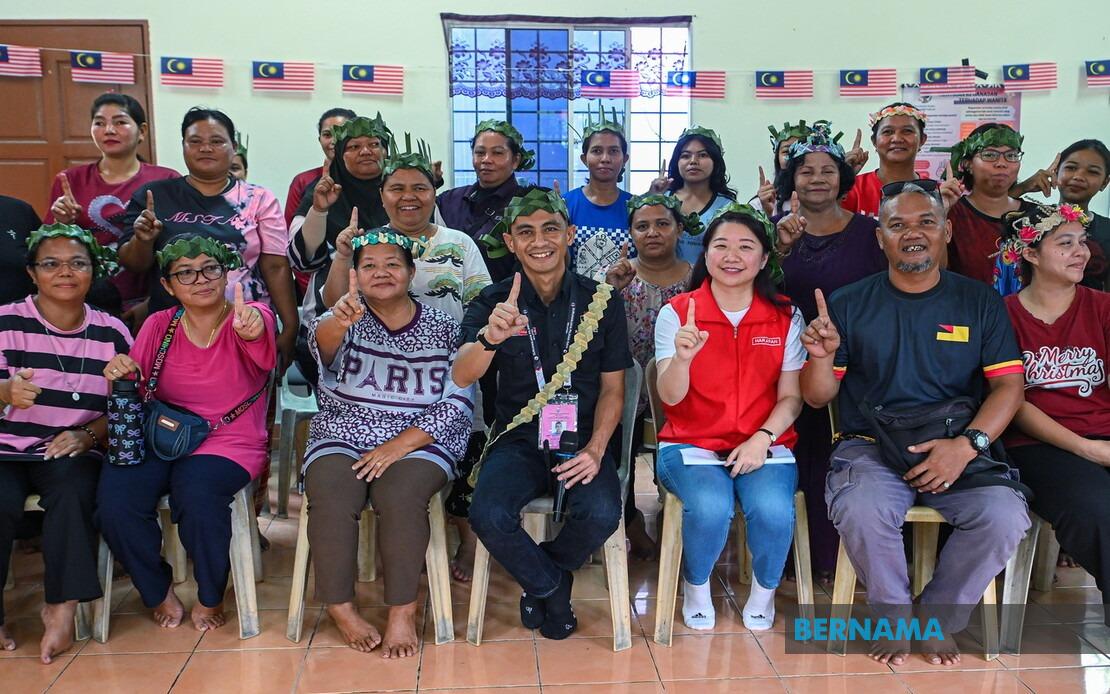
Datuk Ahmad Faez Abdul Razak, the Pakatan Harapan contender for Negeri Sembilan's Labu state seat, has positioned the socioeconomic advancement of the indigenous Orang Asli community as a defining plank of his electoral platform. Speaking after attending an Orang Asli Women Empowerment programme in Kampung Orang Asli Tekir, Ahmad Faez outlined a comprehensive development agenda that bridges immediate infrastructure needs with longer-term economic sustainability for the settlement.
The PH candidate has identified customary land rights as an urgent matter requiring legislative attention. He intends to bring the issue of customary land in Kampung Orang Asli Tekir to the State Legislative Assembly should voters grant him the mandate in the Negeri Sembilan state election scheduled for August 1. This signals recognition of a persistent grievance within Orang Asli communities across Malaysia, where land security remains a fundamental impediment to economic development and intergenerational stability.
Immediate quality-of-life improvements form a second tier of Ahmad Faez's policy commitments. He has pledged to upgrade basic amenities including roads and internet connectivity, acknowledging that rural isolation continues to constrain educational and commercial opportunities. For a community of 796 residents in Kampung Orang Asli Tekir, such infrastructure enhancements would facilitate broader economic participation and reduce the digital divide that increasingly defines rural disadvantage in Southeast Asia.
Youth development emerges as a critical focal point in Ahmad Faez's platform. He emphasises that education and skills enhancement are essential prerequisites for the younger generation to tap into income-generating opportunities. This approach reflects evolving policy thinking beyond traditional subsistence-based support frameworks, positioning youth as agents of community economic transformation rather than passive beneficiaries of government programmes.
The candidate has identified handicraft production as a sector with considerable untapped potential within Kampung Orang Asli Tekir. Rather than relying solely on improved input provision, his strategy encompasses market expansion and value-chain development, suggesting recognition that indigenous communities often possess traditional skills that require contemporary marketing mechanisms to realise commercial viability. Broader distribution networks and branding initiatives could substantially elevate household incomes while preserving cultural heritage.
Agricultural modernisation represents another pillar of the proposed development framework. Ahmad Faez intends to introduce fertigation systems and other contemporary agricultural technologies to enhance crop yields and create more reliable income streams. This technical approach aims to transform subsistence farming into a more commercially viable enterprise, reducing vulnerability to seasonal fluctuations and market volatility whilst maintaining environmental sustainability.
Ahmad Faez has underscored his ongoing engagement with Labu constituents over the preceding two years, framing his candidacy as a continuation of existing community support rather than an opportunistic electoral intervention. This narrative positioning carries particular significance in Malaysian electoral politics, where trust deficits between politicians and marginalised communities remain substantial. His repeated emphasis on consistent presence and grassroots assistance attempts to differentiate his approach from periodic campaign-season contact.
The village chief of Kampung Orang Asli Tekir, Nasir Musil, has publicly acknowledged Ahmad Faez's contribution to community engagement, noting his frequency of visits and willingness to provide assistance. Nasir has additionally raised the persistent issue of stray cattle threatening road safety, a practical concern that illustrates the intersection of environmental management, public safety and livelihood security in rural Orang Asli settlements. Resolution of such issues, though seemingly mundane, carries substantial weight in determining community perceptions of political responsiveness.
Ahmad Faez enters a three-cornered contest against Mohamad Hanifah Abu Baker of Parti Pribumi Bersatu Malaysia, the incumbent, and Siti Nur Umaira Hasim representing Barisan Nasional. This three-way dynamic introduces complexity beyond traditional two-party contests, potentially fragmenting the vote and shifting the electoral calculus. Ahmad Faez's first electoral contestation positions him as a challenger to established political machinery in the constituency.
The electoral timeline creates operational constraints and opportunities for candidate mobilisation. Early voting is scheduled for July 28, with the main polling day on August 1, compressing the campaign period and placing particular emphasis on grassroots organisation and existing community networks. For a candidate emphasising consistent engagement, this shortened timeframe potentially favours those with established relationships within target communities.
The Orang Asli development agenda articulated by Ahmad Faez reflects broader recognition within Malaysian politics that indigenous communities constitute a distinct electoral and policy constituency with specific governance requirements. The emphasis on land rights, infrastructure, education and economic diversification signals that mainstream political parties increasingly recognise the limitations of historical welfare-oriented approaches. Whether Ahmad Faez's commitments translate into substantive implementation should he secure electoral success remains a critical question for assessing the sincerity and feasibility of such platforms.
For the wider Southeast Asian context, the Labu contest illustrates ongoing tensions between indigenous communities and state development frameworks, centring on questions of land security, cultural preservation and economic participation. Malaysian political parties' evolving approach to Orang Asli constituencies demonstrates recognition that marginalised indigenous populations represent both electoral constituencies and communities with legitimate governance aspirations extending beyond traditional patronage relationships.

