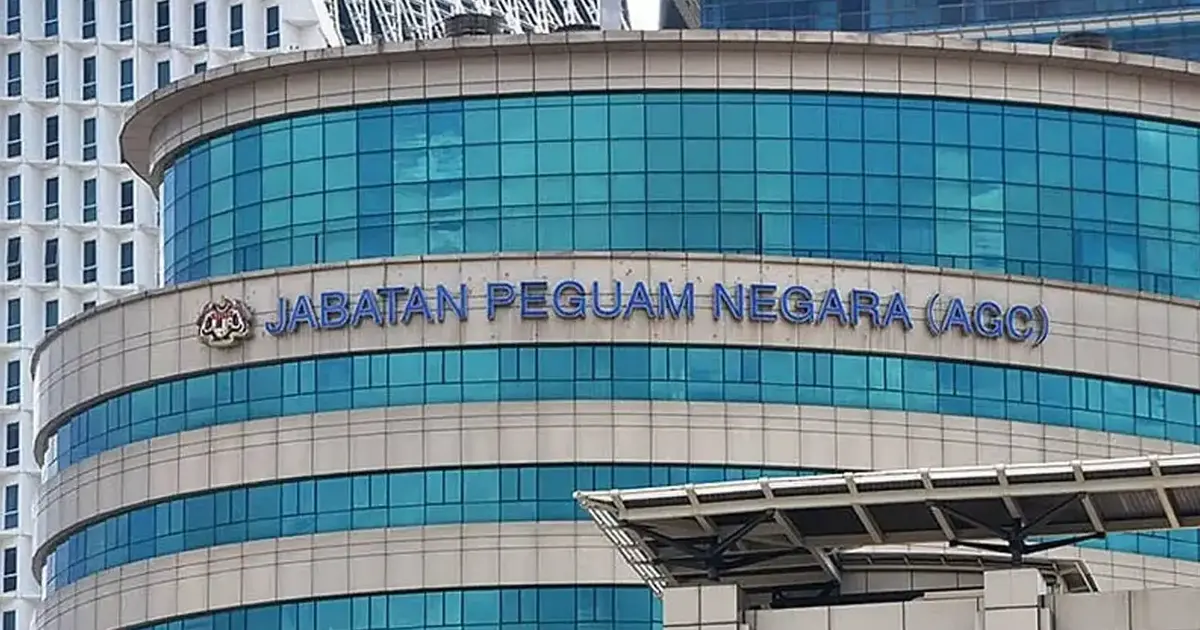
The Attorney General's Chambers (AGC) has yet to complete its examination of investigation documents pertaining to the Durian Tunggal matter, despite receiving what authorities describe as the fourth resubmission of the case file. This extended review period, now stretching beyond thirty days since the most recent filing, has prompted intervention from the Home Minister, who has publicly called on all interested parties to exercise patience and allow the established legal procedures to proceed without interference or external pressure.
The repeated resubmission of investigation papers in this case underscores the complexity of the matter and the multiple rounds of inquiry that may be required before prosecutors can make a prosecutorial determination. Each submission typically indicates that investigating authorities have either gathered additional evidence, refined existing documentation, or addressed concerns raised by the AGC during previous evaluations. The iterative nature of this process reflects standard practice in serious criminal investigations, where thoroughness and procedural compliance take precedence over speed.
The Durian Tunggal case has attracted considerable public and political attention in Malaysia, generating widespread discussion about governance, accountability, and the independence of enforcement agencies. This heightened scrutiny can create pressure on investigative and prosecutorial bodies to act swiftly, even when a methodical approach serves the interests of justice more effectively. The Home Minister's recent statement appears calibrated to manage expectations and remind observers that rushing to judgment could compromise the integrity of the process.
For Malaysian readers unfamiliar with the institutional structure, the AGC operates as the primary prosecutorial authority in the country, vetting investigation files submitted by police and other enforcement agencies before deciding whether to proceed with charges, request further investigation, or decline prosecution altogether. This gatekeeping function is critical to preventing malicious or poorly grounded prosecutions while ensuring that legitimate cases advance through the court system with adequate evidentiary support.
The fact that investigation papers have now been resubmitted four times suggests either that the case involves substantial volume and complexity requiring careful cross-referencing, or that the AGC has identified gaps or areas requiring clarification during previous reviews. Both scenarios are commonplace in high-profile investigations where prosecutors must be confident that evidence will withstand judicial scrutiny. Premature charging based on incomplete documentation could result in dismissal or acquittal, ultimately undermining accountability.
Regionally, Malaysia's legal system reflects Commonwealth traditions where the separation between investigation and prosecution serves as a check against arbitrary enforcement. The AGC's deliberative approach, though sometimes frustrating to observers seeking expedited resolution, aligns with these institutional safeguards. Neighbouring jurisdictions occasionally face criticism for allowing political pressure to influence prosecutorial decisions, and Malaysia's formal independence of the AGC helps insulate the system from such interference.
The Home Minister's public statement carries particular weight given the ministerial responsibility for police operations and domestic security architecture. By emphasizing the need for patience and deference to legal processes, the minister implicitly affirms the autonomy of the prosecutorial function and signals that the government will not artificially accelerate timelines to satisfy political constituencies or manage reputational concerns. This restraint, whether or not always observed in practice, represents an important institutional principle.
Observers tracking the Durian Tunggal matter should recognize that the duration of AGC review does not necessarily correlate with the strength or weakness of the underlying case. Complex white-collar or governance-related investigations frequently require extended prosecutorial analysis precisely because the allegations involve technical elements, documentary evidence, and chains of custody that demand meticulous verification. A thorough AGC review, even if protracted, ultimately strengthens the prosecution's position in court.
The implications for Malaysia's broader governance landscape merit consideration. High-profile investigations that generate public expectation for swift action create tension between institutional independence and political accountability. The Home Minister's call for patience suggests an attempt to navigate this tension by reaffirming the importance of procedural integrity while tacitly acknowledging public interest in the matter. This messaging becomes relevant whenever law enforcement or prosecutorial agencies face pressure from media, civil society, or political figures to accelerate complex cases.
Looking ahead, the AGC's eventual decision—whether to prosecute, seek additional investigation, or decline the matter—will inevitably invite scrutiny and debate. That scrutiny will be better informed and more constructive if stakeholders understand the legitimate reasons for thorough review. The Home Minister's intervention, therefore, appears designed not merely to manage impatience but to establish reasonable expectations about how serious cases proceed through Malaysia's legal system, where institutional process ultimately matters as much as outcome.

