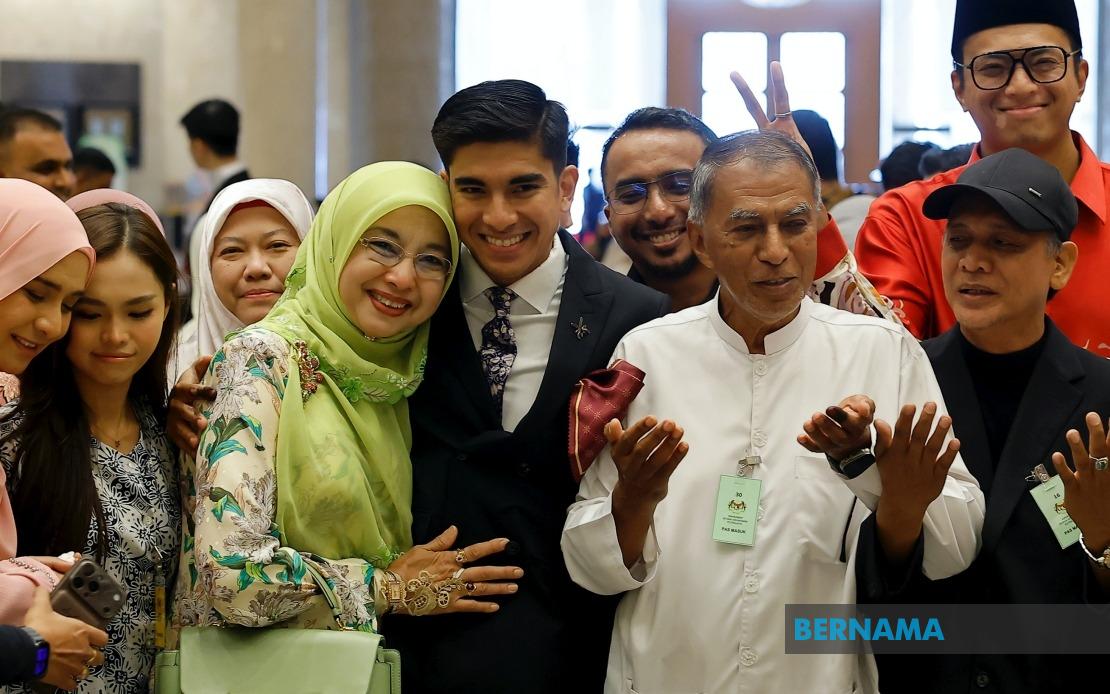
The Federal Court delivered a decisive ruling on July 13 that vindicated Muar Member of Parliament Syed Saddiq Syed Abdul Rahman, upholding his complete acquittal on four charges stemming from allegations involving the youth-focused political movement Angkatan Bersatu Anak Muda (Armada). The 33-year-old lawmaker, who performed a sujud syukur alongside his family in the Palace of Justice lobby, emphasised that the court's decision represented a triumph of legal principle and personal integrity after six years of relentless legal proceedings.
The charges against Syed Saddiq encompassed abetting criminal breach of trust, misappropriation of property, and money laundering related to funds belonging to Armada. The original accusations had cast a shadow over his career following his tenure as minister of youth and sports, subjecting him to extensive court proceedings that tested both his financial resources and emotional resilience. The protracted nature of the case highlighted broader questions about the speed and efficiency of Malaysia's judicial system when processing high-profile political cases.
Addressing journalists at the Palace of Justice, Syed Saddiq reflected on the human toll of his extended legal troubles. Beyond affecting him personally, he acknowledged the profound impact on his parents, immediate family, close friends, and political supporters, as well as the ripple effects across Malaysia's political landscape. His candid assessment underscored how criminal accusations against elected officials create broader societal consequences, particularly when proceedings stretch across multiple years without resolution.
The Muar MP articulated a philosophical stance grounded in conviction and principle, suggesting that his steadfast refusal to compromise on integrity or dignity during the protracted ordeal was essential to reaching this vindication. His assertion that "courage comes from being in the right" reflected a worldview that aligned personal righteousness with legal outcomes, though he acknowledged that the journey had tested this belief during darker periods when the path forward seemed obscured.
Syed Saddiq expressed his commitment to protecting Malaysia's independent judicial institutions, characterising them as fundamental to the nation's strength and stability. This declaration carried particular weight given his personal experience navigating those same institutions over six years, suggesting that despite the prolonged ordeal, he retained faith in their structural integrity and capacity to ultimately deliver justice. His advocacy for judicial independence represented a notable stance for a political figure who might otherwise view the system with cynicism after such a lengthy and challenging experience.
The former minister signalled his intention to step back from active political engagement in the immediate term, prioritising his personal and family life following the conclusion of his legal troubles. Despite remaining formally connected to the MUDA political party, Syed Saddiq indicated uncertainty about his longer-term political trajectory, suggesting he would take time to reassess his direction before committing to future political endeavours. This decision reflected the emotional and psychological exhaustion that accompanies protracted legal proceedings, even when they conclude successfully.
Personal circumstances also factored into Syed Saddiq's current priorities, as he confirmed plans to marry and reported receiving parental blessing for wedding preparations. This detail humanised the narrative beyond the strictly legal dimension, illustrating how his family had collectively endured the implications of criminal charges and court appearances. His intention to spend substantial time with family members who had supported him through the ordeal suggested a deliberate recalibration of life priorities away from the demanding schedules of parliamentary duties.
Syed Saddiq committed to fulfilling his parliamentary obligations to Muar constituents despite seeking reduced involvement in broader political structures. His intention to convene a gathering specifically for the people of Muar demonstrated recognition that his constituents deserved acknowledgment after the extended period during which legal matters competed for his attention and resources. This constituency-focused approach balanced his stated desire for personal withdrawal with continued service to elected representatives.
Hisyam Teh Poh Teik, the counsel representing Syed Saddiq throughout the protracted proceedings, expressed gratitude to the judicial panel and acknowledged the substantial effort invested by the legal team managing the case. His statement underscored the collaborative nature of modern legal defence, requiring coordinated expertise across multiple practitioners working toward a singular objective. The lawyer's emphasis on trusting relationships between client and counsel highlighted the interpersonal dimensions of cases that might otherwise appear purely technical or procedural.
Deputy Public Prosecutor Datuk Wan Shaharuddin Wan Ladin acknowledged the prosecution's acceptance of the Federal Court's ruling while maintaining procedural options regarding potential review mechanisms. His measured statement avoided defensive posturing while preserving the prosecution's formal capacity to seek reconsideration, though he indicated that premature speculation about review applications would be inappropriate given the immediate context. The prosecutor's deference to the Attorney General's ultimate decision reflected hierarchical decision-making structures within Malaysia's prosecution apparatus.
The acquittal carries broader implications for political accountability mechanisms in Malaysia, potentially influencing how legal proceedings involving elected officials balance due process protections with public expectations for swift resolution. The six-year duration raises substantive questions about whether criminal proceedings against politically prominent figures can be administered efficiently without compromising investigative thoroughness or procedural safeguards. For Southeast Asian observers, the case demonstrates how even relatively robust judicial systems can struggle with administrative timelines when processing complex financial allegations against high-profile defendants.
Syed Saddiq's successful navigation of the legal system may also influence broader political discourse about accountability versus persecution, with supporters viewing the acquittal as vindication against politically motivated prosecution, while others might emphasise that accusations themselves warrant serious investigation regardless of ultimate outcomes. The resolution therefore does not necessarily settle deeper questions about whether the original allegations reflected legitimate investigative concerns or overreaching prosecutorial ambition, leaving interpretive space for competing narratives about institutional integrity.

