The African Union's Peace and Security Council has adopted a forceful stance against external powers attempting to shape Sudan's internal political landscape, rejecting both direct foreign interference and schemes to establish competing governmental structures. During a high-level meeting in Khartoum on Sunday, the council's rotating chair Mohamed Khaled, an Algerian diplomat, reinforced the continental body's determination to preserve Sudan's sovereignty at a critical moment when the nation remains fractured by civil war and faces mounting international pressure.
Khaled's visit to Sudan's capital represented more than symbolic solidarity with the government of Sovereignty Council Chairman Abdel Fattah al-Burhan. The diplomatic engagement underscored the African Union's concern that external actors—whether regional powers or international actors—are attempting to exploit Sudan's internal divisions to advance their own strategic interests. By explicitly condemning foreign interference as a factor that "fuels the conflict," the council positioned itself against a pattern of external involvement that has characterised Sudan's ongoing turmoil since fighting erupted in April 2023.
The warning about parallel governments carries particular significance for Sudan's political future. Establishing rival administrative structures or competing centres of authority could fracture state institutions beyond repair, transforming a civil conflict into a territorial fragmentation crisis. The African Union's rejection of such schemes reflects concern that powerful external actors might attempt to carve out spheres of influence or establish proxy governments in areas under their de facto control, thereby complicating any eventual reunification process.
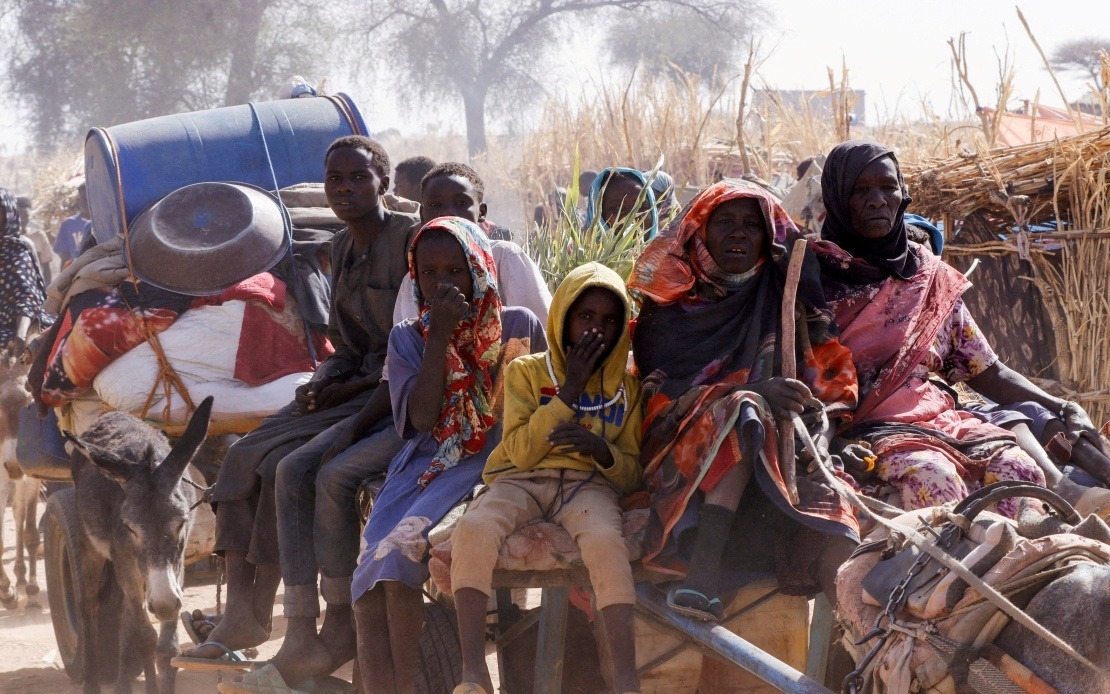
Sudan's conflict, now in its second year, has spiralled into a humanitarian catastrophe affecting millions across the region. The fighting between regular army forces under al-Burhan and the Rapid Support Forces, a paramilitary group originally created to combat insurgencies in remote areas, has killed tens of thousands and displaced approximately thirteen million people according to UN data. This scale of displacement represents one of the world's largest ongoing humanitarian crises, yet it remains substantially under-reported in international media and undersupported by the international humanitarian system.
The genesis of the current war lies in disagreements over integrating the Rapid Support Forces into Sudan's regular military structure. What began as a dispute over institutional arrangements rapidly escalated into a broader conflict between competing power brokers, each commanding significant military resources and support networks. The integration dispute masked deeper rivalries over control of resources, territorial administration, and the shape of Sudan's post-transition political system following years of instability.
During the same meeting, Sudan's Prime Minister Kamil Idris signalled willingness to engage in domestically-driven political resolution, announcing that Sudanese-led dialogue would commence soon. This commitment to internally-negotiated settlement aligns with the African Union's insistence that only through inclusive national dialogue can lasting peace emerge. The council's emphasis on broad-based political negotiation, national reconciliation, and eventual constitutional government reflects recognition that military victory for either side remains elusive, making political settlement the only sustainable path forward.
Khaled specifically advocated for making Sudan's transitional process more inclusive, urging government and opposition forces to build national consensus rather than continuing to pursue zero-sum military objectives. His call for free and fair elections as the mechanism for establishing constitutional legitimacy represents the African Union's vision of post-conflict Sudan as a functioning democratic state where power flows from popular consent rather than military force. Yet achieving such elections remains distant given the security situation and the absence of agreed constitutional frameworks.
The African Union's position carries implications beyond Sudan's borders for the entire East African and Sahel regions. Sudan's continued instability destabilises neighbouring Ethiopia, South Sudan, Egypt, and Libya, creating refugee flows and enabling armed groups to operate across porous frontiers. The council's concern about foreign interference likely extends to preventing regional powers from using Sudan's chaos as a platform for pursuing their own strategic agendas, whether through supporting particular factions or extracting resource concessions in unstable areas.
For Malaysian readers and Southeast Asian observers, Sudan's crisis illustrates how civil conflicts in strategically located nations attract external interference from distant powers competing for influence. The African Union's stance mirrors principles articulated in ASEAN's fundamental doctrine of non-interference in member states' internal affairs—principles increasingly tested in the Southeast Asian context as great powers compete for primacy in the Indo-Pacific region. The emphasis on respecting state sovereignty and rejecting parallel governmental structures resonates with Southeast Asian concerns about maintaining territorial integrity and preventing external powers from fragmenting states along ethnic or religious lines.
The welcoming of government return to Khartoum and resumption of state functions represents a modest but significant step toward normalisation. By describing this development as "pivotal" for restoring institutional functioning and service delivery, Khaled acknowledged that state collapse compounds humanitarian catastrophe. Even partial restoration of governmental presence in the capital could theoretically improve conditions for civilians in government-controlled areas, though the security situation remains volatile and large regions remain inaccessible.
The path ahead remains uncertain despite diplomatic efforts. The Rapid Support Forces control significant territory, maintain substantial military capability, and show limited inclination toward negotiated settlement. Regional powers backing various factions continue operating with their own strategic calculi. Yet the African Union's explicit rejection of foreign interference and parallel governments provides international framing that could eventually support diplomatic efforts to conclude the conflict through negotiated agreement. Whether this diplomatic positioning translates into meaningful pressure on external actors to cease interference and on local combatants to seek settlement remains the critical question determining whether Sudan's devastating conflict finally reaches resolution.

