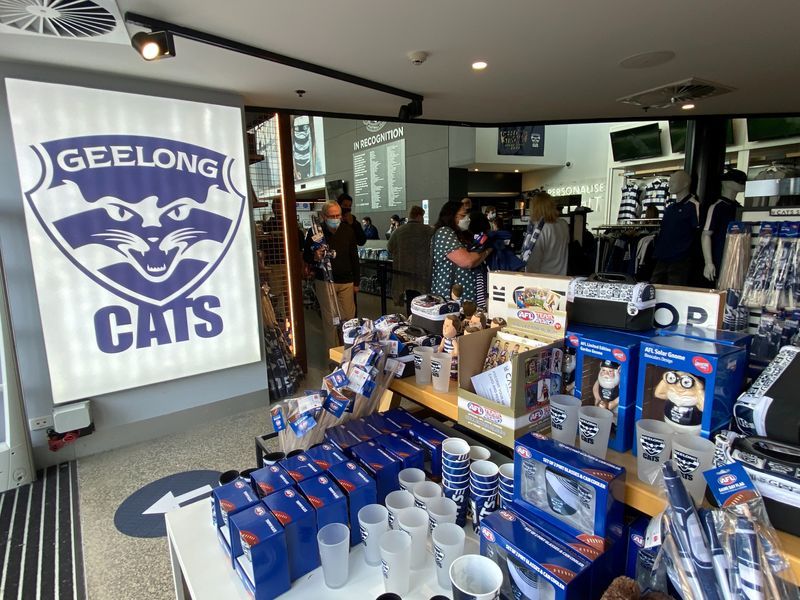
The Australian Football League has imposed a A$140,000 fine on Geelong Cats after the club failed to properly disclose a contract amendment requiring player Jake Kolodjashnij to waive his legal protections against concussion-related claims. The penalty, announced on Thursday, underscores the league's commitment to transparency and player safety protocols, even as the sport grapples with mounting litigation over head injuries sustained across decades of professional competition.
Two years prior to the public disclosure, Geelong had arranged for Kolodjashnij, a championship-winning defender with multiple documented concussion incidents throughout his career, to sign what the club termed an "informed consent letter." This document acknowledged the inherent risks of playing elite Australian Rules football but crucially included language that limited the player's ability to pursue legal remedies should he suffer further head trauma. Despite having endured several previous concussions, Kolodjashnij was cleared by an AFL medical panel and subsequently agreed to extend his contract through the 2026 season.
The arrangement remained concealed from public view until the Herald Sun newspaper revealed its existence earlier this month, immediately generating fierce backlash from player advocates, medical professionals, and sports integrity commentators. The disclosure prompted the AFL to commission an independent investigation that examined both the letter's contents and Geelong's procedural compliance. That review confirmed the club had breached league regulations by executing an unauthorised contract variation without formally notifying either the AFL or the Australian Football League Players' Association (AFLPA), the players' union representing the sport's workforce.
AFL Commissioner Paul Bassat stated in his official announcement that while investigators found no evidence of deliberate concealment or intentional deception directed at league officials or the players' union, the factual breaches were sufficiently serious to warrant substantial financial consequences. The commission emphasised that all member clubs bear responsibility for adhering to established protective frameworks and procedural requirements designed to safeguard athlete welfare and preserve competitive integrity across the sport.
Complicating the matter further, AFL Commission chairman Craig Drummond held the presidency of Geelong at the time the waiver was signed, necessitating his withdrawal from the investigation to avoid conflicts of interest. Drummond publicly apologised in recent weeks for the errors made in managing the consent letter process, acknowledging institutional failures in execution and oversight even as he maintained that the underlying motivation stemmed from a desire to support the player's autonomy.
Geelong's official statement throughout this controversy has centred on the club's purported commitment to delivering comprehensive care and providing Kolodjashnij with genuine agency regarding decisions affecting his professional trajectory. The framing suggests the club viewed the arrangement as athlete-centric rather than self-protective, though this characterisation has faced substantial scrutiny given the secretive nature of the agreement and its legal consequences for player recourse.
Kolodjashnij himself has remained notably quiet since his private medical circumstances became public knowledge. Three weeks ago, he issued a brief statement indicating his physical condition remained sound and that he remained committed to his role at the club, while expressing disappointment that confidential health information had entered the public domain without his consent. His absence from Geelong's squad selections since July has fuelled speculation about his playing future, though official explanations have remained circumspect.
James Gallagher, the AFLPA chief, responded to the commission's sanction by reaffirming the union's continued backing of Kolodjashnij and condemning the original arrangement as fundamentally inappropriate. His statement that "Jake should never have been put in this position" reflects the union's broader position that players, particularly those with established injury histories, deserve unconditional legal protection rather than arrangements that might compromise their rights in exchange for career opportunities.
The Geelong controversy arrives within a broader landscape of sports-related head injury litigation that has engulfed professional leagues worldwide. More than 100 former AFL players initiated a class action lawsuit in 2023 alleging that cumulative concussive and subconcussive trauma sustained during their playing years resulted in lasting physical, cognitive, and psychological harm. This legal action has thrust questions of institutional accountability and player protection into sharp focus, particularly regarding whether leagues adequately warned participants of risks or invested sufficiently in preventive measures and treatment protocols.
In response to the escalating litigation and reputational pressure, the AFL committed to allocating A$25 million toward longitudinal research examining the long-term neurological consequences of concussion and repeated head impacts in professional football. This substantial research commitment signals the league's recognition that contemporary understanding of traumatic brain injury remains incomplete and that the sport's future credibility depends on generating robust, independent evidence about cause-and-effect relationships between playing professional Australian Rules football and chronic neurological conditions.
For Malaysian and Southeast Asian sports governance observers, the Geelong case illuminates critical vulnerabilities in athlete protection frameworks even within established, well-resourced sports organisations operating in wealthy democracies with sophisticated legal systems. The willingness of a major professional club to structure agreements designed to limit player recourse—regardless of stated intentions—reveals how institutional self-interest can subtly distort decision-making even when no malicious intent exists. This dynamic carries particular relevance for regional sports bodies still developing comprehensive player protection standards and disciplinary mechanisms.
The financial penalty imposed, while substantial in absolute terms, remains modest relative to Geelong's operational budget and the club's competitive value. Observers have questioned whether such sanctions sufficiently deter similar transgressions or whether the AFL requires additional enforcement mechanisms, heightened transparency requirements, or structural reforms to executive governance to prevent future incidents of concealment or circumvention of protective rules.

